
Siguiente Entrevista a Daniel Calleja, director de la Representación de la Comisión Europea en España

Nº 160
Julio - agosto 2026
El European Law Institute (ELI) nació en 2011 con un propósito tan sencillo como ambicioso: mejorar la calidad del Derecho en Europa a través del análisis jurídico y de la cooperación entre profesionales e instituciones. Hoy reúne a cerca de 1.800 miembros individuales y 180 institucionales. Trabaja en ámbitos tan sensibles como la armonización del Derecho europeo, la transformación digital, la inteligencia artificial y la cooperación judicial. Con esa tarjeta de visita celebró en Madrid su 15º aniversario.
En el Colegio Notarial de Madrid se reunieron representantes de primer nivel del mundo jurídico e institucional para hablar de Europa, de seguridad jurídica y de la función de las instituciones en un contexto en el que la tecnología, la cooperación y la protección de derechos ya no pueden tratarse como materias separadas. La jornada dejó una imagen muy precisa del momento: el ELI como espacio de encuentro, el Notariado como garante de confianza y las Administraciones como actores de una agenda jurídica en movimiento.
EL ENCUENTRO TUVO MUCHO DE CONMEMORACIÓN Y BASTANTE DE ADVERTENCIA: EL DERECHO EUROPEO NECESITA PUENTES, PERO TAMBIÉN NECESITA SOSTENERSE CON FIRMEZA
El encuentro tuvo mucho de conmemoración y bastante de advertencia: el Derecho europeo necesita puentes, pero también necesita sostenerse con firmeza en un tiempo de cambios rápidos y de certezas frágiles.
Puentes entre sistemas
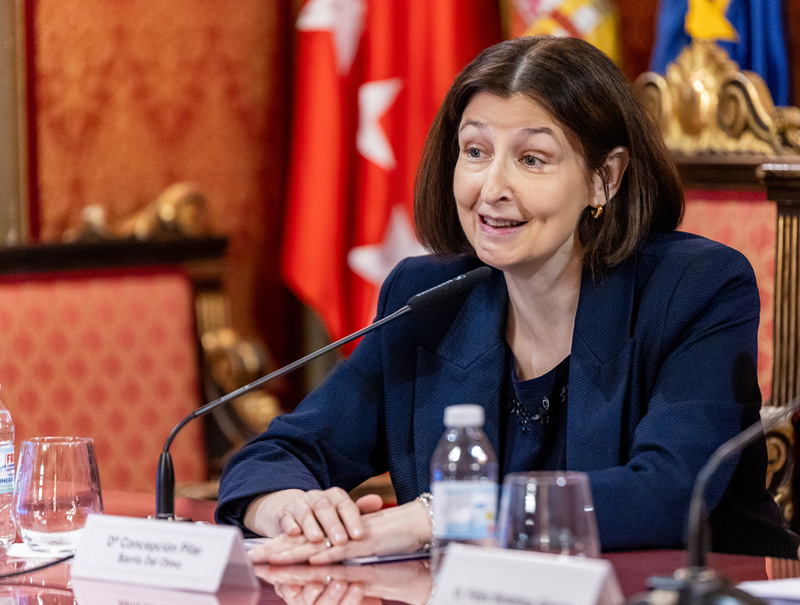
La presidenta del Consejo General del Notariado (CGN), Concepción Pilar Barrio Del Olmo, manifestó ante los asistentes que “el Derecho europeo necesita instituciones que tiendan puentes entre las distintas tradiciones jurídicas, entre el mundo académico y la práctica profesional, entre la innovación y la protección de los derechos”, para añadir que el European Law Institute desempeña esa labor “con rigor, excelencia y visión de futuro”.
LOS PARTICIPANTES EN LA JORNADA COMPARTIERON EL MENSAJE DE REFORZAR LAS INSTITUCIONES JURÍDICAS EN UNA EUROPA QUE NECESITA MÁS COORDINACIÓN Y CONFIANZA
La presidenta del CGN situó el debate en un tiempo de transformaciones jurídicas, económicas, sociales, tecnológicas y geopolíticas que exigen respuestas más sofisticadas y cohesionadas. Defendió el papel del Notariado como institución pública al servicio de la seguridad jurídica preventiva, con capacidad para verificar identidades y capacidades jurídicas también en medios digitales y recordó que “ese control preventivo debe ir unido a la lucha contra el blanqueo de capitales, un terreno en el que el Notariado aporta herramientas concretas a través de su Órgano Centralizado de Prevención y de las bases de datos de titular real y de personas con responsabilidad pública”.
Convergencia normativa
El Ministro de Presidencia, Justicia y Relaciones con las Cortes, Félix Bolaños, inauguró la jornada con un discurso de tono claramente europeísta, pero también reformista, defendiendo “la importancia del análisis comparado del Derecho como herramienta para modernizar los sistemas jurídicos nacionales” y llamó a aproximar el modelo español de investigación penal a los estándares mayoritarios en Europa, apostando por la convergencia normativa como vía para reforzar instituciones y mejorar la respuesta del sistema jurídico.
Bolaños señaló que era para él un honor “participar en estas jornadas que conmemoran el XV aniversario de la creación del ELI y, hacerlo en este entorno del Consejo General del Notariado y el Colegio Notarial de Madrid, donde realmente se pone de manifiesto la importancia y la solera que tiene el Notariado en nuestro país».
FÉLIX BOLAÑOS DEFENDIÓ “LA IMPORTANCIA DEL ANÁLISIS COMPARADO DEL DERECHO COMO HERRAMIENTA PARA MODERNIZAR LOS SISTEMAS JURÍDICOS NACIONALES”
En su opinión “ELI se ha convertido en una institución internacional referente en el estudio del Derecho europeo, desde el punto de vista normativo y jurisprudencial. No sólo aspira a un conocimiento teórico, doctrinal o académico, sino también, y más importante para las Administraciones Públicas, a mejorar el ordenamiento jurídico europeo a través de propuestas y recomendaciones a los legisladores y a los Gobiernos».
El ministro puso además en valor la convergencia de los ordenamientos jurídicos europeos sobre la base de “valores comunes como la democracia, la separación de poderes y la protección de los derechos de la ciudadanía”, añadiendo una advertencia que dio densidad política a la jornada: esos valores, dijo, no son irreversibles. Bolaños enlazó ese diagnóstico con el papel de España en iniciativas europeas sobre menores en entornos digitales, responsabilidad de plataformas y lucha contra contenidos ilícitos y manipulaciones digitales.
CONCEPCIÓN BARRIO SEÑALÓ QUE “EL DERECHO EUROPEO NECESITA INSTITUCIONES QUE TIENDAN PUENTES ENTRE LAS DISTINTAS TRADICIONES JURÍDICAS”
Lugar de cooperación
Por su parte. la presidenta del ELI, la profesora de la universidad Carlos III de Madrid, Teresa Rodríguez de las Heras, definió la razón de ser del instituto: actuar como lugar de cooperación entre academia, práctica profesional e instituciones en un terreno: el Derecho europeo, donde la comparación y la coordinación son ya parte del trabajo cotidiano, y situó el programa como “un encuentro concebido para reflexionar sobre el papel del ELI en la articulación de respuestas comunes ante los nuevos desafíos jurídicos”.
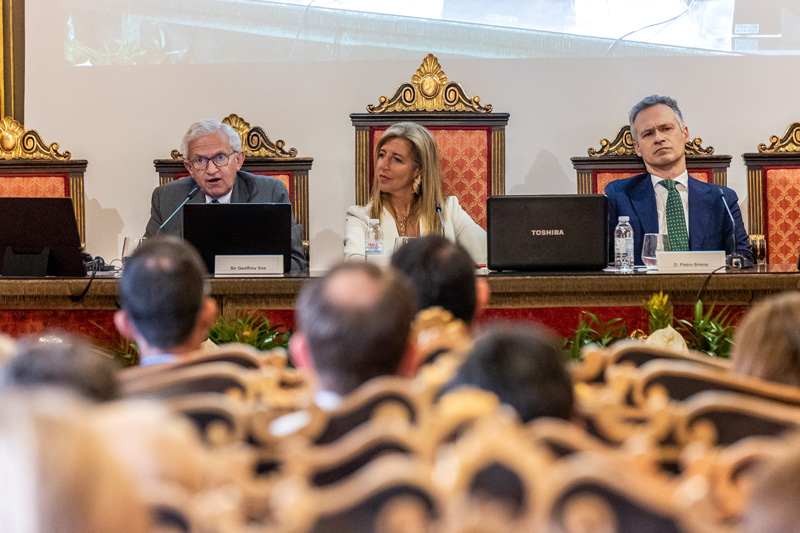
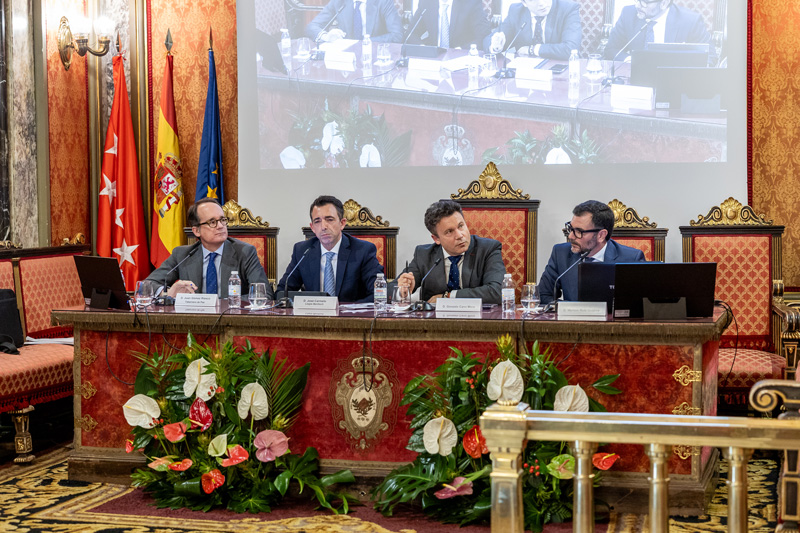
De su mano descubrimos la actividad y el impacto que ha tenido en el ámbito jurídico europeo en estos 15 años, en una mesa redonda en la que participó junto con los vicepresidentes del ELI Geoffrey Vos y Pietro Sirena.
El primero señaló que “ELI reúne a las instituciones educativas, al sector tecnológico, al mundo académico y a expertos internacionales que trabajan para abordar los grandes desafíos jurídicos de nuestro tiempo». Se refirió particularmente a los retos tecnológicos y la irrupción de la inteligencia artificial: «Cuando trabajamos sobre el ámbito tecnológico, la colaboración entre operadores jurídicos y académicos de toda Europa resulta fundamental para proteger el Estado de Derecho y preservar nuestras democracias. Por ello, espero con ilusión los próximos cincuenta años de esta organización y la labor que seguirá desarrollando». Por su parte, Pietro Sirena, señaló que «la evolución a futuro del Derecho europeo no depende tanto de la producción de nuevos instrumentos o reglamentos, como del desarrollo de una cultura, educación y práctica jurídica comunes». Además, hizo hincapié en que «un Derecho genuinamente europeo solo puede surgir si los juristas de Europa desarrollan un sentido compartido de comunidad; una comunidad en la que los distintos estilos, lenguas y sistemas jurídicos sigan siendo diversos, pero sean entendidos como expresiones de una historia compartida y una cultura jurídica común”.
Bajo la moderación de Teresa Rodríguez de las Heras conocimos las perspectivas de cuatro miembros fundadores del ELI sobre el desarrollo, evolución y proyección de la institución: Marc Schmitz, presidente de la Unión Internacional de Agentes Judiciales (UIHJ); Leo Netten, presidente honorario de la UIHJ; Noemí Alarcón, vicepresidenta del Consejo de la Abogacía Europea (CCBE) y Annerie Ploumen, vicepresidenta del Consejo de los Notariados de la Unión Europea (CNUE).
TERESA RODRÍGUEZ DE LAS HERAS DEFINIÓ LA JORNADA COMO “UN ENCUENTRO PARA REFLEXIONAR SOBRE LA ARTICULACIÓN DE RESPUESTAS COMUNES ANTE LOS NUEVOS DESAFÍOS JURÍDICOS”
En sus intervenciones hicieron un repaso de los logros alcanzados por el Instituto y destacaron el importante papel de ELI en la construcción del Derecho europeo, así como la necesidad de seguir colaborando entre instituciones para fortalecer el Estado de Derecho en la Unión Europea y la importancia de la cooperación profesional para afrontar los retos que trae consigo la digitalización.
El Notariado en la era digital
En su intervención final Concepción Pilar Barrio Del Olmo insistió en que “la función notarial está preparada para seguir desempeñando un control preventivo eficaz en un entorno digital, donde la verificación de la identidad y de la capacidad jurídica resulta cada vez más delicada”. La idea no es menor: en un ecosistema jurídico cada vez más automatizado, el valor de la intervención notarial se mide precisamente por su capacidad para dar seguridad antes de que surja el conflicto.
A eso se sumó la referencia al Anteproyecto de Ley de Integridad Pública, sobre el que la presidenta del Consejo General del Notariado expresó “preocupación por la falta de claridad en torno al papel de la escritura notarial”, recordando “que no toda reforma mejora por sí sola la arquitectura institucional”. Barrio Del Olmo cerró su intervención con una apelación a la colaboración del Ministerio de Justicia, especialmente en lo relativo a la lucha contra el blanqueo de capitales y la financiación del terrorismo. En conclusión: el control preventivo no puede rebajarse en nombre de la modernización.
Control preventivo
En la última mesa redonda de la jornada, moderada por el notario Gonzalo Cano, participaron José Carmelo Llopis, decano del Colegio Notarial de Valencia y delegado del CGN para Europa; Juan Gómez-Riesco, notario miembro de la Sección Internacional del CGN, y Marcos Ruiz, director de Negocio y Operaciones del Centro Tecnológico del Notariado.
José Carmelo Llopis señaló que la Unión Europea camina hacia un modelo en el que “la confianza se deposita en el origen primario del dato o atributo”, y si queremos atributos fiables “debemos mantener la autenticidad en el origen del dato”. En este sentido, remarcó que “el Notariado no sólo cumple con los requisitos del Derecho europeo para ser considerado fuente auténtica, sino que, además, por su propia configuración institucional y normativa, es el paradigma de dicha definición. Prescindir del Notariado como fuente auténtica implicaría debilitar la fiabilidad del sistema”.
Juan Gómez-Riesco abordó las novedades normativas que plantea el Régimen 28 de la UE, que propone la creación de un nuevo tipo societario El notario puso de relieve cuestiones y dudas que suscita, entre otras, la base jurídica empleada, así como «la necesidad de reforzar e incluir medidas de control preventivo adicionales que garanticen la máxima seguridad jurídica y una eficaz prevención del blanqueo de capitales, desde la constitución de la sociedad, a sus modificaciones, transmisión de participaciones sociales, disolución y liquidación».
Marcos Ruiz explicó el marco regulatorio y el funcionamiento de los wallet digitales de identidad que prepara la UE para ciudadanos y empresas. «En el ámbito empresarial no basta con identificar a la persona o a la sociedad: hay que acreditar representación, facultades, vigencia y efectos jurídicos. La Business Wallet no sustituye a las fuentes auténticas: las necesita para que el atributo tenga valor jurídico», señaló. En ese mismo sentido, explicó que estas tecnologías «canalizan la actuación, pero realmente son las fuentes auténticas de información las que aportan validez jurídica a las operaciones. Automatizar no debe significar perder controles que aportan trazabilidad, análisis de riesgo y prevención, como la intervención notarial”.
Los participantes en la jornada compartieron el mensaje de reforzar las instituciones jurídicas en una Europa que necesita más coordinación, más confianza y más capacidad de respuesta. El ministro habló de convergencia; el Notariado, de puentes y control preventivo; el ELI, de cooperación y mejora del Derecho. No fue una suma de discursos paralelos, sino una convergencia de diagnósticos sobre el momento presente.
El ELI celebró su XV aniversario con una idea nítida: el Derecho europeo solo será fuerte si sigue siendo capaz de tender puentes entre tradición e innovación, entre práctica y teoría, entre seguridad y cambio, en definitiva, una llamada a seguir construyendo confianza.
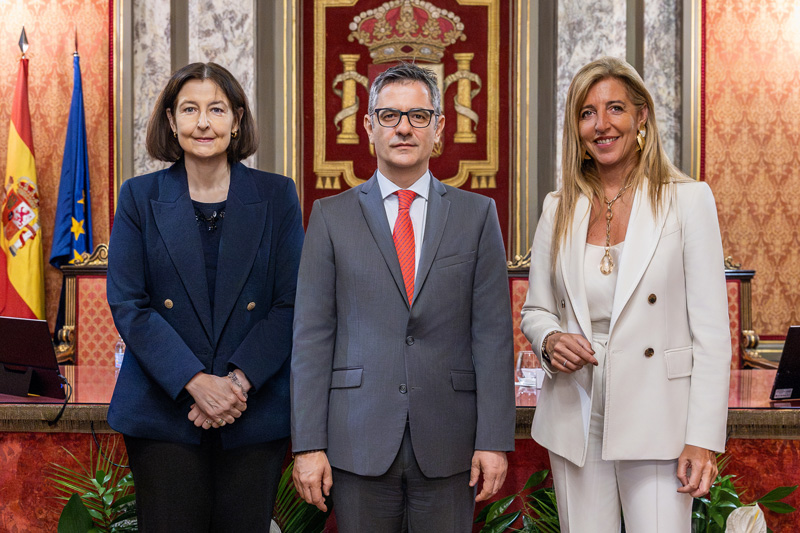
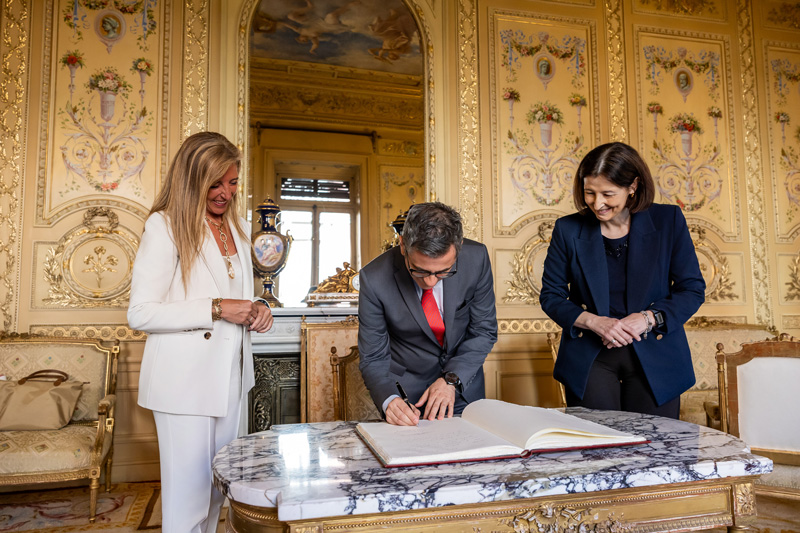
Previo a la inauguración del encuentro, el Ministro de Presidencia, Justicia y Relaciones con las Cortes, Félix Bolaños, firmó en el Libro de Honor del Colegio Notarial de Madrid, acompañado de Concepción Pilar Barrio Del Olmo, decana del mismo y presidenta de Consejo General del Notariado, y de Teresa Rodríguez de las Heras, presidenta del European Law Institute (ELI).
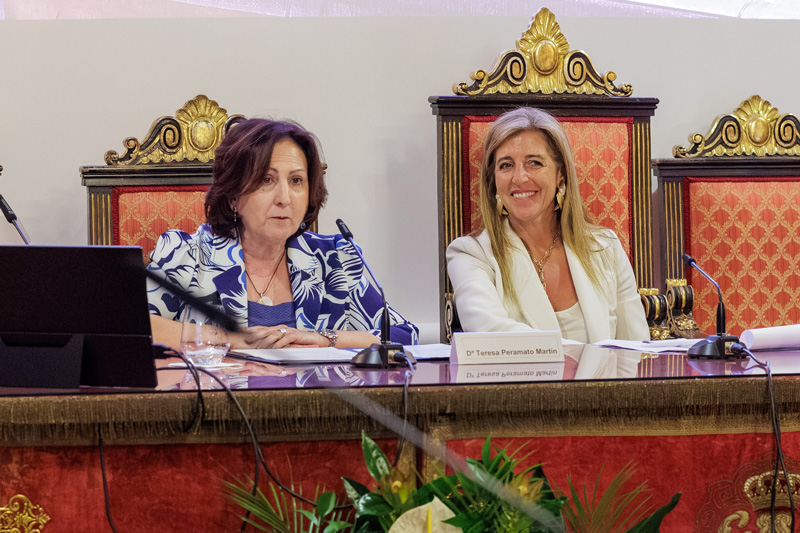
Para la Fiscal General del Estado, Teresa Peramato, “en estos 15 años ELI ha demostrado algo que nos parece muy valioso: que es posible un espacio independiente, plural y técnico capaz de abordar el Derecho desde diferentes perspectivas, pero también desde diferentes tradiciones públicas”.
En su ponencia sobre La justicia penal en el futuro ordenamiento jurídico europeo, Peramato subrayó que «el Estado de Derecho comienza en esa cadena institucional que arranca en la seguridad jurídica preventiva. Como parte de esa cadena de seguridad jurídica, resulta obligado reconocer el papel que han desempeñado los notarios, especialmente en la era digital, como parte activa y decisiva de esa arquitectura de protección”. También resaltó el papel de los fiscales en esa arquitectura europea del Estado de Derecho. “Son piezas esenciales de una cadena sostenida en redes de confianza y trabajo conjunto”. Una cadena que ya no es sólo nacional, sino europea. Por último, recalcó que «el Índice Único Informatizado Notarial y los sistemas de identificación de titularidad real constituyen hoy una herramienta estructural muy valiosa en la lucha contra la delincuencia económica». «Gracias a ellos es posible levantar con rapidez el velo de las estructuras societarias opacas; identificar a quienes se sitúan tras ellas, y proporcionar a los jueces, fiscales y fuerzas y cuerpos de seguridad una información que no solamente es fiable, sino que es completa y en tiempos compatibles con la complejidad de la criminalidad», detalló.
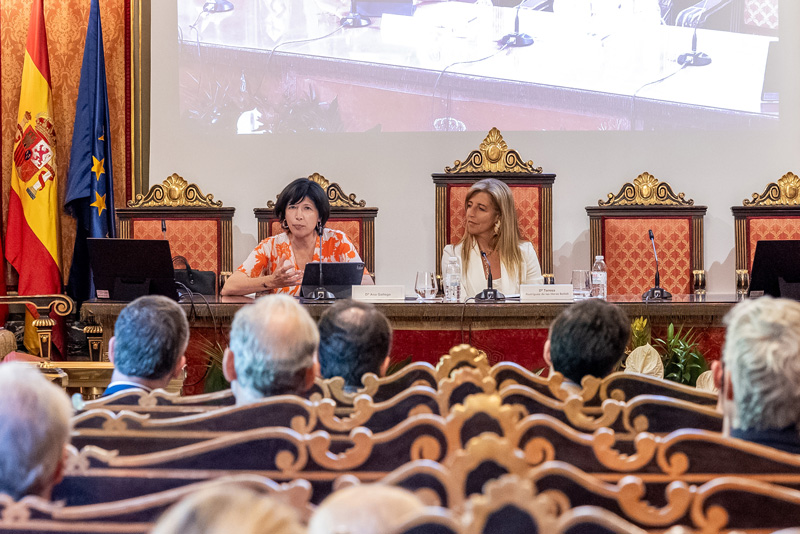
En la jornada participó la directora general de Justicia y Consumidores de la Comisión Europea, Ana Gallego Torres, que habló sobre la política comunitaria y el futuro del ordenamiento jurídico europeo. «Este aniversario sirve para reconocer el trabajo y contribución de ELI al proyecto europeo y a la construcción de una Unión basada en el Derecho, la Cooperación y la Justicia. Una labor que ha ayudado a transformar la experiencia en guías prácticas, a reforzar el tejido jurídico de Europa y a la evolución de las políticas de justicia de la UE», aseguró.
«Hoy, la Justicia en el marco de las políticas de la UE es reconocida como un eje central en términos de potencia democrática, económica y geopolítica». También apuntó que «sin la confianza en que los productos jurídicos emanados de las instituciones de los Estados miembros son equivalentes, se rompen las bases del espacio europeo de seguridad, libertad y justicia». «En definitiva, la confianza de los ciudadanos y las empresas depende en gran medida de la aplicación del Derecho transfronterizo; de que el acceso a la justicia sea real, efectivo y no solamente teórico», concluyó.
The European Law Institute (ELI) was founded in 2011 with a simple yet ambitious purpose: to improve the quality of law in Europe through legal analysis and cooperation between professionals and institutions. Today it has about 1,800 individual members and 180 institutional members. It works in sensitive areas such as the harmonization of European law, digital transformation, artificial intelligence, and judicial cooperation. With that business card, it celebrated its 15th anniversary in Madrid.
Representatives of the highest level of the legal and institutional world met at the Madrid Notary Association to discuss Europe, legal security and the role of institutions in a context in which technology, cooperation and the protection of rights can no longer be treated as separate issues. The day provided a very clear snapshot of the moment: the ELI as a meeting place, the notariat as a guarantor of trust, and the administrations as key players in a dynamic legal agenda.
THE MEETING WAS PART COMMEMORATION AND PART WARNING: EUROPEAN LAW NEEDS BRIDGES, BUT IT ALSO NEEDS TO STAND FIRM
The meeting was part commemoration and part warning: European law needs bridges, but it also needs to stand firm in a time of rapid change and fragile certainties.
Bridges between systems
The president of the General Council of Notaries (CGN), Concepción Pilar Barrio Del Olmo, told those present that “European law needs institutions that build bridges between different legal traditions, between the academic world and professional practice, between innovation and the protection of rights“, adding that the European Law Institute carries out this work “with rigour, excellence and a forward-looking vision‘.
The president of the CGN placed the debate in a time of legal, economic, social, technological, and geopolitical transformations that demand more sophisticated and cohesive responses. She defended the role of the Notary as a public institution serving preventive legal security, with the ability to verify identities and legal capacities, including in digital media, and recalled that “‘this preventive control must be combined with the fight against money laundering, an area in which the Notary provides concrete tools through its Centralized Prevention Body and the databases of beneficial owners and public officials“.
PARTICIPANTS IN THE EVENT SHARED THE MESSAGE OF STRENGTHENING LEGAL INSTITUTIONS IN A EUROPE THAT NEEDS MORE COORDINATION AND TRUST
Regulatory convergence
The Minister of the Presidency, Justice and Relations with the Cortes, Félix Bolaños, opened the day with a speech that was clearly pro-European, but also reformist, by defending “the importance of comparative analysis of law as a tool for modernizing national legal systems” and called for the Spanish model of criminal investigation to be brought closer to the majority standards in Europe, advocating regulatory convergence as a way to strengthen institutions and improve the response of the legal system.
Bolaños said it was an honour for him to «participate in these events commemorating the 15th anniversary of the creation of the ELI, and to do so in this setting of the General Council of Notaries and the Madrid Notary Association, where the importance and the long-standing tradition of the Notariat in our country are truly evident».
In his opinion, “ELI has become an international institution that is a benchmark in the study of European law, from the perspective of both regulations and case law. It does not only aspire to theoretical, doctrinal or academic knowledge, but also, and more importantly for Public Administrations, to improve the European legal system through proposals and recommendations to legislators and governments».
The minister also emphasised the convergence of European legal systems based on ”common values such as democracy, the separation of powers and the protection of citizens’ rights”, adding a warning that gave political weight to the day: these values, he said, are not irreversible. Bolaños linked this diagnosis to Spain’s role in European initiatives on minors in digital environments, platform responsibility, and the fight against illegal content and digital manipulation.
FÉLIX BOLAÑOS DEFENDED «THE IMPORTANCE OF COMPARATIVE LEGAL ANALYSIS AS A TOOL FOR MODERNIZING NATIONAL LEGAL SYSTEMS»
Place of cooperation
For her part, the president of the ELI, Professor Teresa Rodríguez de las Heras from Carlos III University of Madrid, defined the raison d’être of the institute: to act as a place of cooperation between academia, professional practice and institutions in one field: European law, where comparison and coordination are already part of everyday work. She positioned the programme as ”a meeting designed to reflect on the role of the ELI in articulating common responses to new legal challenges”..
With her help, we discovered the activity and impact it has had in the European legal sphere over the last 15 years, in a roundtable discussion in which she participated alongside ELI Vice-Presidents Geoffrey Vos and Pietro Sirena.
Vos noted that ”ELI brings together educational institutions, the technology sector, the academic world, and international experts who work to address the major legal challenges of our time”. He referred specifically to technological challenges and the emergence of artificial intelligence: «When we work in the technological sphere, collaboration between legal and academic operators from across Europe, it is essential to protect the rule of law and preserve our democracies. Therefore, I look forward to the next fifty years of this organization and the work it will continue to do». For his part, Pietro Sirena pointed out that «the future development of European law does not depend so much on the production of new instruments or regulations, but on the development of a common legal culture, education and practice». In addition, he emphasized that «a genuinely European law can only emerge if European jurists develop a shared sense of community; a community in which different legal styles, languages, and systems remain diverse, but are understood as expressions of a shared history and a common legal culture».
CONCEPCIÓN BARRIO POINTED OUT THAT «EUROPEAN LAW NEEDS INSTITUTIONS THAT BUILD BRIDGES BETWEEN THE DIFFERENT LEGAL TRADITIONS»
Under the moderation of Teresa Rodríguez de las Heras, we heard the perspectives of four founding members of the ELI on the development, evolution, and future of the institution: Marc Schmitz, president of the International Union of Judicial Officers (UIHJ); Leo Netten, honorary president of the UIHJ; Noemí Alarcón, vice-president of the Council of the Bars and Law Societies of Europe (CCBE) and Annerie Ploumen, vice-president of the Council of Notaries of the European Union (CNUE).
In their speeches, they reviewed the achievements of the Institute and highlighted the important role of ELI in the construction of European law, as well as the need to continue collaborating between institutions to strengthen the rule of law in the European Union and the importance of professional cooperation to address the challenges posed by digitalization.
TERESA RODRÍGUEZ DE LAS HERAS DEFINED THE DAY AS “A MEETING TO REFLECT ON THE ARTICULATION OF COMMON RESPONSES TO NEW LEGAL CHALLENGES”
Notaries in the Digital Age
In her final speech, Concepción Pilar Barrio Del Olmo insisted that “the notarial function is prepared to continue performing effective preventive control in a digital environment, where the verification of identity and legal capacity is becoming increasingly delicate”. The idea is not insignificant: in an increasingly automated legal ecosystem, the value of notarial intervention is precisely measured by its ability to provide security before a conflict arises.
This was added to the reference to the Public Integrity Bill, on which the president of the General Council of Notaries expressed “concern about the lack of clarity surrounding the role of the notarial deed”; she recalled that “that not every reform improves the institutional architecture on its own”. Barrio Del Olmo concluded his speech with an appeal for cooperation from the Ministry of Justice, particularly in the fight against money laundering and the financing of terrorism. In conclusion: preventive control cannot be sacrificed in the name of modernization.
Preventive control
The last round table of the day, moderated by notary Gonzalo Cano, featured José Carmelo Llopis, dean of the Valencia Notarial Association and CGN delegate for Europe; Juan Gómez-Riesco, notary member of the International Section of the CGN, and Marcos Ruiz, Business and Operations Director of the Notarial Technology Centre.
José Carmelo Llopis pointed out that the European Union is moving towards a model in which ”trust is placed in the primary source of the data or attribute”, and if we want reliable attributes, “we must maintain authenticity at the source of the data”. In this regard, he emphasised that ”the Notary not only meets the requirements of European law to be considered an authentic source, but also, due to its own institutional and regulatory structure, is the paradigm of this definition. Doing away with the Notary as an authentic source would mean weakening the reliability of the system”.
Juan Gómez-Riesco addressed the regulatory changes brought about by EU Regulation 28, which proposes the creation of a new type of company. The notary highlighted the issues and doubts that it raises, among other things, the legal basis used, as well as «the need to strengthen and include additional preventive control measures that guarantee maximum legal certainty and effective prevention of money laundering, from the incorporation of the company, to its amendments, transfer of shares, dissolution and liquidation».
Marcos Ruiz explained the regulatory framework and the functioning of the digital identity wallets that the EU is preparing for citizens and businesses. “In the business world, it is not enough to identify the person or company: representation, powers, validity and legal effects must also be proven. The Business Wallet does not replace authentic sources: it needs them for the attribute to have legal value”, he pointed out. In the same vein, he explained that these technologies “channel the action, but it is really the authentic sources of information that provide legal validity to the operations. Automation should not mean losing controls that provide traceability, risk analysis, and prevention, such as notarial intervention».
Participants in the event shared the message of strengthening legal institutions in a Europe that needs more coordination, trust, and responsiveness. The minister spoke of convergence; the Notariat, of bridges and preventive control; the ELI, of cooperation and the improvement of law. It was not a sum of parallel speeches, but a convergence of diagnoses about the present moment.
ELI celebrated its 15th anniversary with a clear idea: European law will only be strong if it continues to be able to build bridges between tradition and innovation, between practice and theory, between security and change, in short, a call to continue building trust.
Prior to the opening of the meeting, the Minister of the Presidency, Justice and Relations with the Courts, Félix Bolaños, signed the Guestbook Madrid Notary Association, accompanied by Concepción Pilar Barrio Del Olmo, dean of that institution and president of the General Council of Notaries, and Teresa Rodríguez de las Heras, president of the European Law Institute (ELI).
For the Spanish Attorney General, Teresa Peramato, “in these 15 years, ELI has demonstrated something that we regard as highly valuable: that an independent, plural and technical space is possible, capable of addressing the law from different perspectives, but also from different public traditions”.
In her presentation on Criminal Justice in the Future European Legal Order, Peramato emphasised that “the Rule of Law begins in that institutional chain that starts with preventive legal security. As part of this chain of legal security, it is mandatory to recognize the role that notaries have played, especially in the digital age, as an active and decisive part of this protection architecture». She also highlighted the role of prosecutors in this European architecture of the Rule of Law. «They are essential pieces of a chain sustained by networks of trust and collaboration». A chain that is no longer just national, but European. Finally, she emphasized that «the Computerized Single Notarial Information Index and the systems for identifying beneficial ownership are now a very valuable structural tool in the fight against economic crime. These enable us to swiftly lift the veil of opaque corporate structures; identify those behind them; and provide judges, prosecutors, and law enforcement agencies with information that is not only reliable but also complete and delivered within a timeframe compatible with the complexity of the criminality,” she explained.
The Director General for Justice and Consumers of the European Commission, Ana Gallego Torres, participated in the event, speaking about the European Union’s policy and the future of European legal order. This anniversary serves to recognize the work and contribution of ELI to the European project and the construction of a Union based on Law, Cooperation and Justice. «This work has helped transform experience into practical guidelines, strengthen the legal fabric of Europe, and advance the EU’s justice policies,» she said.
Today, justice within the framework of EU policies is recognized as a central pillar in terms of democratic, economic, and geopolitical power. Se also pointed out that «without confidence that the legal products emanating from the institutions of the Member States are equivalent, the foundations of the European area of security, freedom and justice are broken. «Ultimately, the trust of citizens and businesses depends largely on the application of cross-border law; on whether access to justice is real, effective, and not just theoretical,» she concluded.
Déjanos tu email y recibirás un correo cuando publiquemos el siguiente número de la revista.