Siguiente Llanes. De mar, cine y tradiciones

Nº 160
Julio - agosto 2026
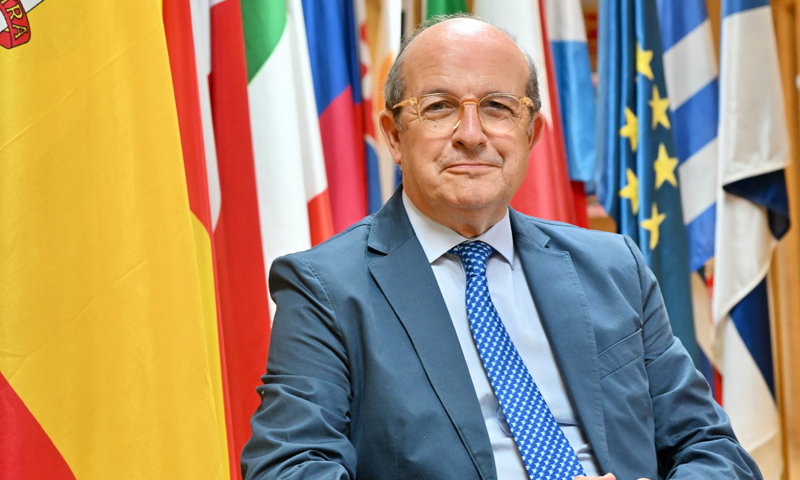
Daniel Calleja es director de la Representación de la Comisión Europea en España desde hace apenas seis meses. En esta charla valora el papel de Bruselas en nuestro país y los retos de comunicación en un contexto de desinformación. Defiende una percepción “muy positiva” de la UE en España, y subraya la importancia de reforzar la cercanía institucional sin perder rigor.
-Acaba de cumplir sus primeros seis meses en el cargo. ¿Cuál es la misión principal de la Representación de la Comisión Europea en España y qué papel desempeña dentro del entramado institucional de la UE?
– La Representación de la Comisión Europea en España se halla bajo la autoridad directa de la presidenta de la Comisión Úrsula von der Leyen. Tiene una triple misión: representar oficialmente a la Comisión ante las autoridades españolas, ejecutar la política de información y comunicación en todas las áreas de acción de la Unión Europea y en tercer lugar mantener informada a la Comisión de todas las cuestiones relevantes en las relaciones entre España y la UE. Se puede resumir en una sola frase: somos la voz los ojos y oídos de la Comisión en nuestro país.
-Como director de la Representación: ¿cuáles son sus responsabilidades diarias y cómo se articula su trabajo con Bruselas y con las autoridades españolas?
– La actividad del director de la Representación es muy intensa. España es el segundo país de la UE más visitado por los Comisarios europeos, a los que acompañamos y apoyamos en todas sus actividades. Hay una relación muy fluida con las autoridades españolas a nivel nacional, autonómico y local con las que estamos en permanente contacto, para asegurar una estrecha cooperación con Bruselas.
“LA DESINFORMACIÓN ES UN FENÓMENO PREOCUPANTE QUE DEBEMOS COMBATIR OFRECIENDO UNA INFORMACIÓN VERAZ Y OBJETIVA”
-Una de las funciones de la Comisión es velar por la correcta aplicación del Derecho de la UE. ¿Qué papel juega la Representación en ese seguimiento desde el ámbito nacional?
– La Representación juega esencialmente un papel de información y de comunicación en lo que se refiere al control de la aplicación del derecho de la Unión. Además de informar a la opinión pública del estado de los distintos procedimientos, también tenemos, mucho contacto con la sociedad civil que nos hace partícipe de sus preocupaciones en relación a la aplicación del derecho europeo, para que las traslademos a Bruselas.
-¿Cómo se relaciona con los distintos niveles de la Administración —Estado, comunidades autónomas y entidades locales— y con qué objetivos?
– La relación se establece a todos los niveles, en la medida en que prácticamente todas las políticas de la Unión Europea tienen una incidencia a nivel nacional, regional y local. Si pensamos en el impacto de la PAC, de la política de cohesión y los fondos estructurales, de la acción del fondo social europeo, de cuestiones de inmigración, de transportes o energía, en todos estos ámbitos es importante explicar y recibir las observaciones de las Administraciones responsables a todos los niveles.
“ESPAÑA ES EL SEGUNDO PAÍS DE LA UE MÁS VISITADO POR LOS COMISARIOS EUROPEOS”
-Más allá de las instituciones: ¿qué tipo de interlocución mantiene con empresas, organizaciones profesionales, colegios, universidades o sociedad civil
– La interlocución es muy directa. Se establece a través de la participación de la Representación de la Comisión en los distintos actos y manifestaciones que todos los días tienen lugar en torno a Europa. También recibimos muchas visitas en nuestra sede donde además del contacto directo con la sociedad civil, celebramos muchos actos de dimensión europea. En estos meses he tenido múltiples contactos con las empresas, los sindicatos, asociaciones profesionales, universidades, colegios y todos los estratos de la sociedad.
“UN 74% DE LOS ESPAÑOLES SE DECLARA SATISFECHO DE PERTENECER A LA UE”
-La comunicación con los ciudadanos es una tarea clave para la UE. ¿Qué instrumentos utiliza para explicar las políticas europeas y acercarlas al debate público en España en un momento internacional tan convulso como el actual?
– Tenemos múltiples instrumentos. Además de la labor de nuestro servicio de prensa en la Representación, y de la organización de eventos, tenemos un instrumento muy eficaz gracias a los 37 centros de información Europe Direct, que repartidos a lo largo y ancho de toda la geografía española están en contacto directo con los ciudadanos. Por otra parte, disponemos de 29 centros de documentación europea en toda España para facilitar cualquier tipo de información sobre Europa al ciudadano que la solicite. Estoy visitándolos todos. Todo ello sin olvidar la importante acción de nuestra oficina regional de la Comisión Europea en Barcelona.
Por otra parte, España es un país que cuenta con numerosas agencias y organismos comunitarios que son muy activos en el ámbito de sus respectivas competencias.
-En un contexto de desinformación y escepticismo hacia las instituciones, ¿qué retos encuentra a la hora de trasladar el valor añadido de la Unión Europea?
– La desinformación es un fenómeno preocupante que debemos combatir ofreciendo una información veraz y objetiva a la ciudadanía. No he percibido una actitud euroescéptica por parte de la sociedad española. En España, este año celebramos el 40 aniversario de nuestra adhesión. La percepción de los españoles sobre nuestra pertenencia a la UE es muy positiva. Un 74% se declara satisfecho de pertenecer a la UE y un 77% desearía que se tomaran todavía más decisiones a nivel de la UE. Estos datos demuestran que nuestro país existe un alto grado de confianza en las instituciones europeas.
“LA FUNCIÓN NOTARIAL ES TRANSCENDENTAL PARA EL MANTENIMIENTO DE LA SEGURIDAD JURÍDICA Y DEL ESTADO DE DERECHO”
-Desde la amplia experiencia que le dan sus más de 35 años en las instituciones europeas, ¿en qué ámbitos considera que la acción de la Comisión Europea tiene hoy un impacto más directo y tangible en la vida cotidiana de los ciudadanos españoles?
– Es difícil citar un ámbito especifico, porque la acción de la Unión Europea se despliega y tiene un impacto directo en nuestra vida cotidiana. Desde su adhesión a la Unión Europea, España se ha beneficiado de la modernización de sus infraestructuras, la internacionalización de su economía, nuevos derechos y libertades para nuestros ciudadanos y nuestras empresas, el programa Erasmus para los jóvenes, una mejora de la salud y de la calidad de vida gracias a la acción de la Unión y en general una mayor influencia y presencia como europeos en la escena internacional.
-¿Qué le gustaría que ciudadanos y profesionales entendieran mejor sobre el funcionamiento de la Comisión Europea y su presencia en nuestro país?
– A pesar de la percepción positiva que los españoles tienen de Europa, sigue siendo un gran desafío explicar y hacer pedagogía sobre las instituciones europeas acercándolas a la opinión pública española y haciendo hincapié en que detrás de la complejidad de la toma de decisiones, que es inherente a una organización que agrupa a 27 Estados miembros, nuestra acción solo tiene sentido al servicio de los ciudadanos.
-Y, por último: ¿Cómo valora la labor que realizan los notarios españoles y europeos y que aportan a la seguridad jurídica y al desarrollo de la normativa comunitaria?
– Lo he dicho en otras ocasiones: la función notarial es transcendental para el mantenimiento de la seguridad jurídica y del estado de derecho en nuestro país. Dos conceptos definen la profesión notarial: confianza y seguridad. Facilitar las transacciones y garantizar las relaciones en nuestras sociedades es una tarea imprescindible en el marco de una profesión que cada vez tiene una mayor dimensión europea.
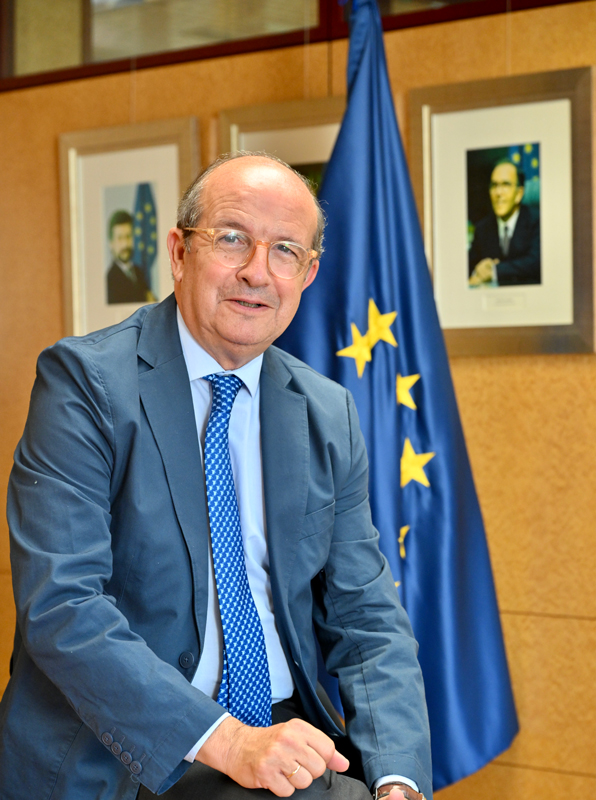
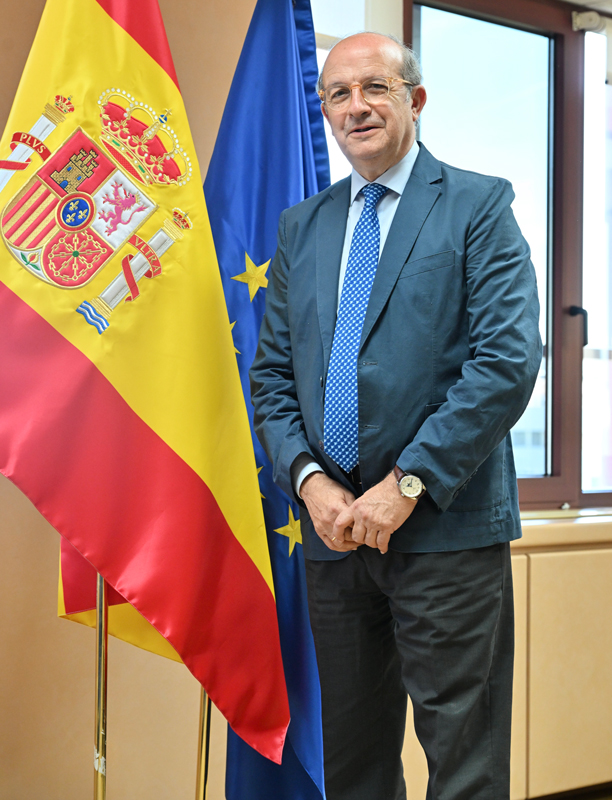
En el portal de la Comisión Europea se ofrece información detallada sobre su área de trabajo, además de distintas vías de contacto con Daniel Calleja.
En este enlace se puede consultar toda la actividad de Daniel Calleja al frente de la Representación de la Comisión Europea en España hasta el momento.
Daniel Calleja has been Head of the European Commission’s Representation in Spain for just six months. In this talk, he assesses the role of Brussels in our country and the challenges of communication in a context of disinformation. He argues that there is a “very positive” perception of the EU in Spain, and emphasises the importance of strengthening institutional ties without compromising on rigour.
-You have just completed your first six months in the post. What is the main remit of the European Commission’s Representation in Spain, and what role does it play within the EU’s institutional framework?
– The European Commission’s Representation in Spain operates under the direct authority of the Commission President, Ursula von der Leyen. It has a threefold mission: to represent the Commission officially before the Spanish authorities; to implement the information and communication policy across all areas of the European Union’s activities; and, thirdly, to keep the Commission informed of all relevant issues concerning relations between Spain and the EU. It can be summed up in a single sentence: we are the Commission’s voice, eyes and ears in our country.
“DISINFORMATION IS A WORRYING PHENOMENON THAT WE MUST COMBAT BY PROVIDING ACCURATE AND OBJECTIVE INFORMATION”
-As Head of the Representation: what are your day-to-day responsibilities, and how does your work relate to Brussels and the Spanish authorities?
– The head of the Representative Office has a very busy schedule. Spain is the second most visited country in the EU by European Commissioners, whom we accompany and support in all their activities. We have a very smooth working relationship with the Spanish authorities (with whom we are in constant contact to ensure close cooperation with Brussels) at the national, regional and local level.
-One of the Commission’s roles is to ensure the correct application of EU law. What role does the Representation play in this monitoring at the national level?
– The Representation essentially plays an information and communication role with regard to monitoring the application of EU law. As well as keeping the public informed about the progress of the various procedures, we also have close contact with civil society, which shares its concerns with us regarding the application of European law, so that we can pass these on to Brussels.
“SPAIN IS THE SECOND MOST VISITED COUNTRY IN THE EU BY EUROPEAN COMMISSIONERS”
-How does it interact with the various levels of government — central government, autonomous communities and local authorities — and to what end?
– This relationship is established at all levels, given that virtually all European Union policies have an impact at national, regional and local levels. If we consider the impact of the CAP, cohesion policy and the Structural Funds, the work of the European Social Fund, and issues relating to immigration, transport and energy, it is important in all these areas to explain matters and to take on board the comments of the relevant authorities at all levels.
-Beyond institutions: what sort of dialogue do you maintain with businesses, professional organisations, schools, universities and civil society?
– The dialogue is very direct. This is achieved through the Commission’s Representation taking part in the various events and demonstrations that take place every day across Europe. We also welcome many visitors to our headquarters, where, in addition to engaging directly with civil society, we host numerous events with a European dimension. Over the past few months, I have had numerous contacts with businesses, trade unions, professional associations, universities, schools and all sections of society.
“74 PER CENT OF SPANIARDS SAY THEY ARE SATISFIED WITH BEING PART OF THE EU”
-Communicating with citizens is a key task for the EU. What tools do you use to explain European policies and bring them into the public debate in Spain at such a turbulent time on the international stage as the present?
– We have a wide range of tools. In addition to the work carried out by our press office at the Representation and the organisation of events, we have a highly effective tool in the form of the 37 Europe Direct information centres, which are spread throughout Spain and are in direct contact with the public. Furthermore, we have 29 European documentation centres throughout Spain to provide any kind of information about Europe to members of the public who request this. I’m visiting all of them. All this without forgetting the important work carried out by our European Commission regional office in Barcelona.
Furthermore, Spain is a country with numerous EU agencies and bodies that are very active within their respective areas of competence.
-Against a backdrop of disinformation and scepticism towards institutions, what challenges do you face in conveying the added value of the European Union?
– Disinformation is a worrying phenomenon that we must combat by providing the public with accurate and objective information. I have not noticed any Eurosceptic sentiment amongst the Spanish public. In Spain, this year we celebrate the 40th anniversary of our membership. The Spanish people’s view of our membership of the EU is very positive. 74 per cent say they are satisfied with EU membership, and 77 per cent would like to see even more decisions taken at an EU level. These figures show that there is a high level of trust in European institutions in our country.
“THE ROLE OF NOTARIES IS CRUCIAL TO MAINTAINING LEGAL CERTAINTY AND THE RULE OF LAW”
-Drawing on the wealth of experience you have gained from more than 35 years working in the European institutions, in which areas do you think that the European Commission’s actions currently have the most direct and tangible impact on the daily lives of Spanish citizens?
– It is difficult to single out a specific area, because the European Union’s activities extend across many fields and have a direct impact on our daily lives. Since joining the European Union, Spain has benefited from the modernisation of its infrastructure, the internationalisation of its economy, new rights and freedoms for our citizens and businesses, the Erasmus programme for young people, improvements in health and quality of life due to the Union’s actions, and, in general, greater influence and presence as Europeans on the international stage.
-What would you like members of the public and professionals to understand better about how the European Commission works and its presence in our country?
– Despite the positive perception that Spaniards have of Europe, it remains a major challenge to explain and raise awareness of the European institutions by bringing them closer to the Spanish public and emphasising that, behind the complexity of decision-making – which is inherent in an organisation comprising 27 Member States – our actions only make sense when they are there to serve citizens.
-And finally: How do you view the work carried out by Spanish and European notaries and the contribution they make to legal certainty and the development of EU legislation?
– I have said this on other occasions: the role of notaries is of paramount importance for the maintenance of legal certainty and the rule of law in our country. Two concepts define the notarial profession: trust and security. Facilitating transactions and safeguarding relationships within our societies is an essential task within the context of a profession that is taking on an increasingly European dimension.
Déjanos tu email y recibirás un correo cuando publiquemos el siguiente número de la revista.