
Siguiente Todo lo que eres cabe en una cartera

Nº 159
Mayo - junio 2026
Si hacemos una búsqueda en internet sobre quiénes son los principales o mejores ejecutivos, directores generales, CEO… del mundo, la red nos devuelve cientos de páginas de valoraciones y ránquines. Comparar entre unos y otros es imposible, porque cada publicación o consultora maneja aspectos de diferente índole, incluso sin salirse del campo de la economía y las finanzas.
Nuevos parámetros
Sin embargo, los elaboradores de los ránquines sobre grandes directivos del mundo están restando grados de importancia, año tras año, al parámetro económico y financiero, para incrementar la estimación de los aspectos sociales, medioambientales y de gobernanza, conocidos como aspectos ESG (Environmental, Social and Governance).
LOS RÁNQUINES SE FIJAN CADA VEZ MÁS EN LA CAPACIDAD DE LOS DIRECTIVOS PARA INTERACTUAR E INSPIRAR A SUS EQUIPOS Y SEGUIDORES
Esto ha llevado a la elaboración de ránquines con valoraciones según parámetros difíciles de cuantificar, pero bien vistos en el entorno social, como la iniciativa del Top 100 del Liderazgo Humanista, de la revista Canal CEO, que clasifica a los líderes según “la capacidad de poner a las personas en el centro del negocio”. También podría incluirse en esta categoría el Ranking de CEOS en LinkedIn, de la consultora Epsilon Technologies, que mide lo que ellos definen como “cuota de atención digital”. En síntesis, se fijan en la capacidad de los directivos para interactuar e inspirar a sus equipos y seguidores, generando una buena reputación entre ellos que repercute después en los resultados de sus compañías.
Talento español en el mundo
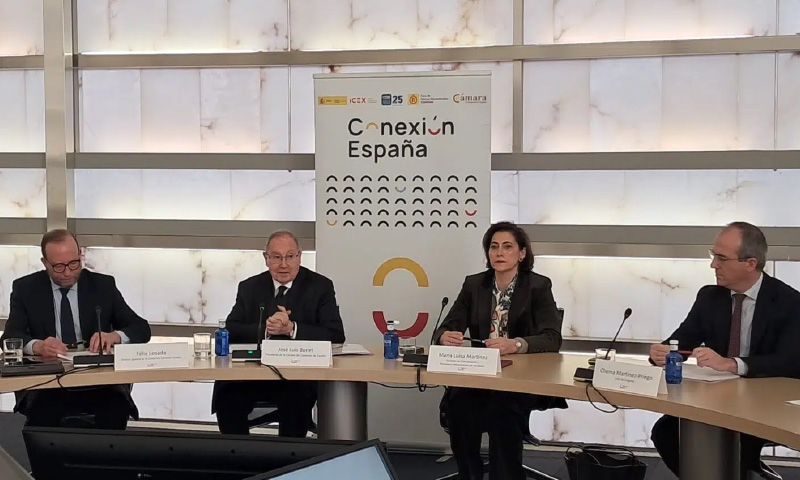
Medir intangibles, como los que acabamos de citar, o algo tan difuso como el talento, requiere el análisis de gran cantidad de datos; y aquí ha venido a echar una mano la inteligencia artificial generativa. La consultora Enigmia, por ejemplo, aplicó “tecnologías de inteligencia artificial, análisis semántico y big data para la medición de intangibles” con el fin de cuantificar la valoración de los ejecutivos españoles en el mundo. La iniciativa fue de la Fundación Conexión España, cuyo propósito es impulsar el valor directivo de España en el mundo, fortalecer la presencia global de nuestros profesionales, apoyar su desarrollo, y potenciar a las personas, los productos, las empresas y las creaciones que nacen en nuestro país. Este objetivo le ha llevado a poner en marcha el Observatorio del Valor Directivo de España en el Mundo 2025, que analiza, por vez primera, la percepción que, en el ámbito de la empresa y de los negocios de todo el mundo, se tiene de los directivos de origen español. Según este estudio el talento directivo español combina humanidad y eficacia, estrategia y cultura, y se expresa en un liderazgo ético, cercano y globalmente competente. Los directivos españoles destacan hoy en sectores como la energía, digitalización, infraestructuras, finanzas o sostenibilidad, y su presencia en organismos internacionales refleja una capacidad única para generar consensos y construir puentes.
Si bien Europa se mantiene como el gran resonador natural por proximidad económica y regulatoria, aglutinando el mayor volumen de menciones, es en Latinoamérica donde el liderazgo español encuentra su ecosistema más favorable. La región se consolida como una verdadera reserva de confianza, registrando las tasas de positividad más altas del estudio. Este dato confirma que el vínculo ha evolucionado exitosamente desde la inversión histórica hacia una colaboración moderna, sostenible y altamente valorada por las sociedades locales. Por su parte, la presencia en Norteamérica destaca por su cualificación: alcanza cotas de protagonismo y reconocimiento técnico de élite, situando al directivo español en las esferas de decisión global Finalmente, Asia y el Pacífico, así como Oriente/Medio y África emergen como escenarios de oportunidad técnica focalizada y generalmente reconocida de manera local
EL OBSERVATORIO DE FUNDACIÓN CONEXIÓN ESPAÑA PONE CIFRAS A LA PERCEPCIÓN QUE SE TIENE EN EL MUNDO DE LOS DIRECTIVOS ESPAÑOLES
Los CEO y la IA
Si volviéramos a hablar de unas y otras valoraciones dentro de unos meses, no muchos, es probable que en la ecuación hubiera que incluir la IA. Un artículo de Harvard Business Review (5 Critical Skills Leaders Need in the Age of AI, octubre de 2025) identifica cinco competencias clave para los ejecutivos: trascender los límites organizacionales, rediseñar los flujos de trabajo para integrar IA, orquestar la colaboración en equipo entre humanos y algoritmos, entrenar y desarrollar talento y liderar con el ejemplo a través de la fluidez personal en IA. Y concluye que los líderes que construyan sistemas adaptativos, donde las personas, los datos y los algoritmos evolucionen conjuntamente, crearán las condiciones para una ventaja competitiva sostenida a medida que la tecnología, los mercados y las expectativas cambian.

El estudio de la Fundación Conexión España, titulado Observatorio del Valor Directivo de España en el Mundo 2025, fue realizado por la consultora Enigmia. Para este trabajo se analizaron en 2025 más de 120.000 datos procedentes de medios internacionales y con la vista puesta en 900 directivos españoles con proyección internacional.
Explica la consultora que ese análisis, cualitativo y cuantitativo, se concreta después en un valor, el cual se proyecta en seis parámetros: impacto, competitividad, talento, valor, compromiso y respetabilidad. Concluye Enigmia que “el informe confirma que el Valor Directivo de España en el Mundo se apoya hoy principalmente en la capacidad de ejecución, los resultados y el impacto tangible. Dimensiones como impacto y competitividad concentran más del 60 % del capital reputacional generado”.
El análisis de la huella pública del liderazgo directivo español en el exterior durante el periodo observado arroja un balance de solidez y consistencia estratégica.
Los datos apuntan a un posicionamiento nítido: España exporta eficacia. La narrativa global, validada por la alta intensidad de atributos como “Liderazgo en sectores emergentes” y “Tecnología”, nos sitúa como referentes en la gestión de infraestructuras complejas, transformación financiera y transición energética.
Fuente: Enigmia.
If we search the internet for who the top executives, general managers and CEOs… in the world are, the web returns hundreds of pages of ratings and rankings. It is impossible to make comparisons between them, because each publication or consulting firm deals with different aspects, even within the field of economics and finance.
New parameters
However, the producers of the world’s top management rankings are, year after year, downgrading the economic and financial parameter, in order to increase the estimation of social, environmental and governance aspects, known as ESG(Environmental, Social and Governance) aspects.
RANKINGS ARE INCREASINGLY LOOKING AT THE ABILITY OF MANAGERS TO INTERACT WITH AND INSPIRE THEIR TEAMS AND FOLLOWERS
This has led to the development of rankings based on parameters that are difficult to quantify, but highly regarded in social contexts, such as the Humanist Leadership Top 100, an initiative by Canal CEO magazine, which ranks leaders according to “the ability to put people at the centre of the business”. This category could also include the LinkedIn CEOS Ranking, from the Epsilon Technologiesconsultancy, which measures what they define as «digital share of attention». In short, they look at the ability of managers to interact with and inspire their teams and followers, and to establish good standing among them, which then has an impact on their companies’ results.
Spanish talent in the world
Measuring intangible factors, such as those mentioned above, or something as diffuse as talent, requires the analysis of large amounts of data; this is where generative artificial intelligence has come in to lend a hand. The consulting firm Enigmia, for example, applied «artificial intelligence technologies, semantic analysis and big data to measure intangibles factors» in order to quantify the valuation of Spanish executives in the world. This was a result of the initiative of Fundación Conexión España, whose purpose is to enhance Spain’s executive profile worldwide, strengthen the global presence of Spanish employees, support their development, and empower the people, products, companies and creations emerging from our country. This objective has led it to establish the 2025 Spanish World Managerial Value Observatorywhich will analyse, for the first time, the perception of Spanish managers in companies and business circles around the worldl. According to this study , Spanish management talent combines humanity and effectiveness, strategy and culture, and is expressed in ethical, approachable and globally competent leadership. Spanish executives today stand out in sectors such as energy, digitalisation, infrastructure, finance and sustainability, and their presence in international organisations reflects a unique capacity to generate consensus and build bridges.
Although Europe remains the great natural resonator due to its economic and regulatory proximity, with the highest volume of mentions, it is in Latin America where Spanish leadership finds its most favourable ecosystem. The region has established itself as a true bastion of confidence, and has registered the highest positivity rates in the study. This confirms that the link has successfully evolved from historical investment to a modern, sustainable partnership that is highly valued by local societies. For its part, the presence in North America stands out through its achievement: it reaches elite levels of prominence and technical recognition, placing the Spanish executive in global decision-making spheres. Finally, Asia and the Pacific, as well as the Middle East and Africa, emerge as scenarios of focused and generally locally recognised technical opportunity
THE OBSERVATORY OF FUNDACIÓN CONEXIÓN ESPAÑA QUANTIFIES THE PERCEPTION HELD WORLDWIDE OF SPANISH EXECUTIVES
CEOs and AI
If we were to come back to these and other valuations in a few but not too many months’ time, it is likely that AI would have to be included in the equation. A Harvard Business Review article (5 Critical Skills Leaders Need in the Age of AI, October 2025) identifies five key skills for executives: transcending organisational boundaries, redesigning workflows to integrate AI, orchestrating team collaboration between humans and algorithms, coaching and developing talent, and leading by example through personal fluency in AI. It concludes that leaders who build adaptive systems, where people, data and algorithms evolve together, will create the conditions for sustained competitive advantage as technology, markets and expectations change.
The study by Fundación Conexión España, entitled 2025 Spanish World Managerial Value Observatory, was carried out by the consultancy firm Enigmia. For this study, more than 120,000 data points from international media were analysed in 2025, with a focus on 900 Spanish managers with an international outlook.
The consultancy firm explains that this qualitative and quantitative analysis is then translated into an amount, which is projected in six parameters: impact, competitiveness, talent, value, commitment and respectability. Enigmia concludes that “the report confirms that Spain’s value as a leader in the world today rests primarily on the ability to execute, results and tangible impact. Dimensions such as impact and competitiveness account for more than 60% of the reputational capital generated».
The analysis of the public footprint of Spanish managerial leadership abroad during the period observed shows a balance of solidity and strategic consistency.
The data point to a clear positioning: Spain exports efficiency. The global narrative, validated by the high intensity of attributes such as «Leadership in emerging sectors» and «Technology», positions us as a benchmark in the management of complex infrastructures, financial transformation and energy transition.
Source: Enigmia.
2025 Spanish World Managerial Value Observatory
Déjanos tu email y recibirás un correo cuando publiquemos el siguiente número de la revista.