ÁMBITO EUROPEO

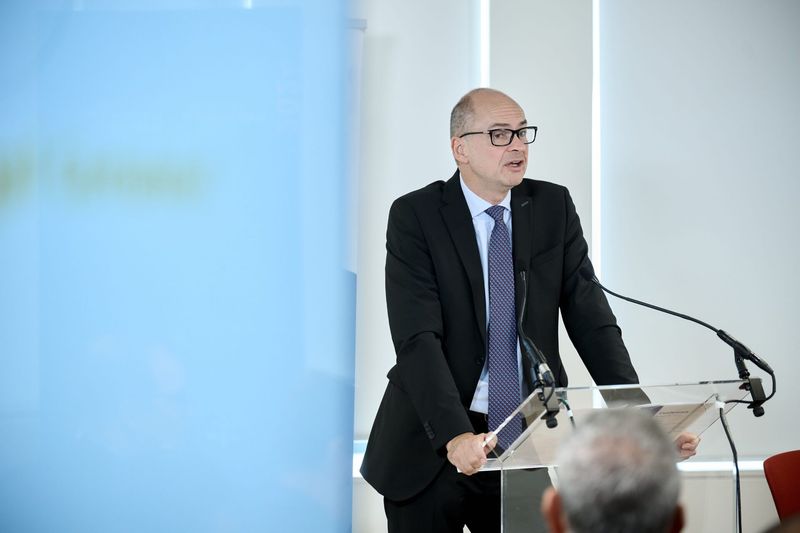
En la inauguración, el presidente de la CNUE, Roland Wadge, subrayó que la competitividad y la seguridad jurídica «no son objetivos contrapuestos», defendiendo que el nuevo régimen podría aportar ambas cosas. A continuación, el profesor René Repasi, eurodiputado, dio inicio a los diálogos, y explicó la perspectiva del Parlamento Europeo sobre el estado actual de las negociaciones. Por su parte, Hubert Gambs, director general adjunto de la Dirección General de Justicia y Consumidores de la Comisión Europea, habló sobre la iniciativa EU Inc. definiéndola como una medida fundamental en la agenda de competitividad empresarial de la Comisión Europea. El profesor Jan Lieder, de la Universidad de Friburgo, adoptó un tono escéptico, cuestionando la base jurídica de la propuesta y señalando lagunas en relación con las directivas de la Unión sobre digitalización.
EL NOTARIADO EUROPEO ADVIERTE DE QUE LA SIMPLIFICACIÓN DE LOS TRÁMITES SOCIETARIOS NO DEBE COMPROMETER LA SEGURIDAD JURÍDICA
Mesas redondas
El primer diálogo centrado en la aplicación práctica de EU Inc., y moderado por el notario alemán y expresidente del CNUE, Peter Stelmaszczyk, contó con la participación de Mariano García Fresno, jefe de la Unidad de Análisis y Comunicación del Órgano Centralizado de Prevención (OCP) de Blanqueo de Capitales del Notariado español; Radim Neubauer, presidente de la Cámara de Notarios de la República Checa; y Sophia Zakari, directora de Política Empresarial y Asuntos Jurídicos de SMEunited, quienes abordaron cuestiones relativas a las herramientas digitales, los procedimientos y los desafíos en la aplicación de la normativa.
LOS NOTARIOS DE EUROPA SEÑALAN QUE LOS CONTROLES PREVENTIVOS SON UNA VENTAJA ESTRATÉGICA DEL MODELO JURÍDICO EUROPEO
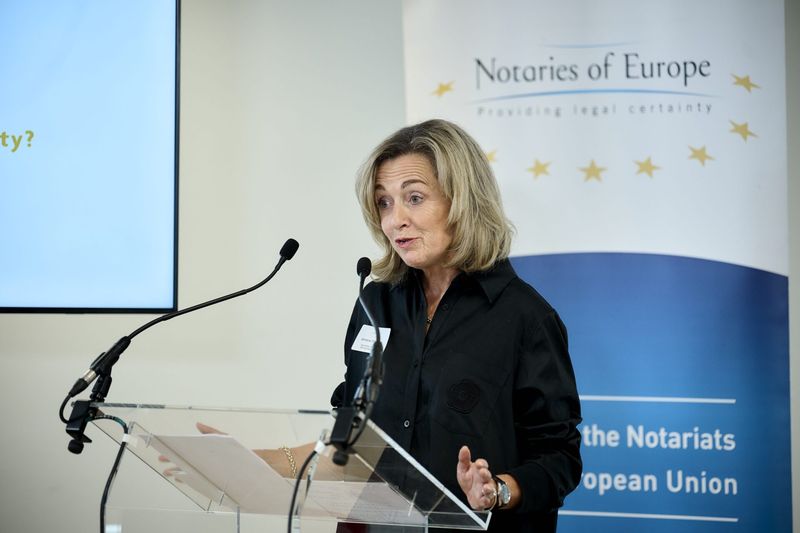
La segunda mesa titulada EU Inc. y el mercado único, competitividad, Estado de derecho y controles y moderada por Corrado Malberti, presidente del Grupo de Trabajo de Derecho de Sociedades del CNUE, comenzó con la intervención de Cosita Delvaux, notaria en Luxemburgo y presidenta honoraria del CNUE; seguida por Valentina Allotti, jurista de la asociación EuropeanIssuers; e Isabelle Schömann, secretaria general adjunta de la Confederación Europea de Sindicatos (CES). Tras este diálogo, intervino el embajador Nicolas Mackel, representante permanente de Luxemburgo ante la Unión Europea (UE), que destacó la importancia de la competitividad para la UE en estos tiempos de incertidumbre global.
Por su parte, en la clausura, la vicepresidenta del CNUE, Annerie Ploumen, recordó que la simplificación del proceso de constitución de sociedades debe mantener la seguridad jurídica: «La competitividad de Europa depende de aprovechar el acervo existente y de contar con garantías sólidas, aportadas por los notarios, sin crear obstáculo alguno a la rapidez o la eficiencia». «La competitividad y la seguridad jurídica no son elementos opuestos que deban sacrificarse el uno en favor del otro, sino dos condiciones que Europa debe aprender a mantener unidas», concluyó.
Competitividad con garantías
En un documento de mayo de 2026, los Notarios de Europa reconocieron la necesidad de reforzar la competitividad del mercado único, pero expresaron sus reservas ante la propuesta de reglamento sobre el Régimen 28, denominado EU Inc.
A su juicio, la iniciativa podría poner en riesgo tres ventajas fundamentales de la Unión Europea: el Estado de Derecho, la seguridad jurídica y la fiabilidad de las transacciones empresariales.
El CNUE advirtió de que la propuesta se aproxima a modelos societarios como el de Delaware, en Estados Unidos, caracterizados por controles previos mínimos o inexistentes y una mayor dependencia de los litigios posteriores.
Frente a este planteamiento, recordó que los sistemas jurídicos de buena parte de los Estados miembros contemplan verificaciones preventivas a lo largo del ciclo de vida de las sociedades.
Para los Notarios de Europa, estos controles no deben considerarse una carga burocrática, sino un elemento diferenciador y una ventaja estratégica del modelo europeo.
El modelo notarial español
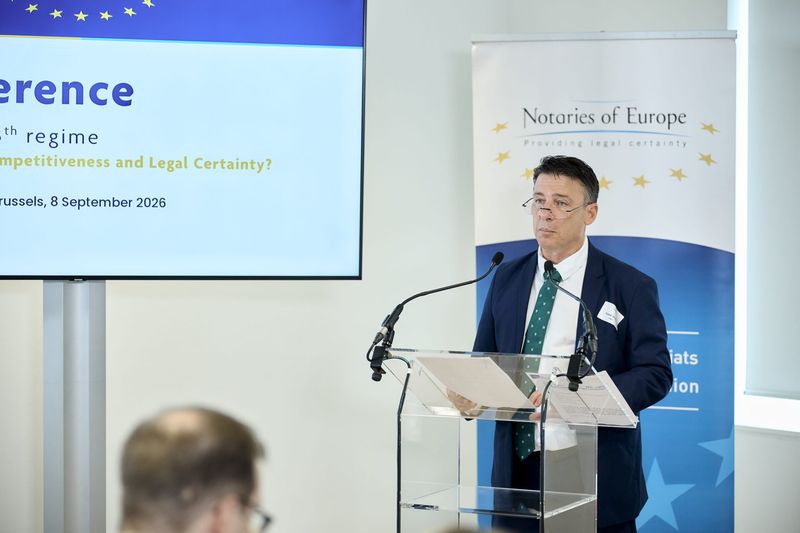
Mariano García Fresno, jefe de la Unidad de Análisis y Comunicación del Órgano Centralizado de Prevención (OCP) de Blanqueo de Capitales del Notariado español, destacó durante su intervención en la conferencia del CNUE las ventajas del sistema español, que permite compatibilizar la rapidez en la constitución de sociedades con la seguridad jurídica y el control preventivo.
«El sistema español es un ejemplo de cómo la agilidad y la seguridad jurídica trabajan a la par», afirmó García Fresno, quien recordó el papel central del notario como funcionario público encargado de verificar la identidad y capacidad de las partes y controlar la legalidad de las operaciones.
Asimismo, explicó cómo el OCP y el Índice Único Informatizado permiten centralizar y analizar la información notarial para evaluar los riesgos de las operaciones y reforzar la prevención del blanqueo de capitales. En este sentido, subrayó que «la tecnología no sustituye el control de legalidad, sino que contribuye a hacerlo más eficaz».
El reconocimiento al sistema español
En la clausura del acto, Annerie Ploumen, vicepresidenta del CNUE, recordó que la simplificación de la transmisión de participaciones «debe seguir siendo fiable» y defendió la importancia de aprovechar el marco jurídico existente y mantener salvaguardias sólidas, que los notarios pueden proporcionar «sin crear ningún obstáculo a la rapidez o la eficiencia».
Ploumen hizo una referencia expresa al modelo español de prevención del blanqueo de capitales, señalando que «es una fuente de inspiración, especialmente en lo relativo a la transmisión de participaciones». «Mariano García Fresno ha señalado en su intervención lo que puede conseguir, en materia de lucha contra el blanqueo, el control preventivo a gran escala. El Órgano Centralizado de Prevención del Blanqueo de Capitales del Notariado español se apoya en más de 150 millones de actos notariales y en 28 indicadores de riesgo para detectar operaciones sospechosas», puntualizó.
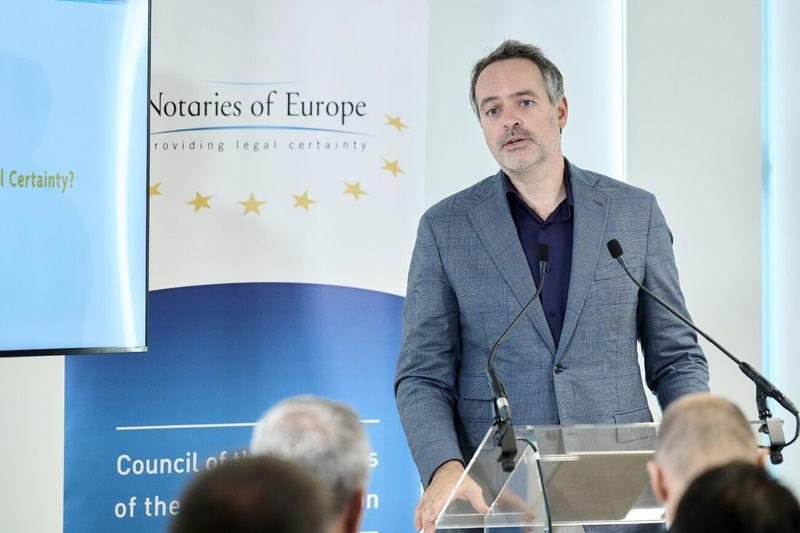
INTERVENCIONES DE LA CONFERENCIA
Vídeos de las intervenciones de la conferencia EU Inc. — Régimen 28: ¿Competitividad y seguridad jurídica?
At the opening ceremony, the President of CNUE [European Notarial Network], Roland Wadge, stressed that competitiveness and legal certainty «are not conflicting objectives», and argued that the new regime could deliver both. Next, MEP Professor René Repasi opened the discussions and explained the European Parliament’s perspective on the current state of the negotiations. For his part, Hubert Gambs, Deputy Director-General at the European Commission’s Directorate-General for Justice and Consumers, spoke about the EU Inc. initiative, describing it as a key measure in the European Commission’s business competitiveness agenda. Professor Jan Lieder, of the University of Freiburg, adopted a sceptical tone, questioning the legal basis of the proposal and pointing out gaps in relation to the Union’s directives on digitalisation.
THE EUROPEAN NOTARIAT WARNS THAT THE SIMPLIFICATION OF CORPORATE PROCEDURES MUST NOT COMPROMISE LEGAL CERTAINTY
Panels
The first discussion focused on the practical implementation of EU Inc. and was chaired by German notary and former CNUE President, Peter Stelmaszczyk. The participants were Mariano García Fresno, Head of the Analysis and Communication Unit at the Spanish Notariat’s Centralised Body for the Prevention of Money Laundering (OCP); Radim Neubauer, President of the Chamber of Notaries of the Czech Republic; and Sophia Zakari, Director of Enterprise Policy and Legal Affairs at SMEunited. They addressed issues regarding digital tools, procedures, and challenges in implementing the regulations.
EUROPEAN NOTARIES POINT OUT THAT PREVENTIVE CHECKS ARE A STRATEGIC ADVANTAGE OF THE EUROPEAN LEGAL MODEL
The second panel, ‘EU Inc. and the Single Market: competitiveness, the rule of law and controls’ was chaired by Corrado Malberti, Chairperson of the CNUE Company Law Working Group. It began with a presentation by Cosita Delvaux, a notary in Luxembourg and Honorary President of the CNUE, followed by Valentina Allotti, a legal expert at the EuropeanIssuers association, and Isabelle Schömann, Deputy General Secretary of the European Trade Union Confederation (ETUC). Following this discussion, Ambassador Nicolas Mackel, Luxembourg’s Permanent Representative to the European Union (EU), spoke and highlighted the importance of competitiveness for the EU in these times of global uncertainty.
For her part, at the closing session, the Vice-President of the CNUE, Annerie Ploumen, reiterated that the simplification of the company incorporation process must maintain legal certainty: «Europe’s competitiveness depends on leveraging the existing body of law and on having robust safeguards—provided by notaries—without creating any obstacles to speed or efficiency». «Competitiveness and legal certainty are not opposing elements that must be sacrificed for the sake of one another, but rather two conditions that Europe must learn to maintain together,» she concluded.
Competitiveness with guarantees
In a document from May 2026, European Notaries acknowledged the need to strengthen the competitiveness of the Single Market but expressed reservations regarding the proposed regulation for the 28th Regime, known as EU Inc.
In their view, the initiative could jeopardise three fundamental advantages of the European Union: the rule of law, legal certainty, and the reliability of business transactions.
The CNUE warned that the proposal resembles corporate models such as that of Delaware in the United States, that are characterised by minimal or non-existent prior controls and a greater reliance on subsequent litigation.
In response to this approach, it was pointed out that the legal systems of a significant number of Member States provide for preventive checks throughout the lifecycle of companies.
For European Notaries, these controls should not be considered a bureaucratic burden, but rather a distinguishing feature and a strategic advantage of the European model.
The Spanish notarial model
Mariano García Fresno, Head of the Analysis and Communication Unit of the Spanish Notariat’s Centralised Body for the Prevention of Money Laundering (OCP), highlighted the advantages of the Spanish system during his address at the CNUE conference; the system enables the rapid incorporation of companies to be reconciled with legal certainty and preventive control:
«The Spanish system is an example of how efficiency and legal certainty go hand in hand,» stated García Fresno, highlighting the central role of the notary as a public official responsible for verifying the identity and capacity of the parties and ensuring the legality of transactions.
He also explained how the OCP and the Unified Computerised Index enable the centralisation and analysis of notarial information in order to assess transaction risks and strengthen the prevention of money laundering. In this regard, he stressed that «technology does not replace the monitoring of legality, but rather contributes to making it more effective».
Recognition of the Spanish system
At the close of the event, Annerie Ploumen, Vice-President of the CNUE, reiterated that the simplification of the transfer of shares «must remain reliable» and advocated the importance of leveraging the existing legal framework and maintaining robust safeguards—which notaries can provide «without creating any obstacles to speed or efficiency».
Ploumen made express reference to the Spanish model for the prevention of money laundering, noting that «it is a source of inspiration, especially regarding the transfer of equity interests». In his address, Mariano García Fresno highlighted what large-scale preventive monitoring can achieve in the fight against money laundering. «The Spanish Notariat’s Centralised Body for the Prevention of Money Laundering relies on more than 150 million notarial acts and 28 risk indicators to detect suspicious transactions,» he noted.
CONFERENCE PRESENTATIONS
Videos of the presentations at the conference EU Inc. — 28th Regime: Competitiveness and legal certainty?