ALDEA GLOBAL
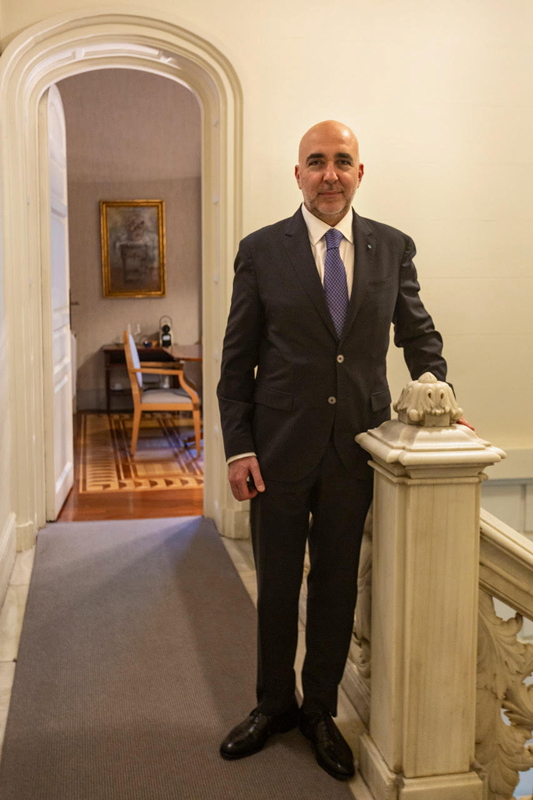
Además de jurista, con despacho propio especializado en litigio civil, mercantil y familiar, cuenta con una amplia tradición profesional vinculada al mundo asociativo colegial. El pasado 22 de mayo fue nombrado presidente de la Unión Iberoamericana de Colegios y Agrupaciones de Abogados (UIBA), aunque su relación con esta entidad arrancó en 2017, cuando asumió el cargo de vicepresidente. También ha sido vicepresidente y luego presidente del Consejo General de la Abogacía Mexicana entre 2020 y 2021 y antes, del Ilustre y Nacional Colegio de Abogados de México, en los periodos 2014-2016 y 2016-2018.
-Como recién nombrado presidente de la UIBA, ¿cuáles son sus objetivos al frente de la entidad en estos próximos cuatro años y qué tipo de cambios pretende acometer?
– La abogacía ha enfrentado desafíos muy diversos y la UIBA ha respondido a la altura de las exigencias en cada momento de su historia. Nuestra profesión es un importante motor para sostener las democracias y la paz social. Por esas razones, nuestros objetivos se dividen en dos grandes ejes. El primero es de carácter institucional: fortalecer la UIBA como espacio de coordinación iberoamericana; ampliar nuestra presencia ante los organismos multilaterales regionales e internacionales, y consolidar la representación técnica de la abogacía organizada ante los foros donde se toman decisiones que afectan a la justicia y al ejercicio profesional. El segundo eje va encaminado a defender activamente la independencia, la libertad y la dignidad de la profesión en cada uno de los 22 países que integran nuestra Unión.
“CUANDO UN ABOGADO ES DETENIDO ARBITRARIAMENTE O CUANDO UN COLEGIO SUFRE PRESIONES, LA UIBA TIENE QUE RESPONDER CON VOZ CLARA Y CON ACCIONES CONCRETAS”
-¿Qué papel puede jugar la UIBA, más allá de mantener su faceta negociadora con otros organismos jurídicos o políticos?
– La UIBA debe seguir siendo un interlocutor técnico de la abogacía organizada ante los foros en los que se discuten políticas públicas que inciden en la justicia y en el ejercicio profesional. Hemos iniciado un plan de acción para aumentar nuestra presencia ante organismos multilaterales regionales e internacionales, donde la participación en consultas públicas y foros especializados será permanente, a fin de elaborar posiciones técnicas construidas a partir del consenso de los colegios mismos. Pero la UIBA también seguirá siendo la red de abogacía organizada de 22 países que actuará en los lugares en donde haya abogados amenazados, perseguidos o criminalizados. Cuando un abogado es detenido arbitrariamente o cuando un colegio sufre presiones para subordinarse al poder político, la UIBA tiene que responder con voz clara y con acciones concretas.
-¿Cuáles son las fortalezas o virtudes de esta institución, que este año celebra su 50.º aniversario?
– Quienes me han precedido en la presidencia de la UIBA han movido a los abogados iberoamericanos a que caminemos juntos. Eso es lo que hacemos ahora y es lo que seguiremos haciendo. La UIBA es un espacio de coordinación institucional donde nos comprendemos y dialogamos a partir de una cultura compartida, lo cual nos permite identificar oportunidades y riesgos comunes de forma mucho más ágil, para elaborar proyectos y posiciones conjuntas en defensa de la independencia profesional, de la colegiación y del acceso a la Justicia.
En estos 50 años ha habido procesos muy difíciles en nuestra Región – dictaduras, crisis institucionales, retrocesos democráticos- tiempo durante el cual, la UIBA ha generado las redes de cooperación necesarias para poder responder a los desafíos actuales.
“LA UIBA ESTÁ CONVENCIDA DE QUE LA DEFENSA DE LA ABOGACÍA ES, EN EL FONDO, LA DEFENSA DE LOS DERECHOS DE LOS CIUDADANOS”
-Y en lo relativo a la abogacía: ¿a qué peligros o retos se enfrenta la profesión internacionalmente? ¿Puede ejercerse con libertad en los países de América Latina? ¿De qué manera su ejercicio incomoda al poder y por qué es importante conseguir que los dirigentes de algunos países suscriban el Convenio Internacional de Protección a la Abogacía?
– El comportamiento del Estado frente al ejercicio de nuestra profesión es un indicador relevante de la calidad democrática. Sin embargo, en algunos países identificamos nuevas tensiones regulatorias, intentos de deslegitimación de la colegiación y, en casos más graves, restricciones al ejercicio independiente de la Abogacía.
Hay países en la Región en los que no es posible ejercer con libertad la Abogacía; donde la profesión enfrenta un desmantelamiento sistemático y arbitrario.
La Abogacía incomoda al poder porque es el último obstáculo entre el ciudadano y el Estado cuando éste actúa de manera arbitraria. Por esa razón, el Convenio Internacional de Protección a la Abogacía es un instrumento fundamental que puede ser la base de un estándar mínimo de protección a nivel regional e internacional: un instrumento que establezca con claridad qué condiciones debe garantizar el Estado para que un abogado pueda ejercer con independencia. La UIBA impulsa este convenio convencida de que la defensa de la Abogacía es, en el fondo, la defensa de los derechos de los ciudadanos.
-Precisamente, extender a toda Europa y especialmente a América Latina el Convenio del Consejo de Europa para la Protección de la Profesión de la Abogacía ha sido uno de los temas planteados en la Cumbre de Abogacía Institucional, celebrada los días 24, 25 y 26 de junio en Madrid, y en la que participaron la CCBE europea, la UIBA latinoamericana y la abogacía portuguesa. ¿Cuáles son los principales asuntos que recoge este acuerdo?
– Efectivamente, en las reuniones que sostuvimos en Madrid con la CCBE, gracias a la convocatoria del Consejo General de la Abogacía Española, avanzamos de manera muy significativa en la discusión sobre los contenidos y el alcance de este Convenio. Los principales elementos que recoge son la garantía de independencia del abogado frente al Estado y frente a terceros; la inviolabilidad del secreto profesional y de las comunicaciones con el cliente; el derecho de acceso efectivo a los tribunales y a los expedientes; la prohibición de represalias directas o indirectas contra el abogado por razón de su actividad profesional, y el reconocimiento del papel de los colegios de abogados como instituciones de garantía del Estado de Derecho.
Que la CCBE europea, la UIBA iberoamericana y la abogacía portuguesa hayamos podido sentarnos a trabajar juntos al ser convocados por la Abogacía Española, en sí mismo es un logro histórico.
La unidad de la Abogacía permite defender la libertad, la independencia y la dignidad de la profesión con un frente común. Lo planteamos así convencidos de que la defensa de la Abogacía es la defensa de los derechos de los ciudadanos.
“LA COLABORACIÓN ENTRE EL ABOGADO QUE ASESORA Y EL NOTARIO QUE DA FE ES LA MEJOR GARANTÍA PARA EL CLIENTE”
-¿Cuál era el objetivo de este encuentro de trabajo? ¿Qué otras ideas se han debatido?
– En Madrid debatimos sobre la transformación artificial en el ejercicio profesional y los mecanismos de cooperación para la defensa de abogados en situación de riesgo.
Lo que nos une a la CCBE, a la Abogacía española y a la portuguesa es mucho más que la historia compartida, es la convicción de que la Abogacía organizada puede gestionar agendas de trabajo comunes que tengan impacto real.
-¿Qué papel juega el secreto profesional en la abogacía y por qué es un elemento a blindar?
– El secreto profesional no es un privilegio del abogado, es en realidad un derecho del cliente. Es la condición que hace posible que una persona pueda transmitir información a quién lo va a defender, con la seguridad de que la misma será tratada con el debido secreto.
Lo que hoy observamos con preocupación es que aumenten los requerimientos de información en el marco de normativas de prevención del blanqueo de capitales, hasta acceso a comunicaciones electrónicas que no distinguen entre el abogado y su cliente. También hemos visto casos en los que la vigilancia de despachos o la intervención de comunicaciones se utiliza como mecanismo de presión contra abogados que defienden causas políticamente incómodas.
La UIBA tiene una posición muy firme en este punto, respaldada por sus propios Estatutos, donde la dignidad, la independencia y la libertad del abogado son valores esenciales en la realización de Justicia, y el secreto profesional es la expresión más concreta de esa independencia. Su protección debe estar consagrada no solo en la legislación nacional de cada país, sino en instrumentos internacionales vinculantes. Por eso el convenio que mencionábamos antes es tan importante.
“LA ABOGACÍA INCOMODA AL PODER PORQUE ES EL ÚLTIMO OBSTÁCULO ENTRE EL CIUDADANO Y EL ESTADO CUANDO ÉSTE ACTÚA DE MANERA ARBITRARIA”
-¿De qué manera la comunicación es clave a la hora de ejercer la profesión y cómo la IA puede ser – o está siendo ya- una buena aliada?
– La irrupción de la IA ha modificado no solamente la prestación de los servicios profesionales, sino también los hábitos de quienes los demandan. Algunos usuarios de servicios legales buscan respuestas en modelos de inteligencia artificial evitando la consulta a un profesional del Derecho.
Esto plantea un desafío serio, ya que la IA puede generar respuestas atendibles y otras muy equivocadas al mismo tiempo.
Los abogados que incorporen estas herramientas de manera ética y competente tendrán una ventaja significativa, ya que, sin duda, lograrán una mayor eficiencia en la investigación jurídica, mejor sistematización de jurisprudencias y una redacción de documentos más precisa.
La UIBA está trabajando activamente para que la incorporación de la IA a la práctica jurídica sea una oportunidad para todos los países de la Región y no una amenaza. Eso implica formación, pero también marcos éticos claros y posiciones institucionales ante los reguladores que van a legislar sobre esta materia.
-¿Qué desafío supone la transformación digital del sistema judicial para el ejercicio libre de la Abogacía?
La digitalización de la Justicia tiene un enorme potencial para mejorarla, con expedientes electrónicos, audiencias virtuales, notificaciones digitales, sistemas de consulta en línea… Pero también presenta riesgos reales para el ejercicio libre de la Abogacía que no podemos ignorar.
El primero es la brecha de acceso por razones económicas o tecnológicas. El segundo riesgo está detrás del control de los algoritmos; con qué criterios y en beneficio de quién se programan. Y el tercero, y quizás el más urgente para nuestra Región, es el bloqueo de manera selectiva de sistemas o portales sin notificación oficial, usando precisamente los mecanismos digitales como herramienta de presión contra determinados abogados.
-¿En qué ámbito ve más importante o necesaria la colaboración de los abogados con los notarios?
– El Notariado es un actor fundamental que comparte con la Abogacía valores esenciales, como lo es la seguridad jurídica y la protección de los derechos de las personas. Hay espacios en los que nuestra colaboración es natural y necesaria, especialmente como mecanismo de justicia preventiva.
Un ciudadano que recurre a un notario está ejerciendo derechos que ayudan a reducir conflictos. En ese proceso, la colaboración entre el abogado que asesora y el notario que da fe es la mejor garantía para el cliente y cuando ambos funcionan bien, el sistema jurídico en su conjunto funciona mejor.
En un contexto en el que ambas profesiones enfrentan presiones desreguladoras similares, la unidad de las profesiones jurídicas organizadas es más importante que nunca, por lo que finalmente tenemos una agenda con muchos temas en común.
ALDEA GLOBAL
-As the newly appointed chairperson of the UIBA, what are your objectives at the helm of the organisation over the next four years, and what sort of changes do you intend to implement?
– The legal profession has faced a wide range of challenges, and the UIBA has risen to the occasion at every stage of its history. Our profession is a key driving force in upholding democracies and social harmony. For these reasons, our objectives are divided into two main areas. The first is institutional in nature: to strengthen the UIBA as a forum for Ibero-American coordination; to expand our presence within regional and international multilateral organisations; and to consolidate the technical representation of the organised legal profession in forums where decisions affecting the justice system and the practice of law are taken. The second priority is aimed at actively defending the independence, freedom and dignity of the profession in each of the 22 countries that make up our Union.
-What role can the UIBA play, apart from continuing to act as a negotiator with other legal or political bodies?
– The UIBA must continue to act as a technical representative of the organised legal profession in forums where public policies affecting the justice system and the practice of the profession are discussed. We have launched an action plan to strengthen our presence within regional and international multilateral organisations, where we will participate on an ongoing basis in public consultations and specialist forums, with a view to developing technical positions based on a consensus reached by the professional bodies themselves. However, the UIBA will also continue to be the organised network of lawyers from 22 countries that will take action wherever lawyers are threatened, persecuted or criminalised. When a lawyer is arbitrarily detained or when a bar association is pressured to submit to political authority, the UIBA must respond with a clear voice and concrete action.
“WHEN A LAWYER IS ARBITRARILY DETAINED OR WHEN A BAR ASSOCIATION COMES UNDER PRESSURE, THE UIBA MUST RESPOND WITH A CLEAR VOICE AND SPECIFIC ACTION”
-What are the strengths or virtues of this institution, which is celebrating its 50th anniversary this year?
– Those who have been chairperson of the UIBA before me have inspired Ibero-American lawyers to move forward together. That is what we are doing now, and that is what we will continue to do. The UIBA is a forum for institutional coordination where we understand one another and engage in dialogue on the basis of a shared culture; this enables us to identify common opportunities and risks much more swiftly, so that we can develop joint projects and positions in defence of professional independence, professional bodies and access to justice.
Over the past 50 years, our region has faced some very difficult times – dictatorships, institutional crises and setbacks for democracy – during which time the UIBA has built the cooperation networks required in order to respond to today’s challenges.
And as regards the legal profession: what dangers or challenges does the profession face internationally? Can it be practised freely in Latin American countries? In what way does your work make those in power uncomfortable, and why is it important to ensure that the leaders of certain countries sign the Convention for the Protection of the Profession of Lawyer?
The state’s attitude towards the practice of our profession is a key indicator of the quality of democracy. However, in some countries we have identified new regulatory pressures, attempts to undermine the legitimacy of the bar, and, in the most serious cases, restrictions on the independent practice of the legal profession.
There are countries in the region where it is not possible to practise law freely, and where the profession is facing systematic and arbitrary dismantling.
The legal profession makes those in power uncomfortable because it is the final barrier between the citizen and the State when the latter acts arbitrarily. For this reason, the International Convention for the Protection of Lawyers is a key instrument that can serve as the basis for a minimum standard of protection at regional and international level: an instrument that clearly sets out the conditions that must be guaranteed by the State in order to enable a lawyer to practise independently. The UIBA is promoting this agreement in the firm belief that defending the legal profession is, at its core, a defence of citizens’ rights.
“THE UIBA IS CONVINCED THAT DEFENDING THE LEGAL PROFESSION IS, AT ITS HEART, A DEFENCE OF CITIZENS’ RIGHTS”
-Indeed, extending the Council of Europe Convention on the Protection of the Legal Profession to the whole of Europe and, in particular, to Latin America was one of the issues raised at the Summiton Institutional Legal Practice, held on 24, 25 and 26 June in Madrid, and attended by the European CCBE, the Latin American UIBA and members of the Portuguese legal profession. What are the main issues covered by this agreement?
– Indeed, at the meetings we held in Madrid with the CCBE, which were organised by the General Council of the Spanish Bar, we made significant progress in the discussion on the content and scope of this Agreement. The main elements it sets out are the guarantee of a lawyer’s independence from the State and from third parties; the inviolability of professional secrecy and of communications with clients; the right to effective access to courts and case files; the prohibition of direct or indirect reprisals against lawyers on account of their professional activities; and the recognition of the role of bar associations as institutions safeguarding the rule of law.
The fact that the European CCBE [Council of Bars and Law Societies of Europe], the Ibero-American UIBA and the Portuguese legal profession have been able to sit down and work together, having been brought together by the Spanish Bar Association, is in itself a historic achievement.
Unity within the legal profession enables us to defend the freedom, independence and dignity of the profession by presenting a united front. We approach it this way because we are convinced that defending the legal profession means defending citizens’ rights.
“COLLABORATION BETWEEN THE ADVISING NOTARY AND THE CERTIFYING NOTARY IS THE BEST GUARANTEE FOR THE CLIENT”
– What was the aim of this working meeting? What other ideas have been discussed?
– In Madrid, we discussed the impact of artificial intelligence on the legal profession and the mechanisms for cooperation in defending lawyers at risk.
What unites us with the CCBE, the Spanish legal profession and the Portuguese legal profession is much more than a shared history; it is the conviction that an organised legal profession can manage common agendas that have a real impact.
-What role does professional confidentiality play in the legal profession, and why is it something that must be safeguarded?
Legal professional privilege is not a privilege enjoyed by the lawyer; it is, in fact, a right of the client. It is the condition that enables a person to pass on information to their defence counsel, in the certainty that it will be treated with due confidentiality.
What we are observing with concern today is the increasing number of information requirements under anti-money laundering regulations, including access to electronic communications that make no distinction between a lawyer and their client. We have also seen cases in which the surveillance of law firms or the interception of communications is used as a means of exerting pressure on lawyers who defend politically sensitive cases.
The UIBA takes a very firm stance on this point, backed by its own Bylaws, in which the dignity, independence and freedom of lawyers are essential values in the administration of justice, and professional secrecy is the most concrete expression of that independence. Their protection must be enshrined not only in each country’s national legislation, but also in binding international instruments. That is why the agreement we mentioned earlier is so important.
“THE LEGAL PROFESSION MAKES THOSE IN POWER UNCOMFORTABLE BECAUSE IT IS THE FINAL BARRIER BETWEEN THE CITIZEN AND THE STATE WHEN THE LATTER ACTS ARBITRARILY”
-In what way is communication key to practising the profession, and how can AI be – or is it already – a valuable ally?
– The rise of AI has transformed not only the way professional services are delivered, but also the habits of those who use them. Some users of legal services seek answers from artificial intelligence models, rather than consulting a legal professional. This poses a serious challenge, as AI can generate both plausible and highly inaccurate responses at the same time.
Lawyers who incorporate these tools in an ethical and competent manner will have a significant advantage, as they will undoubtedly achieve greater efficiency in legal research, better organisation of case law and more precise drafting of documents.
The UIBA is actively working to ensure that the integration of AI into legal practice represents an opportunity for all countries in the region, rather than a threat. This involves training, but also clear ethical frameworks and institutional positions vis-à-vis the regulators who will be legislating on this matter.
-What challenge does the digital transformation of the judicial system pose for the independent practice of law?
The digitisation of the justice system has enormous potential to improve it, with electronic case files, virtual hearings, digital notifications, and online enquiry systems… But it also presents real risks to the free practice of the legal profession that we cannot ignore.
The first is the access gap caused by economic or technological factors. The second risk lies behind the control of the algorithms; with what criteria and for whose benefit they are programmed. The third, and perhaps the most urgent for our Region, is the selective blocking of systems or portals without official notification, by using precisely digital mechanisms as a tool to exert pressure on certain lawyers.
-In which area do you consider collaboration between lawyers and notaries to be most important or necessary?
The notarial profession plays a vital role and shares essential values with the legal profession, such as legal certainty and the protection of people’s rights. There are areas where our collaboration is both natural and necessary, particularly as a means of preventive justice.
A member of the public who uses the services of a notary is exercising rights that help to reduce disputes. In this process, collaboration between the advising solicitor and the certifying notary is the best safeguard for the client, and when both work well together, the legal system as a whole functions more effectively.
In a context where both professions face similar pressures for deregulation, unity amongst the organised legal professions is more important than ever, which is why we now finally have an agenda with many issues in common.