Siguiente El nuevo horizonte de las transferencias instantáneas en la UE: el Bizum a la europea, por Fernando Serrano Antón

Nº 158
Marzo - abril 2026
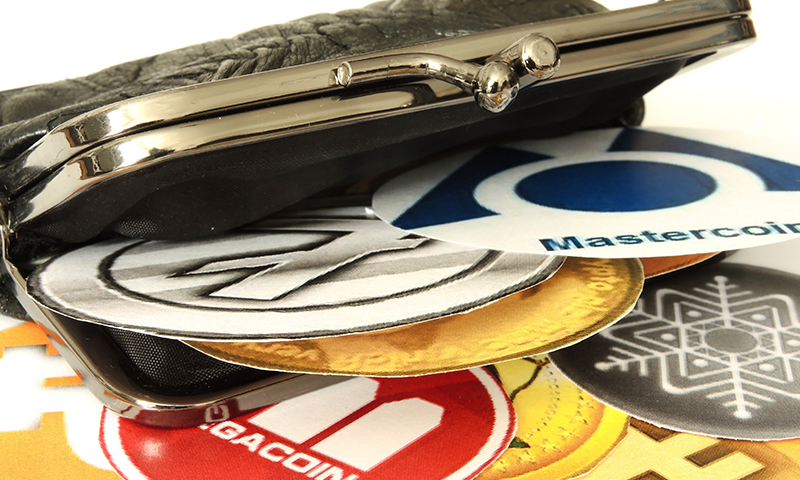
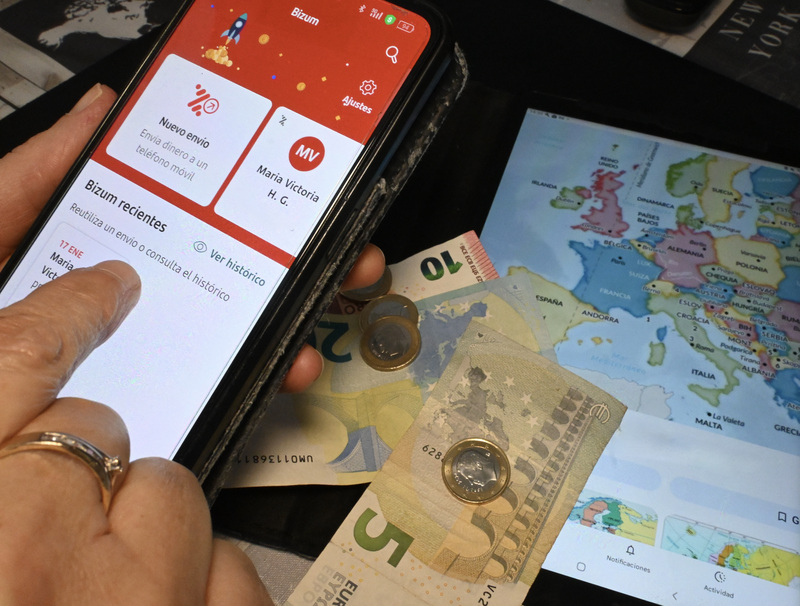
Enviar dinero rápido y gratis entre países de la UE está a punto de ser tan sencillo como hacer un Bizum. De hecho, esa es, en esencia, la idea: imitar un modelo que en España no ha dejado de crecer año tras año. A falta de cerrar algunos detalles importantes Europa se prepara para poner en marcha este mismo año un sistema que busca cambiar la forma de pagar de millones de personas.
Establecer un sistema de transferencias inmediato entre particulares a través del teléfono móvil. Una idea que tras desplegarse por Suecia, Polonia, Dinamarca o Noruega germinó en España a finales de 2016, dando como resultado a Bizum: un mecanismo que desde entonces se ha convertido en una referencia en la forma de relacionarse económicamente a pequeña escala. Tal ha sido su éxito, que desde la banca comunitaria se pretende replicar este instrumento, con el objetivo de conectar a todas las entidades europeas, y facilitar la conversación económica entre sus ciudadanos.
El proyecto cuenta con el visto bueno de las autoridades europeas así como de los supervisores bancarios, y los últimos detalles pasan por definir la sociedad que será propietaria de la tecnología necesaria para llevarlo a cabo. Cuando se haya deshecho el nudo asociativo, esta plataforma permitirá a los europeos realizar transferencias instantáneas entre países sin coste. Algo que se espera que ocurra a lo largo de este año, idealmente antes de la primavera, según las últimas manifestaciones oficiales.
EUROPA Y EPI, DOS INICIATIVAS INDEPENDIENTES IMPULSADAS POR DISTINTOS PAÍSES, CONFORMARÁN EL CORPUS DEL NUEVO HUB PANEUROPEO
Masivamente utilizado
Cuando una nueva práctica se convierte en hábito, como ha sucedido con el uso de Bizum, su salto a la conversación cotidiana se produce de manera natural, como si siempre hubiera estado ahí. “Te hago un Bizum”, ha pasado a ser una de esas frases habituales que abrochan realidades y contribuyen a olvidar el pasado. El éxito de esta herramienta es incuestionable: en 2025 superó los 1.237 millones de operaciones, con un volumen asociado de 67.751 millones de euros, según la banca española. En siete años, desde 2018, primer ejercicio del que hay datos, el número de interacciones se ha multiplicado por 38, y las previsiones para este 2026 se sitúan por encima de los 1.400 millones de operaciones.
Pese a que su implantación ha sido relativamente tardía en comparación con la de sus equivalentes europeos (Swish apareció en Suecia en 2012, MobilePay en Dinamarca en 2013, BLIK en Polonia en 2015, el mismo año en el que se lanzó Vipps en Noruega) su expansión fue mucho más rápida gracias al apoyo coordinado de casi todo el sector bancario español. Al tratarse de una iniciativa conjunta, su propagación fue mucho más expansiva que la de los demás sistemas, y hoy, prácticamente la totalidad de los bancos nacionales ofrecen ya este servicio.
EL PARLAMENTO EUROPEO HA ALERTADO DEL PELIGRO DE DEPENDER DE PROVEEDORES EXTRANJEROS COMO VISA O APPLE PAY
A la europea
Un hito que no ha pasado desapercibido en el ecosistema europeo, y que ha dado pie al proyecto conjunto EuroPA y EPI, dos iniciativas independientes que en 2025 anunciaron un acuerdo histórico para crear conjuntamente un centro paneuropeo de pagos instantáneos que interconecte a Bizum con Bancomat Pay, MB Way, Vipps MobilePay, BLIK, y otros; y que cubrirá inicialmente 15 países y más de 380 millones de personas, aproximadamente el 84% de la población europea. La Alianza Europea de Pagos y la Iniciativa Europea de Pagos (EuroPA y EPI en sus siglas en inglés), buscan con su unión crear una alternativa a Visa, Mastercard, Apple Pay o Google Pay.
“Gracias a las nuevas normas de la UE sobre pagos instantáneos, las personas y las empresas pueden transferir dinero en euros en cuestión de segundos, en cualquier momento y en todos los países de la eurozona. Estas medidas harán que los pagos instantáneos sean más seguros, más baratos y más ampliamente disponibles”. Así, por medio de este anuncio del pasado 10 de octubre, justificó la Comisión Europea por qué la UE necesitaba un sistema común de pagos instantáneos. Uno que fuera interoperable, universal y sin sobrecoste, equiparable al modelo de Bizum.
Pero hay otras motivaciones detrás de este proyecto que, si bien no esquivan las estrictamente operativas a nivel financiero, sí tienen que ver con la fortaleza de todo el sistema: lograr la soberanía financiera y la independencia de proveedores externos. Piero Cipollone, miembro del Comité Ejecutivo del BCE, alertó ante el Parlamento Europeo que una parte significativa de los pagos digitales en Europa “está en manos de proveedores no europeos”, lo que provoca una “dependencia excesiva de proveedores no europeos” y “socava nuestra resiliencia y compromete nuestra soberanía monetaria”.
Las conversaciones para que este plan cristalice versan ahora sobre la formación de la sociedad que será la propietaria de la tecnología que permita conectar entre sí a cada una de estas plataformas. Pese a que la idea original pasaba por establecer conexiones bilaterales entre ellas a cambio de una comisión, este planteamiento se terminó rechazando en favor de una red multilateral. Queda por resolver, sin embargo, una de las tareas más quirúrgicas de todo el proyecto: el reparto del accionariado de esa sociedad.
TRAS AÑOS DE BLOQUEO SE ESPERA QUE ESTÉ OPERATIVO ESTE AÑO: IDEALMENTE EN PRIMAVERA
Distintas perspectivas
En cuanto a la forma de hacerlo, hay visiones enfrentadas. Una apunta a que cada plataforma nacional se reparta los títulos de la nueva entidad de forma equilibrada. Otra señala que esta debería realizarse en función del volumen que aporte cada país; y la tercera vía pasa por que se haga un reparto original que, una vez lanzada la herramienta, se corrija en función del volumen. Por el momento, las conversaciones a este respecto siguen abiertas, del mismo modo que el equipo gestor y el CEO de la entidad siguen pendientes de designación.
Pese a que ahora la estrategia es común por parte de todos los países de la UE, en un principio existieron dos bandos con propuestas antagónicas. Por un lado, Francia y Alemania (el bloque EPI); por el otro, España, Italia y Portugal (representantes de EuroPA). El primer grupo apostaba por crear una solución europea desde cero. Esto es, un producto único y homogéneo, no una red de soluciones locales conectadas. Ese producto llevaba el nombre de Wero, y estaba liderado por la gran banca de Francia, Alemania, Bélgica y Países Bajos, que defendían su peso financiero e influencia geopolítica. La otra coalición de países abanderaba el aprovechamiento de las plataformas existentes, y su interconexión mediante un centro común, en lugar de sustituirlos. En su opinión, la infraestructura técnica ya era suficientemente robusta, y solo necesitaba aumentar su interoperabilidad.
Este enfrentamiento provocó la congelación del proyecto durante años, hasta que la tregua llegó el 23 de junio de 2025, en favor de una solución híbrida: se crearía una empresa común que conectase todas las plataformas, pero sin que ninguna se impusiera sobre las demás. Unas líneas maestras sobre las que se sigue trabajando hasta hoy.
Retos de esta forma de pago
La operabilidad de este nuevo sistema, que deberá llevar a cabo las transferencias en un periodo de no más de 10 segundos y sin sobrecoste alguno para los particulares, según la recientemente aprobada normativa del Parlamento Europeo, promete multiplicar geográficamente la satisfacción de todos aquellos usuarios que quieran enviar dinero fuera de sus fronteras, de la misma manera que lo vienen haciendo dentro de ellas. Y es que los hábitos, si no se resisten, pronto se convierten en necesidad.
A medida que avance la implantación de este ecosistema común, los bancos deberán adaptar sus infraestructuras para garantizar la estabilidad, seguridad y velocidad de las operaciones, un reto que no es menor en un entorno donde millones de transacciones cruzarán fronteras en cuestión de segundos.
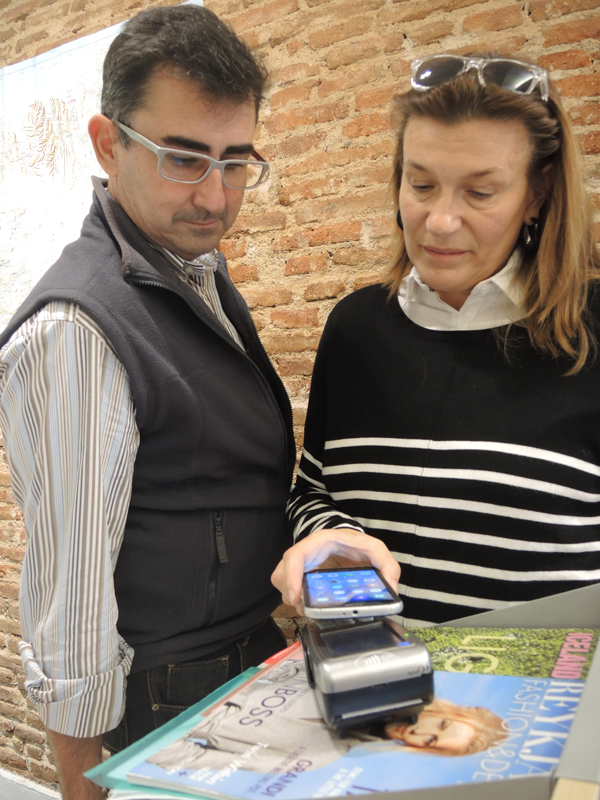
La confianza del usuario será un pilar decisivo: cualquier fallo, por mínimo que sea, repercutirá en la percepción de un sistema que aspira a convertirse en la columna vertebral de los pagos europeos. Además, esta transición implicará una pedagogía silenciosa, pero profunda, en la que los ciudadanos deberán asimilar nuevos usos casi sin advertirlo, igual que ocurrió con Bizum en España.
La consolidación de este proyecto no solo transformará la manera en que europeos de distintos países se envían dinero, sino que redefinirá la arquitectura de los servicios financieros en la UE para las próximas décadas, reforzando su integración económica, y afianzando su soberanía.
The future of instant payments in the EU (2025, Pablo Iglesias‑Rodríguez, Sussex Law School / Springer)
The rise of instant payments: a cross-country comparison (2025, Central European Management Journal)
Instant Payments: the current & future state of the market in Europe (Sopra Banking, 2024)
Establish a system of immediate transfers between individuals via mobile phone. After being deployed in Sweden, Poland, Denmark and Norway, the idea took root in Spain at the end of 2016. The result was Bizum: a mechanism that has since become a benchmark for how people interact economically on a small scale. Such has been its success that the community banking sector intends to replicate this instrument, with the aim of connecting all European institutions and facilitating economic dialogue among their citizens.
The project has been approved by the European authorities and banking supervisors, and the last details are being finalised by defining the company that will own the technology required for its implementation. Once the associative knot has been unravelled, this platform will allow Europeans to make instant transfers between countries free of charge. This is expected to happen over the course of this year, ideally before spring, according to the latest official statements.
EUROPA AND EPI, TWO INDEPENDENT INITIATIVES DRIVEN BY DIFFERENT COUNTRIES, WILL FORM THE CORPUS OF THE NEW PAN-EUROPEAN HUB
Widely used
When a new practice becomes a habit, as has happened with the use of Bizum, referring to it in everyday conversation comes naturally, as if it had always been there. “I’ll send you a Bizum,” has become one of those familiar phrases that help people forget the past. The success of this tool is unquestionable: in 2025, it exceeded 1,237 million transactions, with an associated volume of 67,751 million euros, according to Spanish banks. In seven years, since 2018, the first year for which data is available, the number of interactions has increased 38-fold, and forecasts for 2026 anticipate over 1.4 billion operations.
Although its implementation has been relatively late compared to its European counterparts (Swish appeared in Sweden in 2012, MobilePay in Denmark in 2013, BLIK in Poland in 2015, the same year in which Vipps was launched in Norway), its expansion was much faster due to the coordinated support of almost the entire Spanish banking sector. As a joint initiative, its spread was much more expansive than that of the other systems, and today, practically all national banks already offer this service.
THE EUROPEAN PARLIAMENT HAS WARNED OF THE DANGERS OF RELYING ON FOREIGN PROVIDERS SUCH AS VISA OR APPLE PAY
European style
This milestone has not gone unnoticed in the European ecosystem, and has given rise to the joint project EuroPA and EPI, two independent initiatives that in 2025 announced a historic agreement to jointly create a pan-European hub for instant payments that will interconnect Bizum with Bancomat Pay, MB Way, Vipps MobilePay, BLIK, and others. It will initially cover 15 countries and more than 380 million people, approximately 84% of the European population. The European Payments Alliance and the European Payments Initiative (EuroPA and EPI in their English acronyms) aim, by joining forces, to create an alternative to Visa, Mastercard, Apple Pay or Google Pay.
Due to the new EU rules on instant payments, individuals and businesses can transfer money in euros in a matter of seconds, at any time and in all euro area countries. These measures will make instant payments safer, cheaper and more widely available». This announcement on 10 October was therefore the way in which the European Commission justified why the EU needed a common instant payment system. One that would be interoperable, universal and free of charge, comparable to the Bizum model.
But there are other objectives behind this project which, while not limited to the strictly financial operational aspects, relate to the strength of the entire system: achieving financial sovereignty and independence from external providers. ECB Executive Board member Piero Cipollone warned the European Parliament that a significant share of digital payments in Europe «is in the hands of non-European providers», leading to «excessive dependence on non-European providers» and «undermining our resilience and compromising our monetary sovereignty».
Discussions to bring this plan to fruition now focus on the formation of the company that will enable each of these platforms to connect with each other. Although the original idea was to establish bilateral connections between them in exchange for a fee, this approach was eventually rejected in favour of a multilateral network. However, one of the most surgical tasks of the whole project remains to be resolved: the distribution of the company’s shareholding.
AFTER YEARS OF BLOCKADE, IT IS EXPECTED TO BE OPERATIONAL THIS YEAR: IDEALLY IN SPRING
Different perspectives
On the question of how to do this, there are conflicting views. One aims for each national platform to share the titles of the new entity in a balanced way. Another suggests that this should be done based on the volume contributed by each country; and the third option involves making an initial allocation which, once the tool is launched, is adjusted according to the volume. For the time being, discussions in this respect are still ongoing, and the management team and the CEO of the institution are still to be appointed.
Although the strategy is now common to all EU countries, there were originally two camps with conflicting proposals. On the one hand, France and Germany (the EPI bloc); on the other, Spain, Italy and Portugal (EuroPA representatives). The first group was in favour of creating a European solution from scratch. This is a single, homogeneous product, not a network of connected local solutions. This product was called Wero, and was led by the big banks of France, Germany, Belgium and the Netherlands, which defended their financial clout and geopolitical influence. The other coalition of countries advocated building on existing platforms, and interconnecting them through a common hub, rather than replacing them. In their view, the technical infrastructure was already sufficiently robust and only needed to increase its interoperability.
This confrontation caused the project to be frozen for years, until the truce came on 23 June 2025, in favour of a hybrid solution: a joint venture would be created to connect all the platforms, but without any one platform taking precedence over the others. Some guiding principles that are still being worked on today.
The challenges of this payment method
The operability of this new system, which should carry out transfers in no more than 10 seconds and at no extra cost to individuals, according to the recently approved European Parliament regulation, promises to increase users’ satisfaction across borders, just as they have been doing within them. Habits, if not resisted, soon become a necessity.
As the implementation of this common ecosystem progresses, banks will need to adapt their infrastructures in order to ensure the stability, security and speed of operations: no small challenge in an environment where millions of transactions will cross borders in a matter of seconds.
User confidence will be a decisive pillar: any failure, however minor, will have an impact on the perception of a system that aspires to become the backbone of European payments. Moreover, this transition will involve a silent but profound pedagogy in which citizens will have to assimilate new uses almost without noticing, as was the case with Bizum in Spain.
The consolidation of this project will not only transform the way Europeans from different countries send money to each other, but will redefine the architecture of financial services in the EU for the coming decades, strengthening its economic integration and reinforcing its sovereignty.
The future of instant payments in the EU (2025, Pablo Iglesias‑Rodríguez, Sussex Law School / Springer)
The rise of instant payments: a cross-country comparison (2025, Central European Management Journal)
Instant Payments: the current & future state of the market in Europe (Sopra Banking, 2024)