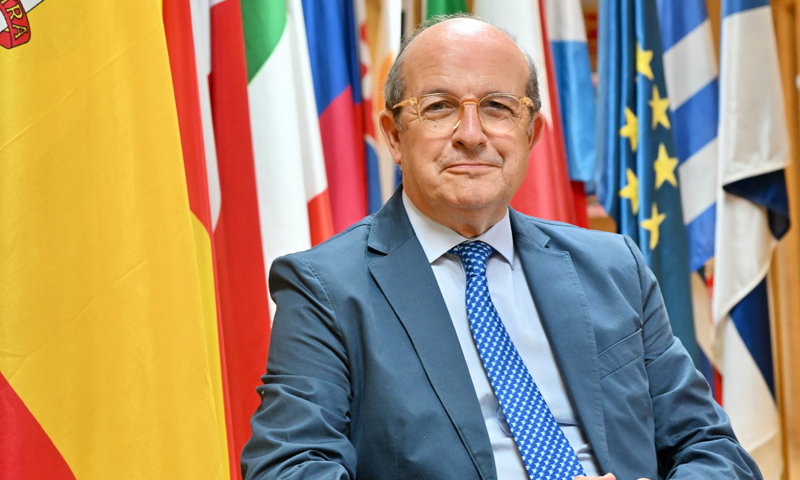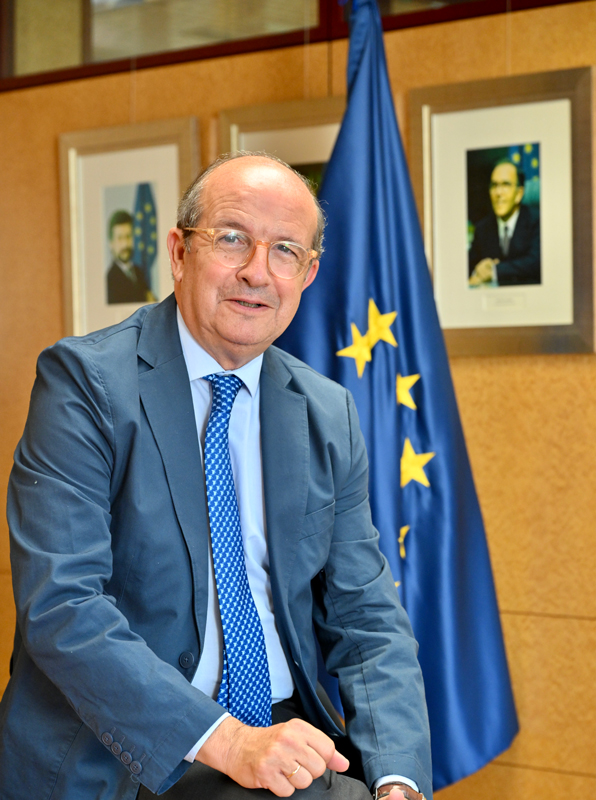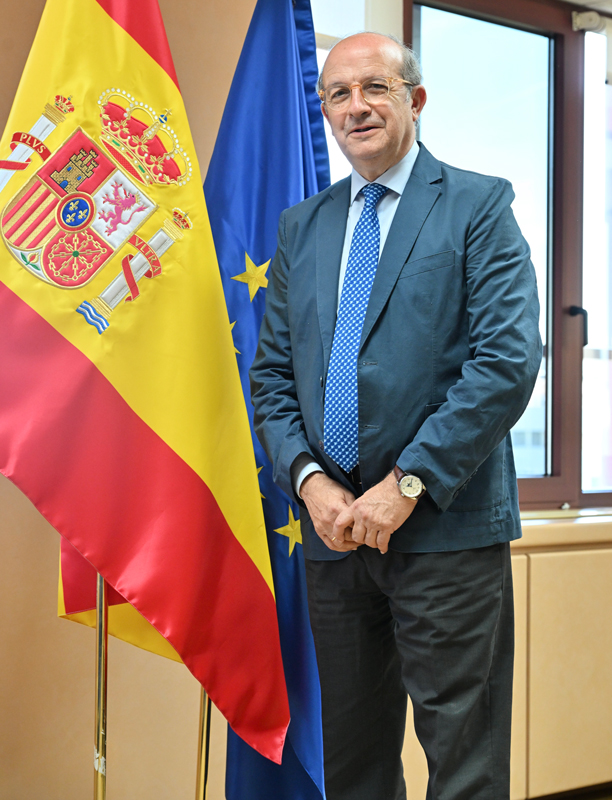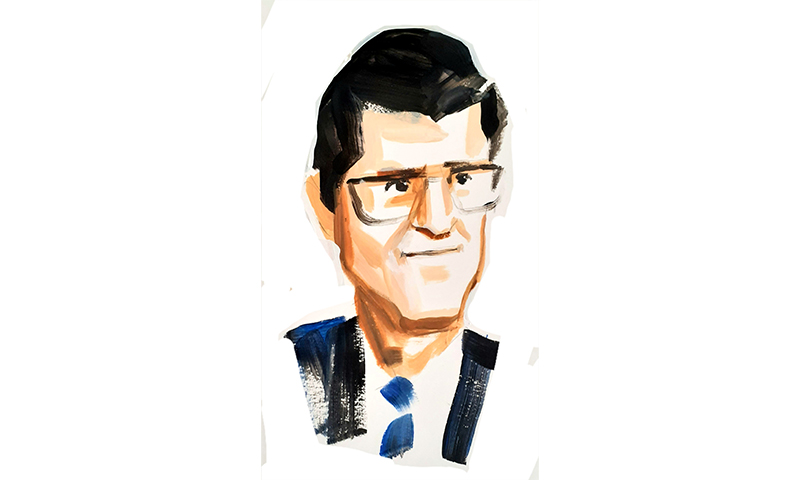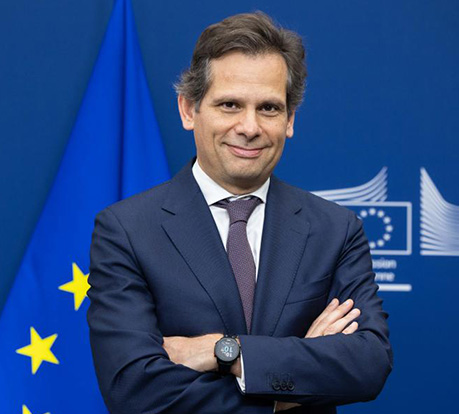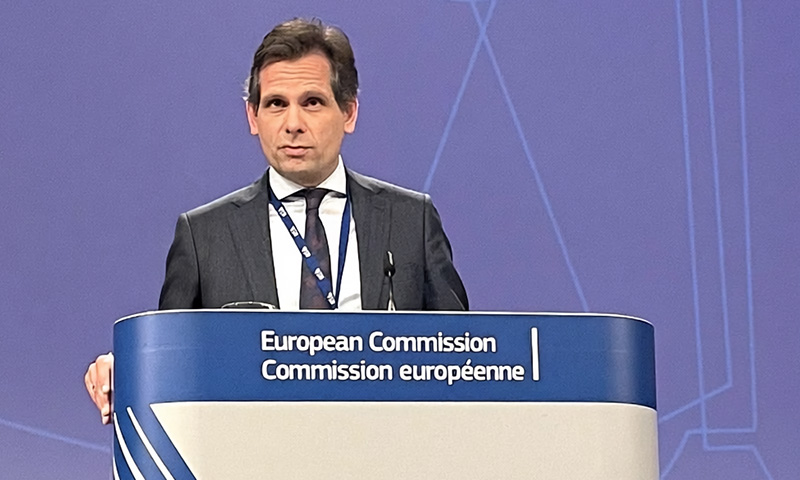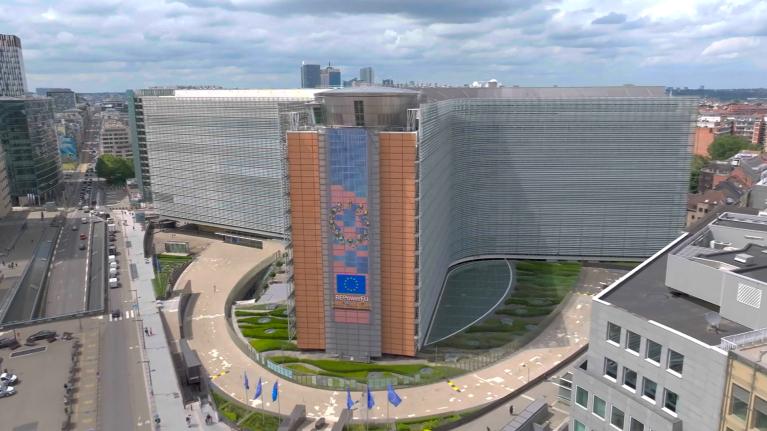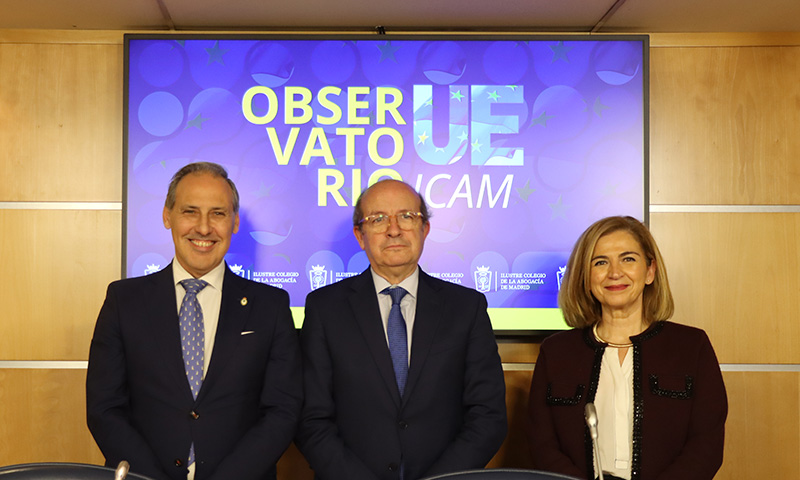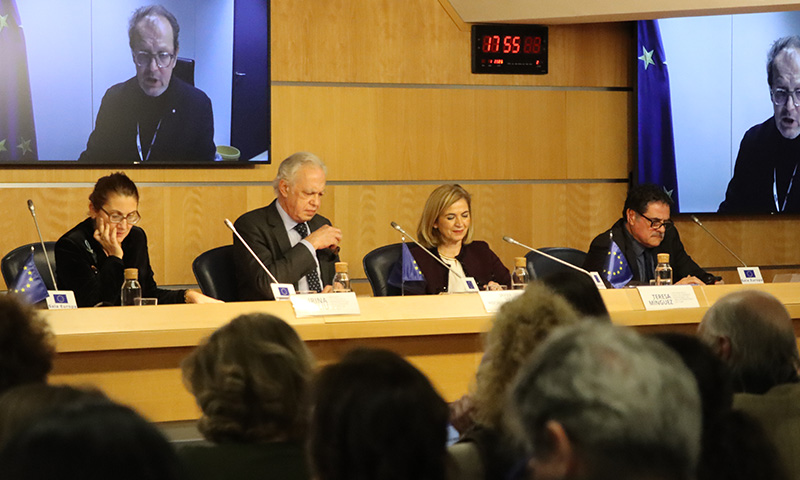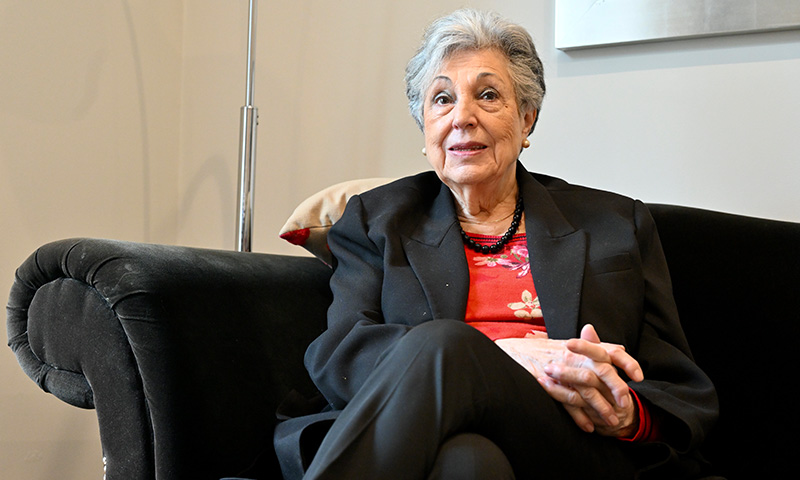
Entrevista a Daniel Calleja, director de la Representación de la Comisión Europea en España

ÁMBITO EUROPEO

Somos la voz, los ojos y oídos de la Comisión Europea en nuestro país”

Daniel Calleja,

director de la Representación de la Comisión Europea en España

GORKA R. PÉREZ

Daniel Calleja es director de la Representación de la Comisión Europea en España desde hace apenas seis meses. En esta charla valora el papel de Bruselas en nuestro país y los retos de comunicación en un contexto de desinformación. Defiende una percepción “muy positiva” de la UE en España, y subraya la importancia de reforzar la cercanía institucional sin perder rigor.

-Acaba de cumplir sus primeros seis meses en el cargo. ¿Cuál es la misión principal de la Representación de la Comisión Europea en España y qué papel desempeña dentro del entramado institucional de la UE?

– La Representación de la Comisión Europea en España se halla bajo la autoridad directa de la presidenta de la Comisión Úrsula von der Leyen. Tiene una triple misión: representar oficialmente a la Comisión ante las autoridades españolas, ejecutar la política de información y comunicación en todas las áreas de acción de la Unión Europea y en tercer lugar mantener informada a la Comisión de todas las cuestiones relevantes en las relaciones entre España y la UE. Se puede resumir en una sola frase: somos la voz los ojos y oídos de la Comisión en nuestro país.

-Como director de la Representación: ¿cuáles son sus responsabilidades diarias y cómo se articula su trabajo con Bruselas y con las autoridades españolas?

– La actividad del director de la Representación es muy intensa. España es el segundo país de la UE más visitado por los Comisarios europeos, a los que acompañamos y apoyamos en todas sus actividades. Hay una relación muy fluida con las autoridades españolas a nivel nacional, autonómico y local con las que estamos en permanente contacto, para asegurar una estrecha cooperación con Bruselas.


“LA DESINFORMACIÓN ES UN FENÓMENO PREOCUPANTE QUE DEBEMOS COMBATIR OFRECIENDO UNA INFORMACIÓN VERAZ Y OBJETIVA”


-Una de las funciones de la Comisión es velar por la correcta aplicación del Derecho de la UE. ¿Qué papel juega la Representación en ese seguimiento desde el ámbito nacional?

– La Representación juega esencialmente un papel de información y de comunicación en lo que se refiere al control de la aplicación del derecho de la Unión. Además de informar a la opinión pública del estado de los distintos procedimientos, también tenemos, mucho contacto con la sociedad civil que nos hace partícipe de sus preocupaciones en relación a la aplicación del derecho europeo, para que las traslademos a Bruselas.

-¿Cómo se relaciona con los distintos niveles de la Administración —Estado, comunidades autónomas y entidades locales— y con qué objetivos?

– La relación se establece a todos los niveles, en la medida en que prácticamente todas las políticas de la Unión Europea tienen una incidencia a nivel nacional, regional y local. Si pensamos en el impacto de la PAC, de la política de cohesión y los fondos estructurales, de la acción del fondo social europeo, de cuestiones de inmigración, de transportes o energía, en todos estos ámbitos es importante explicar y recibir las observaciones de las Administraciones responsables a todos los niveles.


“ESPAÑA ES EL SEGUNDO PAÍS DE LA UE MÁS VISITADO POR LOS COMISARIOS EUROPEOS”


-Más allá de las instituciones: ¿qué tipo de interlocución mantiene con empresas, organizaciones profesionales, colegios, universidades o sociedad civil

– La interlocución es muy directa. Se establece a través de la participación de la Representación de la Comisión en los distintos actos y manifestaciones que todos los días tienen lugar en torno a Europa. También recibimos muchas visitas en nuestra sede donde además del contacto directo con la sociedad civil, celebramos muchos actos de dimensión europea. En estos meses he tenido múltiples contactos con las empresas, los sindicatos, asociaciones profesionales, universidades, colegios y todos los estratos de la sociedad.


“UN 74% DE LOS ESPAÑOLES SE DECLARA SATISFECHO DE PERTENECER A LA UE”


-La comunicación con los ciudadanos es una tarea clave para la UE. ¿Qué instrumentos utiliza para explicar las políticas europeas y acercarlas al debate público en España en un momento internacional tan convulso como el actual?

– Tenemos múltiples instrumentos. Además de la labor de nuestro servicio de prensa en la Representación, y de la organización de eventos, tenemos un instrumento muy eficaz gracias a los 37 centros de información Europe Direct, que repartidos a lo largo y ancho de toda la geografía española están en contacto directo con los ciudadanos. Por otra parte, disponemos de 29 centros de documentación europea en toda España para facilitar cualquier tipo de información sobre Europa al ciudadano que la solicite. Estoy visitándolos todos. Todo ello sin olvidar la importante acción de nuestra oficina regional de la Comisión Europea en Barcelona.

Por otra parte, España es un país que cuenta con numerosas agencias y organismos comunitarios que son muy activos en el ámbito de sus respectivas competencias.

-En un contexto de desinformación y escepticismo hacia las instituciones, ¿qué retos encuentra a la hora de trasladar el valor añadido de la Unión Europea?

– La desinformación es un fenómeno preocupante que debemos combatir ofreciendo una información veraz y objetiva a la ciudadanía. No he percibido una actitud euroescéptica por parte de la sociedad española. En España, este año celebramos el 40 aniversario de nuestra adhesión. La percepción de los españoles sobre nuestra pertenencia a la UE es muy positiva. Un 74% se declara satisfecho de pertenecer a la UE y un 77% desearía que se tomaran todavía más decisiones a nivel de la UE. Estos datos demuestran que nuestro país existe un alto grado de confianza en las instituciones europeas.


“LA FUNCIÓN NOTARIAL ES TRANSCENDENTAL PARA EL MANTENIMIENTO DE LA SEGURIDAD JURÍDICA Y DEL ESTADO DE DERECHO”


-Desde la amplia experiencia que le dan sus más de 35 años en las instituciones europeas, ¿en qué ámbitos considera que la acción de la Comisión Europea tiene hoy un impacto más directo y tangible en la vida cotidiana de los ciudadanos españoles?

– Es difícil citar un ámbito especifico, porque la acción de la Unión Europea se despliega y tiene un impacto directo en nuestra vida cotidiana. Desde su adhesión a la Unión Europea, España se ha beneficiado de la modernización de sus infraestructuras, la internacionalización de su economía, nuevos derechos y libertades para nuestros ciudadanos y nuestras empresas, el programa Erasmus para los jóvenes, una mejora de la salud y de la calidad de vida gracias a la acción de la Unión y en general una mayor influencia y presencia como europeos en la escena internacional.

-¿Qué le gustaría que ciudadanos y profesionales entendieran mejor sobre el funcionamiento de la Comisión Europea y su presencia en nuestro país?

– A pesar de la percepción positiva que los españoles tienen de Europa, sigue siendo un gran desafío explicar y hacer pedagogía sobre las instituciones europeas acercándolas a la opinión pública española y haciendo hincapié en que detrás de la complejidad de la toma de decisiones, que es inherente a una organización que agrupa a 27 Estados miembros, nuestra acción solo tiene sentido al servicio de los ciudadanos.

-Y, por último: ¿Cómo valora la labor que realizan los notarios españoles y europeos y que aportan a la seguridad jurídica y al desarrollo de la normativa comunitaria?

– Lo he dicho en otras ocasiones: la función notarial es transcendental para el mantenimiento de la seguridad jurídica y del estado de derecho en nuestro país. Dos conceptos definen la profesión notarial: confianza y seguridad. Facilitar las transacciones y garantizar las relaciones en nuestras sociedades es una tarea imprescindible en el marco de una profesión que cada vez tiene una mayor dimensión europea.

HUELLA DIGITAL

  • En el portal de la Comisión Europea se ofrece información detallada sobre su área de trabajo, además de distintas vías de contacto con Daniel Calleja.

  • En este enlace se puede consultar toda la actividad de Daniel Calleja al frente de la Representación de la Comisión Europea en España hasta el momento.

EUROPEAN SCOPE

We are the voice, the eyes and the ears of the European Commission in our country”

Daniel Calleja,

Head of the European Commission Representation in Spain

GORKA R. PÉREZ

Daniel Calleja has been Head of the European Commission’s Representation in Spain for just six months. In this talk, he assesses the role of Brussels in our country and the challenges of communication in a context of disinformation. He argues that there is a “very positive” perception of the EU in Spain, and emphasises the importance of strengthening institutional ties without compromising on rigour.

-You have just completed your first six months in the post. What is the main remit of the European Commission’s Representation in Spain, and what role does it play within the EU’s institutional framework?

– The European Commission’s Representation in Spain operates under the direct authority of the Commission President, Ursula von der Leyen. It has a threefold mission: to represent the Commission officially before the Spanish authorities; to implement the information and communication policy across all areas of the European Union’s activities; and, thirdly, to keep the Commission informed of all relevant issues concerning relations between Spain and the EU. It can be summed up in a single sentence: we are the Commission’s voice, eyes and ears in our country.


“DISINFORMATION IS A WORRYING PHENOMENON THAT WE MUST COMBAT BY PROVIDING ACCURATE AND OBJECTIVE INFORMATION”


-As Head of the Representation: what are your day-to-day responsibilities, and how does your work relate to Brussels and the Spanish authorities?

– The head of the Representative Office has a very busy schedule. Spain is the second most visited country in the EU by European Commissioners, whom we accompany and support in all their activities. We have a very smooth working relationship with the Spanish authorities (with whom we are in constant contact to ensure close cooperation with Brussels) at the national, regional and local level.

-One of the Commission’s roles is to ensure the correct application of EU law. What role does the Representation play in this monitoring at the national level?

– The Representation essentially plays an information and communication role with regard to monitoring the application of EU law. As well as keeping the public informed about the progress of the various procedures, we also have close contact with civil society, which shares its concerns with us regarding the application of European law, so that we can pass these on to Brussels.


“SPAIN IS THE SECOND MOST VISITED COUNTRY IN THE EU BY EUROPEAN COMMISSIONERS”


-How does it interact with the various levels of government — central government, autonomous communities and local authorities — and to what end?

– This relationship is established at all levels, given that virtually all European Union policies have an impact at national, regional and local levels. If we consider the impact of the CAP, cohesion policy and the Structural Funds, the work of the European Social Fund, and issues relating to immigration, transport and energy, it is important in all these areas to explain matters and to take on board the comments of the relevant authorities at all levels.

-Beyond institutions: what sort of dialogue do you maintain with businesses, professional organisations, schools, universities and civil society?

– The dialogue is very direct. This is achieved through the Commission’s Representation taking part in the various events and demonstrations that take place every day across Europe. We also welcome many visitors to our headquarters, where, in addition to engaging directly with civil society, we host numerous events with a European dimension. Over the past few months, I have had numerous contacts with businesses, trade unions, professional associations, universities, schools and all sections of society.


“74 PER CENT OF SPANIARDS SAY THEY ARE SATISFIED WITH BEING PART OF THE EU”


-Communicating with citizens is a key task for the EU. What tools do you use to explain European policies and bring them into the public debate in Spain at such a turbulent time on the international stage as the present?

– We have a wide range of tools. In addition to the work carried out by our press office at the Representation and the organisation of events, we have a highly effective tool in the form of the 37 Europe Direct information centres, which are spread throughout Spain and are in direct contact with the public. Furthermore, we have 29 European documentation centres throughout Spain to provide any kind of information about Europe to members of the public who request this. I’m visiting all of them. All this without forgetting the important work carried out by our European Commission regional office in Barcelona.

Furthermore, Spain is a country with numerous EU agencies and bodies that are very active within their respective areas of competence.

-Against a backdrop of disinformation and scepticism towards institutions, what challenges do you face in conveying the added value of the European Union?

– Disinformation is a worrying phenomenon that we must combat by providing the public with accurate and objective information. I have not noticed any Eurosceptic sentiment amongst the Spanish public. In Spain, this year we celebrate the 40th anniversary of our membership. The Spanish people’s view of our membership of the EU is very positive. 74 per cent say they are satisfied with EU membership, and 77 per cent would like to see even more decisions taken at an EU level. These figures show that there is a high level of trust in European institutions in our country.


“THE ROLE OF NOTARIES IS CRUCIAL TO MAINTAINING LEGAL CERTAINTY AND THE RULE OF LAW”


-Drawing on the wealth of experience you have gained from more than 35 years working in the European institutions, in which areas do you think that the European Commission’s actions currently have the most direct and tangible impact on the daily lives of Spanish citizens?

– It is difficult to single out a specific area, because the European Union’s activities extend across many fields and have a direct impact on our daily lives. Since joining the European Union, Spain has benefited from the modernisation of its infrastructure, the internationalisation of its economy, new rights and freedoms for our citizens and businesses, the Erasmus programme for young people, improvements in health and quality of life due to the Union’s actions, and, in general, greater influence and presence as Europeans on the international stage.

-What would you like members of the public and professionals to understand better about how the European Commission works and its presence in our country?

– Despite the positive perception that Spaniards have of Europe, it remains a major challenge to explain and raise awareness of the European institutions by bringing them closer to the Spanish public and emphasising that, behind the complexity of decision-making – which is inherent in an organisation comprising 27 Member States – our actions only make sense when they are there to serve citizens.

-And finally: How do you view the work carried out by Spanish and European notaries and the contribution they make to legal certainty and the development of EU legislation?

– I have said this on other occasions: the role of notaries is of paramount importance for the maintenance of legal certainty and the rule of law in our country. Two concepts define the notarial profession: trust and security. Facilitating transactions and safeguarding relationships within our societies is an essential task within the context of a profession that is taking on an increasingly European dimension.

Digital signature

  • The European Commission’s website provides detailed information on his area of work, as well as various ways to contact Daniel Calleja.
     
  • This link provides an overview of all the work carried out by Daniel Calleja as Head of the European Commission’s Representation in Spain to date.

El Notariado en el aniversario del European Law Institute

ÁMBITO EUROPEO

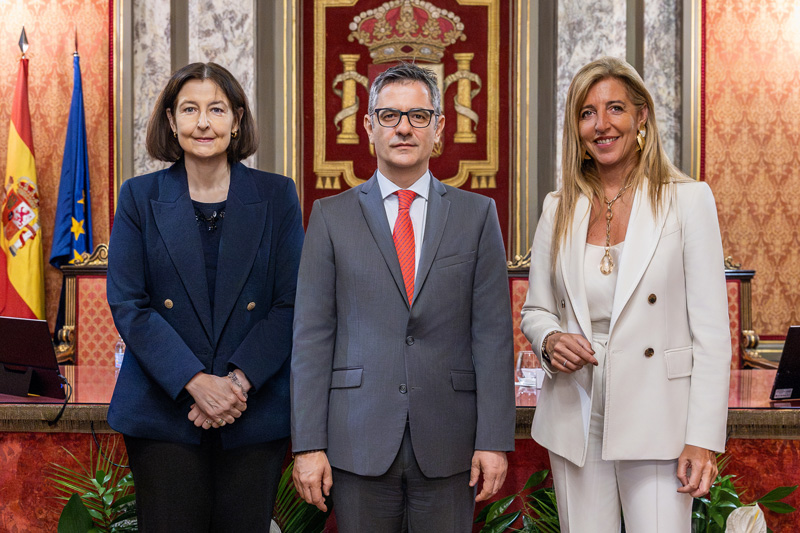
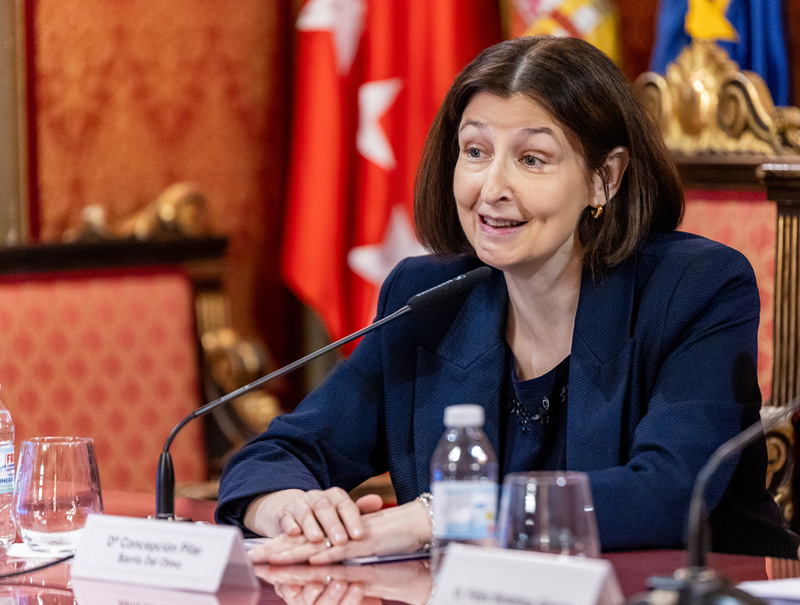
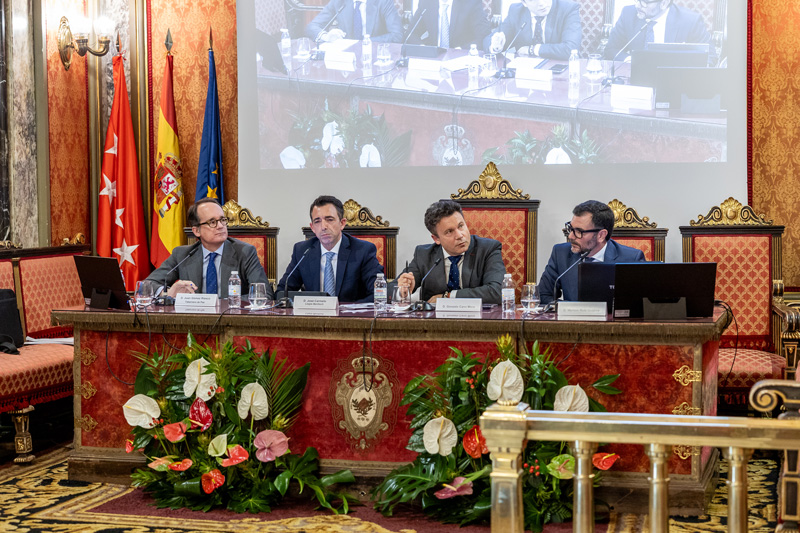
Concepción Barrio, Félix Bolaños y Teresa Rodríguez.

El Notariado en el aniversario del European Law Institute

Carlos Capa

El European Law Institute (ELI) nació en 2011 con un propósito tan sencillo como ambicioso: mejorar la calidad del Derecho en Europa a través del análisis jurídico y de la cooperación entre profesionales e instituciones. Hoy reúne a cerca de 1.800 miembros individuales y 180 institucionales. Trabaja en ámbitos tan sensibles como la armonización del Derecho europeo, la transformación digital, la inteligencia artificial y la cooperación judicial. Con esa tarjeta de visita celebró en Madrid su 15º aniversario.

En el Colegio Notarial de Madrid se reunieron representantes de primer nivel del mundo jurídico e institucional para hablar de Europa, de seguridad jurídica y de la función de las instituciones en un contexto en el que la tecnología, la cooperación y la protección de derechos ya no pueden tratarse como materias separadas. La jornada dejó una imagen muy precisa del momento: el ELI como espacio de encuentro, el Notariado como garante de confianza y las Administraciones como actores de una agenda jurídica en movimiento.


EL ENCUENTRO TUVO MUCHO DE CONMEMORACIÓN Y BASTANTE DE ADVERTENCIA: EL DERECHO EUROPEO NECESITA PUENTES, PERO TAMBIÉN NECESITA SOSTENERSE CON FIRMEZA


El encuentro tuvo mucho de conmemoración y bastante de advertencia: el Derecho europeo necesita puentes, pero también necesita sostenerse con firmeza en un tiempo de cambios rápidos y de certezas frágiles.

Puentes entre sistemas

La presidenta del Consejo General del Notariado (CGN), Concepción Pilar Barrio Del Olmo, manifestó ante los asistentes que “el Derecho europeo necesita instituciones que tiendan puentes entre las distintas tradiciones jurídicas, entre el mundo académico y la práctica profesional, entre la innovación y la protección de los derechos”, para añadir que el European Law Institute desempeña esa labor “con rigor, excelencia y visión de futuro”.


LOS PARTICIPANTES EN LA JORNADA COMPARTIERON EL MENSAJE DE REFORZAR LAS INSTITUCIONES JURÍDICAS EN UNA EUROPA QUE NECESITA MÁS COORDINACIÓN Y CONFIANZA


La presidenta del CGN situó el debate en un tiempo de transformaciones jurídicas, económicas, sociales, tecnológicas y geopolíticas que exigen respuestas más sofisticadas y cohesionadas. Defendió el papel del Notariado como institución pública al servicio de la seguridad jurídica preventiva, con capacidad para verificar identidades y capacidades jurídicas también en medios digitales y recordó que “ese control preventivo debe ir unido a la lucha contra el blanqueo de capitales, un terreno en el que el Notariado aporta herramientas concretas a través de su Órgano Centralizado de Prevención y de las bases de datos de titular real y de personas con responsabilidad pública”.

Convergencia normativa

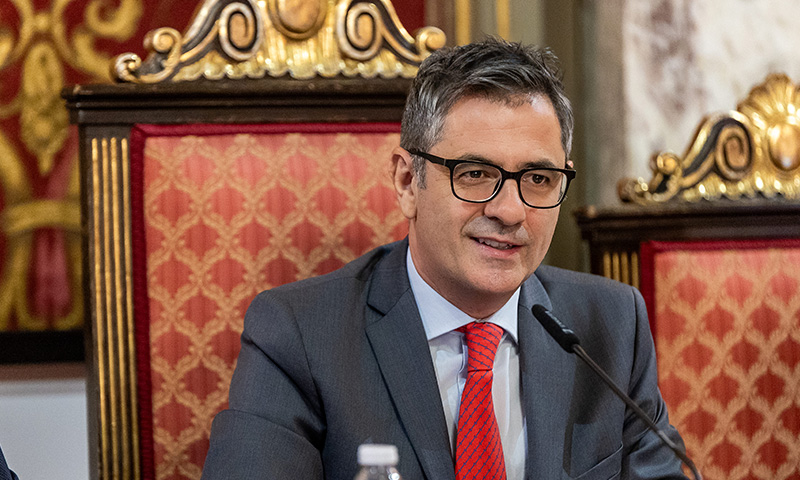
El Ministro de Presidencia, Justicia y Relaciones con las Cortes, Félix Bolaños, inauguró la jornada con un discurso de tono claramente europeísta, pero también reformista, defendiendo “la importancia del análisis comparado del Derecho como herramienta para modernizar los sistemas jurídicos nacionales” y llamó a aproximar el modelo español de investigación penal a los estándares mayoritarios en Europa, apostando por la convergencia normativa como vía para reforzar instituciones y mejorar la respuesta del sistema jurídico.

Bolaños señaló que era para él un honor “participar en estas jornadas que conmemoran el XV aniversario de la creación del ELI y, hacerlo en este entorno del Consejo General del Notariado y el Colegio Notarial de Madrid, donde realmente se pone de manifiesto la importancia y la solera que tiene el Notariado en nuestro país».


FÉLIX BOLAÑOS DEFENDIÓ “LA IMPORTANCIA DEL ANÁLISIS COMPARADO DEL DERECHO COMO HERRAMIENTA PARA MODERNIZAR LOS SISTEMAS JURÍDICOS NACIONALES”


En su opinión “ELI se ha convertido en una institución internacional referente en el estudio del Derecho europeo, desde el punto de vista normativo y jurisprudencial. No sólo aspira a un conocimiento teórico, doctrinal o académico, sino también, y más importante para las Administraciones Públicas, a mejorar el ordenamiento jurídico europeo a través de propuestas y recomendaciones a los legisladores y a los Gobiernos».

El ministro puso además en valor la convergencia de los ordenamientos jurídicos europeos sobre la base de “valores comunes como la democracia, la separación de poderes y la protección de los derechos de la ciudadanía”, añadiendo una advertencia que dio densidad política a la jornada: esos valores, dijo, no son irreversibles. Bolaños enlazó ese diagnóstico con el papel de España en iniciativas europeas sobre menores en entornos digitales, responsabilidad de plataformas y lucha contra contenidos ilícitos y manipulaciones digitales.


CONCEPCIÓN BARRIO SEÑALÓ QUE “EL DERECHO EUROPEO NECESITA INSTITUCIONES QUE TIENDAN PUENTES ENTRE LAS DISTINTAS TRADICIONES JURÍDICAS”


Lugar de cooperación

Por su parte. la presidenta del ELI, la profesora de la universidad Carlos III de Madrid, Teresa Rodríguez de las Heras, definió la razón de ser del instituto: actuar como lugar de cooperación entre academia, práctica profesional e instituciones en un terreno: el Derecho europeo, donde la comparación y la coordinación son ya parte del trabajo cotidiano, y situó el programa como  “un encuentro concebido para reflexionar sobre el papel del ELI en la articulación de respuestas comunes ante los nuevos desafíos jurídicos”.

De su mano descubrimos la actividad y el impacto que ha tenido en el ámbito jurídico europeo en estos 15 años, en una mesa redonda en la que participó junto con los vicepresidentes del ELI Geoffrey Vos y Pietro Sirena. 
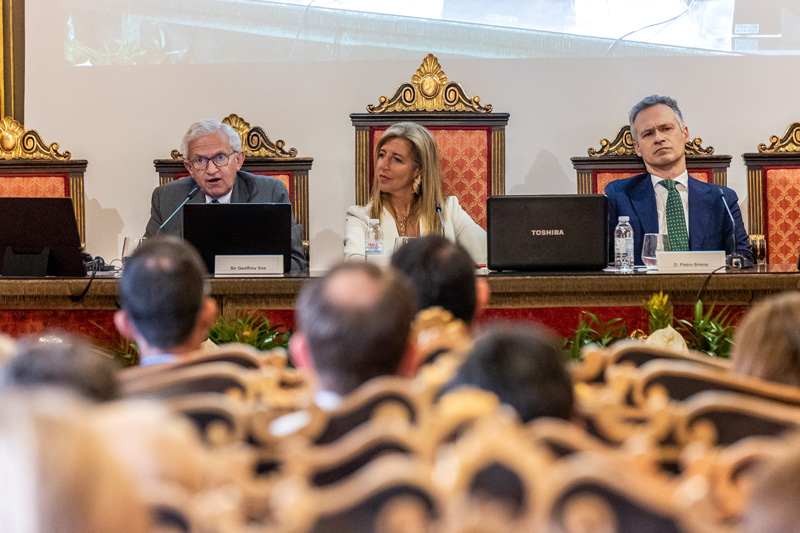
El primero señaló que “ELI reúne a las instituciones educativas, al sector tecnológico, al mundo académico y a expertos internacionales que trabajan para abordar los grandes desafíos jurídicos de nuestro tiempo». Se refirió particularmente a los retos tecnológicos y la irrupción de la inteligencia artificial: «Cuando trabajamos sobre el ámbito tecnológico, la colaboración entre operadores jurídicos y académicos de toda Europa resulta fundamental para proteger el Estado de Derecho y preservar nuestras democracias. Por ello, espero con ilusión los próximos cincuenta años de esta organización y la labor que seguirá desarrollando».  Por su parte, Pietro Sirena, señaló que «la evolución a futuro del Derecho europeo no depende tanto de la producción de nuevos instrumentos o reglamentos, como del desarrollo de una cultura, educación y práctica jurídica comunes». Además, hizo hincapié en que «un Derecho genuinamente europeo solo puede surgir si los juristas de Europa desarrollan un sentido compartido de comunidad; una comunidad en la que los distintos estilos, lenguas y sistemas jurídicos sigan siendo diversos, pero sean entendidos como expresiones de una historia compartida y una cultura jurídica común”.

Bajo la moderación de Teresa Rodríguez de las Heras conocimos las perspectivas de cuatro miembros fundadores del ELI sobre el desarrollo, evolución y proyección de la institución: Marc Schmitz, presidente de la Unión Internacional de Agentes Judiciales (UIHJ); Leo Netten, presidente honorario de la UIHJ; Noemí Alarcón, vicepresidenta del Consejo de la Abogacía Europea (CCBE) y Annerie Ploumen, vicepresidenta del Consejo de los Notariados de la Unión Europea (CNUE).


TERESA RODRÍGUEZ DE LAS HERAS DEFINIÓ LA JORNADA COMO “UN ENCUENTRO PARA REFLEXIONAR SOBRE LA ARTICULACIÓN DE RESPUESTAS COMUNES ANTE LOS NUEVOS DESAFÍOS JURÍDICOS”


En sus intervenciones hicieron un repaso de los logros alcanzados por el Instituto y destacaron el importante papel de ELI en la construcción del Derecho europeo, así como la necesidad de seguir colaborando entre instituciones para fortalecer el Estado de Derecho en la Unión Europea y la importancia de la cooperación profesional para afrontar los retos que trae consigo la digitalización.

El Notariado en la era digital

En su intervención final Concepción Pilar Barrio Del Olmo insistió en que “la función notarial está preparada para seguir desempeñando un control preventivo eficaz en un entorno digital, donde la verificación de la identidad y de la capacidad jurídica resulta cada vez más delicada”. La idea no es menor: en un ecosistema jurídico cada vez más automatizado, el valor de la intervención notarial se mide precisamente por su capacidad para dar seguridad antes de que surja el conflicto.

A eso se sumó la referencia al Anteproyecto de Ley de Integridad Pública, sobre el que la presidenta del Consejo General del Notariado expresó “preocupación por la falta de claridad en torno al papel de la escritura notarial”, recordando “que no toda reforma mejora por sí sola la arquitectura institucional”. Barrio Del Olmo cerró su intervención con una apelación a la colaboración del Ministerio de Justicia, especialmente en lo relativo a la lucha contra el blanqueo de capitales y la financiación del terrorismo. En conclusión: el control preventivo no puede rebajarse en nombre de la modernización.

Control preventivo

En la última mesa redonda de la jornada, moderada por el notario Gonzalo Cano, participaron José Carmelo Llopis, decano del Colegio Notarial de Valencia y delegado del CGN para Europa; Juan Gómez-Riesco, notario miembro de la Sección Internacional del CGN, y Marcos Ruiz, director de Negocio y Operaciones del Centro Tecnológico del Notariado.

José Carmelo Llopis señaló que la Unión Europea camina hacia un modelo en el que “la confianza se deposita en el origen primario del dato o atributo”, y si queremos atributos fiables “debemos mantener la autenticidad en el origen del dato”. En este sentido, remarcó que “el Notariado no sólo cumple con los requisitos del Derecho europeo para ser considerado fuente auténtica, sino que, además, por su propia configuración institucional y normativa, es el paradigma de dicha definición. Prescindir del Notariado como fuente auténtica implicaría debilitar la fiabilidad del sistema”.

Juan Gómez-Riesco abordó las novedades normativas que plantea el Régimen 28 de la UE, que propone la creación de un nuevo tipo societario El notario puso de relieve cuestiones y dudas que suscita, entre otras, la base jurídica empleada, así como «la necesidad de reforzar e incluir medidas de control preventivo adicionales que garanticen la máxima seguridad jurídica y una eficaz prevención del blanqueo de capitales, desde la constitución de la sociedad, a sus modificaciones, transmisión de participaciones sociales, disolución y liquidación».

Marcos Ruiz explicó el marco regulatorio y el funcionamiento de los wallet digitales de identidad que prepara la UE para ciudadanos y empresas.  «En el ámbito empresarial no basta con identificar a la persona o a la sociedad: hay que acreditar representación, facultades, vigencia y efectos jurídicos. La Business Wallet no sustituye a las fuentes auténticas: las necesita para que el atributo tenga valor jurídico», señaló. En ese mismo sentido, explicó que estas tecnologías «canalizan la actuación, pero realmente son las fuentes auténticas de información las que aportan validez jurídica a las operaciones. Automatizar no debe significar perder controles que aportan trazabilidad, análisis de riesgo y prevención, como la intervención notarial”.

Los participantes en la jornada compartieron el mensaje de reforzar las instituciones jurídicas en una Europa que necesita más coordinación, más confianza y más capacidad de respuesta. El ministro habló de convergencia; el Notariado, de puentes y control preventivo; el ELI, de cooperación y mejora del Derecho. No fue una suma de discursos paralelos, sino una convergencia de diagnósticos sobre el momento presente.

El ELI celebró su XV aniversario con una idea nítida: el Derecho europeo solo será fuerte si sigue siendo capaz de tender puentes entre tradición e innovación, entre práctica y teoría, entre seguridad y cambio, en definitiva, una llamada a seguir construyendo confianza.

Firma en el libro de honor

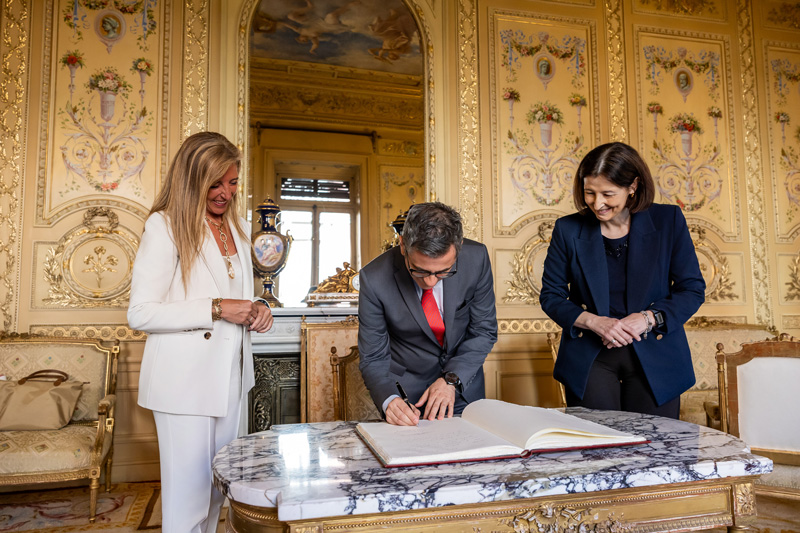
Previo a la inauguración del encuentro, el Ministro de Presidencia, Justicia y Relaciones con las Cortes, Félix Bolaños, firmó en el Libro de Honor del Colegio Notarial de Madrid, acompañado de Concepción Pilar Barrio Del Olmo, decana del mismo y presidenta de Consejo General del Notariado, y de Teresa Rodríguez de las Heras, presidenta del European Law Institute (ELI).

De izquierda a derecha: Teresa Rodríguez, Félix Bolaños y Concepción Barrio.
Concepción Barrio.

Cadena de seguridad

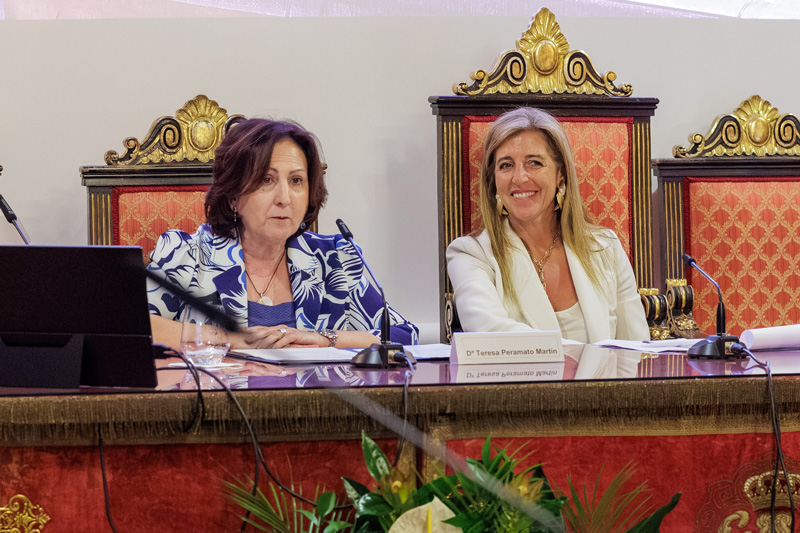
Para la Fiscal General del Estado, Teresa Peramato, “en estos 15 años ELI ha demostrado algo que nos parece muy valioso: que es posible un espacio independiente, plural y técnico capaz de abordar el Derecho desde diferentes perspectivas, pero también desde diferentes tradiciones públicas”.

En su ponencia sobre La justicia penal en el futuro ordenamiento jurídico europeo, Peramato subrayó que «el Estado de Derecho comienza en esa cadena institucional que arranca en la seguridad jurídica preventiva. Como parte de esa cadena de seguridad jurídica, resulta obligado reconocer el papel que han desempeñado los notarios, especialmente en la era digital, como parte activa y decisiva de esa arquitectura de protección”. También resaltó el papel de los fiscales en esa arquitectura europea del Estado de Derecho. “Son piezas esenciales de una cadena sostenida en redes de confianza y trabajo conjunto”. Una cadena que ya no es sólo nacional, sino europea. Por último, recalcó que «el Índice Único Informatizado Notarial y los sistemas de identificación de titularidad real constituyen hoy una herramienta estructural muy valiosa en la lucha contra la delincuencia económica». «Gracias a ellos es posible levantar con rapidez el velo de las estructuras societarias opacas; identificar a quienes se sitúan tras ellas, y proporcionar a los jueces, fiscales y fuerzas y cuerpos de seguridad una información que no solamente es fiable, sino que es completa y en tiempos compatibles con la complejidad de la criminalidad», detalló.

De izquierda a derecha: Teresa Peramato y Teresa Rodríguez.

La política comunitaria

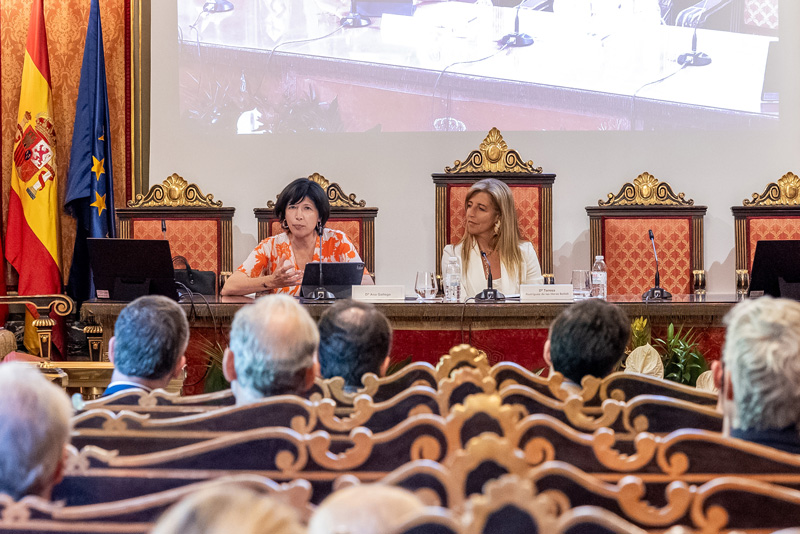
En la jornada participó la directora general de Justicia y Consumidores de la Comisión Europea, Ana Gallego Torres, que habló sobre la política comunitaria y el futuro del ordenamiento jurídico europeo. «Este aniversario sirve para reconocer el trabajo y contribución de ELI al proyecto europeo y a la construcción de una Unión basada en el Derecho, la Cooperación y la Justicia. Una labor que ha ayudado a transformar la experiencia en guías prácticas, a reforzar el tejido jurídico de Europa y a la evolución de las políticas de justicia de la UE», aseguró.
 «Hoy, la Justicia en el marco de las políticas de la UE es reconocida como un eje central en términos de potencia democrática, económica y geopolítica». También apuntó que «sin la confianza en que los productos jurídicos emanados de las instituciones de los Estados miembros son equivalentes, se rompen las bases del espacio europeo de seguridad, libertad y justicia». «En definitiva, la confianza de los ciudadanos y las empresas depende en gran medida de la aplicación del Derecho transfronterizo; de que el acceso a la justicia sea real, efectivo y no solamente teórico», concluyó.

De izquierda a derecha: Ana Gallego y Teresa Rodríguez.
De izquierda a derecha: Geoffrey Vos, Teresa Rodríguez y Pietro Sirena.
De izquierda a derecha: Juan Gómez-Riesco, José Carmelo Llopis, Gonzalo Cano y Marcos Ruiz.

EUROPEAN SCOPE

Félix Bolaños.

The Notariat on the anniversary of the European Law Institute

Carlos Capa

The European Law Institute (ELI) was founded in 2011 with a simple yet ambitious purpose: to improve the quality of law in Europe through legal analysis and cooperation between professionals and institutions. Today it has about 1,800 individual members and 180 institutional members. It works in sensitive areas such as the harmonization of European law, digital transformation, artificial intelligence, and judicial cooperation. With that business card, it celebrated its 15th anniversary in Madrid.

Representatives of the highest level of the legal and institutional world met at the Madrid Notary Association to discuss Europe, legal security and the role of institutions in a context in which technology, cooperation and the protection of rights can no longer be treated as separate issues. The day provided a very clear snapshot of the moment: the ELI as a meeting place, the notariat as a guarantor of trust, and the administrations as key players in a dynamic legal agenda.


THE MEETING WAS PART COMMEMORATION AND PART WARNING: EUROPEAN LAW NEEDS BRIDGES, BUT IT ALSO NEEDS TO STAND FIRM


The meeting was part commemoration and part warning: European law needs bridges, but it also needs to stand firm in a time of rapid change and fragile certainties.

Bridges between systems

The president of the General Council of Notaries (CGN), Concepción Pilar Barrio Del Olmo, told those present that “European law needs institutions that build bridges between different legal traditions, between the academic world and professional practice, between innovation and the protection of rights“, adding that the European Law Institute carries out this work “with rigour, excellence and a forward-looking vision‘.

The president of the CGN placed the debate in a time of legal, economic, social, technological, and geopolitical transformations that demand more sophisticated and cohesive responses. She defended the role of the Notary as a public institution serving preventive legal security, with the ability to verify identities and legal capacities, including in digital media, and recalled that “‘this preventive control must be combined with the fight against money laundering, an area in which the Notary provides concrete tools through its Centralized Prevention Body and the databases of beneficial owners and public officials“.


PARTICIPANTS IN THE EVENT SHARED THE MESSAGE OF STRENGTHENING LEGAL INSTITUTIONS IN A EUROPE THAT NEEDS MORE COORDINATION AND TRUST


Regulatory convergence

The Minister of the Presidency, Justice and Relations with the Cortes, Félix Bolaños, opened the day with a speech that was clearly pro-European, but also reformist, by defending “the importance of comparative analysis of law as a tool for modernizing national legal systems” and called for the Spanish model of criminal investigation to be brought closer to the majority standards in Europe, advocating regulatory convergence as a way to strengthen institutions and improve the response of the legal system.

Bolaños said it was an honour for him to «participate in these events commemorating the 15th anniversary of the creation of the ELI, and to do so in this setting of the General Council of Notaries and the Madrid Notary Association, where the importance and the long-standing tradition of the Notariat in our country are truly evident».

In his opinion, “ELI has become an international institution that is a benchmark in the study of European law, from the perspective of both regulations and case law. It does not only aspire to theoretical, doctrinal or academic knowledge, but also, and more importantly for Public Administrations, to improve the European legal system through proposals and recommendations to legislators and governments».

The minister also emphasised the convergence of European legal systems based on ”common values such as democracy, the separation of powers and the protection of citizens’ rights”, adding a warning that gave political weight to the day: these values, he said, are not irreversible. Bolaños linked this diagnosis to Spain’s role in European initiatives on minors in digital environments, platform responsibility, and the fight against illegal content and digital manipulation.


FÉLIX BOLAÑOS DEFENDED «THE IMPORTANCE OF COMPARATIVE LEGAL ANALYSIS AS A TOOL FOR MODERNIZING NATIONAL LEGAL SYSTEMS»


Place of cooperation

For her part, the president of the ELI, Professor Teresa Rodríguez de las Heras from Carlos III University of Madrid, defined the raison d’être of the institute: to act as a place of cooperation between academia, professional practice and institutions in one field: European law, where comparison and coordination are already part of everyday work.  She positioned the programme as ”a meeting designed to reflect on the role of the ELI in articulating common responses to new legal challenges”..

With her help, we discovered the activity and impact it has had in the European legal sphere over the last 15 years, in a roundtable discussion in which she participated alongside ELI Vice-Presidents Geoffrey Vos and Pietro Sirena. 
Vos noted that ”ELI brings together educational institutions, the technology sector, the academic world, and international experts who work to address the major legal challenges of our time”. He referred specifically to technological challenges and the emergence of artificial intelligence: «When we work in the technological sphere, collaboration between legal and academic operators from across Europe, it is essential to protect the rule of law and preserve our democracies. Therefore, I look forward to the next fifty years of this organization and the work it will continue to do».  For his part, Pietro Sirena pointed out that «the future development of European law does not depend so much on the production of new instruments or regulations, but on the development of a common legal culture, education and practice». In addition, he emphasized that «a genuinely European law can only emerge if European jurists develop a shared sense of community; a community in which different legal styles, languages, and systems remain diverse, but are understood as expressions of a shared history and a common legal culture».


CONCEPCIÓN BARRIO POINTED OUT THAT «EUROPEAN LAW NEEDS INSTITUTIONS THAT BUILD BRIDGES BETWEEN THE DIFFERENT LEGAL TRADITIONS»


Under the moderation of Teresa Rodríguez de las Heras, we heard the perspectives of four founding members of the ELI on the development, evolution, and future of the institution: Marc Schmitz, president of the International Union of Judicial Officers (UIHJ); Leo Netten, honorary president of the UIHJ; Noemí Alarcón, vice-president of the Council of the Bars and Law Societies of Europe (CCBE) and Annerie Ploumen, vice-president of the Council of Notaries of the European Union (CNUE).

In their speeches, they reviewed the achievements of the Institute and highlighted the important role of ELI in the construction of European law, as well as the need to continue collaborating between institutions to strengthen the rule of law in the European Union and the importance of professional cooperation to address the challenges posed by digitalization.


TERESA RODRÍGUEZ DE LAS HERAS DEFINED THE DAY AS “A MEETING TO REFLECT ON THE ARTICULATION OF COMMON RESPONSES TO NEW LEGAL CHALLENGES”


Notaries in the Digital Age

In her final speech, Concepción Pilar Barrio Del Olmo insisted that “the notarial function is prepared to continue performing effective preventive control in a digital environment, where the verification of identity and legal capacity is becoming increasingly delicate”. The idea is not insignificant: in an increasingly automated legal ecosystem, the value of notarial intervention is precisely measured by its ability to provide security before a conflict arises.

This was added to the reference to the Public Integrity Bill, on which the president of the General Council of Notaries expressed “concern about the lack of clarity surrounding the role of the notarial deed”; she recalled that “that not every reform improves the institutional architecture on its own”. Barrio Del Olmo concluded his speech with an appeal for cooperation from the Ministry of Justice, particularly in the fight against money laundering and the financing of terrorism. In conclusion: preventive control cannot be sacrificed in the name of modernization.

Preventive control

The last round table of the day, moderated by notary Gonzalo Cano, featured José Carmelo Llopis, dean of the Valencia Notarial Association and CGN delegate for Europe; Juan Gómez-Riesco, notary member of the International Section of the CGN, and Marcos Ruiz, Business and Operations Director of the Notarial Technology Centre.

José Carmelo Llopis pointed out that the European Union is moving towards a model in which ”trust is placed in the primary source of the data or attribute”, and if we want reliable attributes, “we must maintain authenticity at the source of the data”. In this regard, he emphasised that ”the Notary not only meets the requirements of European law to be considered an authentic source, but also, due to its own institutional and regulatory structure, is the paradigm of this definition. Doing away with the Notary as an authentic source would mean weakening the reliability of the system”.

Juan Gómez-Riesco addressed the regulatory changes brought about by EU Regulation 28, which proposes the creation of a new type of company. The notary highlighted the issues and doubts that it raises, among other things, the legal basis used, as well as «the need to strengthen and include additional preventive control measures that guarantee maximum legal certainty and effective prevention of money laundering, from the incorporation of the company, to its amendments, transfer of shares, dissolution and liquidation».

Marcos Ruiz explained the regulatory framework and the functioning of the digital identity wallets that the EU is preparing for citizens and businesses.  “In the business world, it is not enough to identify the person or company: representation, powers, validity and legal effects must also be proven. The Business Wallet does not replace authentic sources: it needs them for the attribute to have legal value”, he pointed out. In the same vein, he explained that these technologies “channel the action, but it is really the authentic sources of information that provide legal validity to the operations. Automation should not mean losing controls that provide traceability, risk analysis, and prevention, such as notarial intervention».

Participants in the event shared the message of strengthening legal institutions in a Europe that needs more coordination, trust, and responsiveness. The minister spoke of convergence; the Notariat, of bridges and preventive control; the ELI, of cooperation and the improvement of law. It was not a sum of parallel speeches, but a convergence of diagnoses about the present moment.

ELI celebrated its 15th anniversary with a clear idea: European law will only be strong if it continues to be able to build bridges between tradition and innovation, between practice and theory, between security and change, in short, a call to continue building trust.

Concepción Barrio, Félix Bolaños and Teresa Rodríguez.

Sign the guestbook

Prior to the opening of the meeting, the Minister of the Presidency, Justice and Relations with the Courts, Félix Bolaños, signed the Guestbook Madrid Notary Association, accompanied by Concepción Pilar Barrio Del Olmo, dean of that institution and president of the General Council of Notaries, and Teresa Rodríguez de las Heras, president of the European Law Institute (ELI).

Concepción Barrio.

Safety chain

For the Spanish Attorney General, Teresa Peramato, “in these 15 years, ELI has demonstrated something that we regard as highly valuable: that an independent, plural and technical space is possible, capable of addressing the law from different perspectives, but also from different public traditions”.

In her presentation on Criminal Justice in the Future European Legal Order, Peramato emphasised that “the Rule of Law begins in that institutional chain that starts with preventive legal security. As part of this chain of legal security, it is mandatory to recognize the role that notaries have played, especially in the digital age, as an active and decisive part of this protection architecture». She also highlighted the role of prosecutors in this European architecture of the Rule of Law. «They are essential pieces of a chain sustained by networks of trust and collaboration». A chain that is no longer just national, but European. Finally, she emphasized that «the Computerized Single Notarial Information Index and the systems for identifying beneficial ownership are now a very valuable structural tool in the fight against economic crime. These enable us to swiftly lift the veil of opaque corporate structures; identify those behind them; and provide judges, prosecutors, and law enforcement agencies with information that is not only reliable but also complete and delivered within a timeframe compatible with the complexity of the criminality,” she explained.

From left to right: Teresa Rodríguez, Félix Bolaños and Concepción Barrio.

EU Policy

The Director General for Justice and Consumers of the European Commission, Ana Gallego Torres, participated in the event, speaking about the European Union’s policy and the future of European legal order. This anniversary serves to recognize the work and contribution of ELI to the European project and the construction of a Union based on Law, Cooperation and Justice. «This work has helped transform experience into practical guidelines, strengthen the legal fabric of Europe, and advance the EU’s justice policies,» she said.
 Today, justice within the framework of EU policies is recognized as a central pillar in terms of democratic, economic, and geopolitical power. Se also pointed out that «without confidence that the legal products emanating from the institutions of the Member States are equivalent, the foundations of the European area of security, freedom and justice are broken. «Ultimately, the trust of citizens and businesses depends largely on the application of cross-border law; on whether access to justice is real, effective, and not just theoretical,» she concluded.

60 From left to right: Teresa Peramato and Teresa Rodríguez.
From left to right: Ana Gallego and Teresa Rodríguez.
From left to right: Geoffrey Vos, Teresa Rodríguez, and Pietro Sirena.
From left to right: Juan Gómez-Riesco, José Carmelo Llopis, Gonzalo Cano and Marcos Ruiz.

15º aniversario del European Law Institute, por Teresa Rodríguez de las Heras. Presidenta del ELI

PROTECCIÓN AL CONSUMIDOR

ÁMBITO EUROPEO

TERESA RODRÍGUEZ DE LAS HERAS BALLELL,

Presidenta del European Law Institute (ELI) Catedrática de Derecho Mercantil, Universidad Carlos III de Madrid

Superado el hartazgo de una actividad regulatoria ciertamente desaforada debe venir la calma, pero no la quietud, y menos aún la parálisis"

El 15º aniversario de la fundación del European Law Institute

El 1 de junio de 2026 marca el 15º aniversario de la fundación del European Law Institute (ELI)1. Los aniversarios son ocasiones para la memoria y la celebración por lo logrado, pero son, sobre todo, momentos de reflexión sobre el presente y ocasiones singularmente fértiles para pensar el futuro. Tres lustros podrían parecer una corta historia, sin embargo, en estos quince años, el ELI ha ganado dimensión, escala e influencia de forma extraordinaria y se ha convertido en un foro independiente de referencia, en un catalizador del debate de política legislativa a nivel global, y en un promotor de la reforma y la modernización legislativas con instrumentos de soft-law en todas las áreas del Derecho2.

Multilateralismo cuestionado

El ELI celebra su joven aniversario en un contexto internacional radicalmente diferente, con un multilateralismo frontalmente cuestionado, unas organizaciones internacionales intencionadamente debilitadas para convertir las delicadamente tejidas relaciones de cooperación en oportunistas interacciones desiguales entre Estados, guiadas por la insensible lógica transaccional, y una escena geopolítica turbulenta, fracturada y lastrada por la desconfianza. Tras décadas de construcción robusta y leal de una comunidad jurídica global, el presente muestra que vivimos en la “Era de la Fragilidad”, una alarmante fragilidad multidimensional. Las fracturas del presente evidencian una triple fragilidad del mundo contemporáneo: la fragilidad del planeta, que nos enfrenta al reto, esperemos que no demasiado tardío e irremediable, de hacer nuestras sociedades sostenibles; la fragilidad del ser humano, expuesto principalmente hoy por la Inteligencia Artificial (IA) al dilema apabullante de imaginar futuros utópicos de trascendencia o de temer los horizontes más distópicos que encierran incluso un genuino riesgo existencial; y la fragilidad de la Ley y del Estado de derecho, sumidos en un ataque sistemático y descarado y enfrentados a sus propias limitaciones inherentes de legitimidad, justicia y eficacia. Consciente de este presente, el ELI ha hecho suya esta fragilidad como misión, ha interiorizado estas fragilidades, que ha convertido en sus ejes de reflexión, de acción y de propuesta para la adopción de sus instrumentos de política y reforma legislativas3.

Raíces europeas

Las raíces europeas del ELI la hacen también sensible al radical cambio estratégico con que la Unión Europea se ha enfrentado a este nuevo, ciertamente imprevisible e incómodo, contexto geopolítico. Tras el intenso despliegue normativo y regulatorio con el que la UE cerró el ciclo 2019-2024 – Comisión Von der Leyen I – se aboga ahora por una “simplification revolution”. Esta estrategia de simplificación está tensionada por dos fuerzas, una externa y otra interna. Una geopolítica, en la que se defiende, ya sin contención alguna, una retórica antiregulación que cuestiona radicalmente todo marco de derecho internacional y, en particular, los esfuerzos dirigidos a la gobernanza de la IA, acusando toda regulación en este sentido de excesos e ineficiencias, de intromisión en el mercado y del fracaso de un modelo económico europeo en declive. Este argumentario ha calado con gran facilidad en un terreno ya abonado por el diagnóstico y las advertencias y recomendaciones de los Informes Draghi y Letta, sobre el futuro de Europa. Las preocupaciones, legítimas e identificadas con finura y agudeza por sus autores, sobre el impacto de la regulación (excesiva) en la competitividad, la innovación y la prosperidad de Europa, han dado razones a la repetidamente alegada “fatiga regulatoria”.

Sin embargo, a pesar de la hostilidad del entorno geopolítico en el que la UE debe bracear, la sensatez de una “pausa regulatoria” no debe conducir a la temeridad de una retirada del terreno global o una renuncia al modelo europeo. La UE debe luchar por preservar y reforzar su soberanía digital y apuntalarla en el modelo de valores europeo. Esta soberanía digital naturalmente requiere financiación, tejido industrial, ciencia básica y aplicada e innovación tecnológica. Pero además acción política, compromiso ciudadano y un marco normativo facilitador que mire hacia los nuevos horizontes (IA sostenible, IA agéntica, computación cuántica, robots polifuncionales) y anticipe el escenario, que propongo, de las sociedades híbridas4.

Superado el hartazgo de una actividad regulatoria ciertamente desaforada debe venir la calma, pero no la quietud, y menos aún la parálisis y la retirada de la escena internacional. La pasividad por temor a ahondar en un problema que debe resolverse con acciones adecuadas es tan perniciosa como la respuesta excesiva o desencaminada.

La gobernanza de la IA

En este contexto, la gobernanza de la IA se ha convertido en un eje vertebrador de las estrategias de sostenibilidad, de soberanía digital y de resiliencia jurídica, tecnológica y social. Por ello, pensar y consensuar un modelo para la IA es pensar y consensuar un modelo de sociedad que incorpora la reflexión y la acción sobre las tres dimensiones de la fragilidad actual. Es un posicionamiento ante el reto de la sostenibilidad; una respuesta a los peligros y las promesas de una economía de la IA, hoy asimétrica, desigual, con altísimos niveles de integración vertical y preocupantes grados de concentración empresarial; y, finalmente, un desafío a la resiliencia del Estado de derecho.

Abogamos por superar una visión reduccionista de la IA como simple producto y entenderla también como una palanca cultural y de construcción civilizatoria. La prometida estrategia “AI Continent” para la UE requiere articular también estructuras jurídicas facilitadoras de la adopción de la IA – con un marco jurídico-privado para la “Economía de Agentes de IA”5–, ofrecer instrumentos de certidumbre y previsibilidad al mercado6, acompañar su incorporación con el liderazgo científico y técnico en computación cuántica y otras áreas de pensamiento y desarrollo humanista, y apostar por un uso responsable de la IA en todos los frentes que, lejos de una simplista visión instrumentalista de la IA, se atreva a pensar el mundo en términos imaginarios de “hibridación”.

[1] Sobre la institución, su origen, sus objetivos y su misión, https://www.europeanlawinstitute.eu/about-eli/.
[2] El ELI cuenta con 1800 miembros individuales que recorren todas las profesiones jurídicas y representan hoy la comunidad jurídica en 64 países y con 200 miembros institucionales, que reflejan las raíces europeas de la institución, pero la clara vocación internacional: https://www.europeanlawinstitute.eu/membership/current-members/.
[3] Tres ejes temáticos que ordenan la amplia actividad del ELI, sus proyectos y sus instrumentos: Rule of Law and the Convergence of Legal Systems; Law and Governance for the Digital Age; Climate Justice and Sustainable Societies.
[4] Teresa Rodríguez de las Heras Ballell, “Editorial: The Next Frontier for Private Law: Envisioning Rules and Constructing Legal Fictions for an AI-Human Hybrid Society”, Journal of European Consumer and Market Law (EuCML), Vol. 15, Issue 1 (2026) pp. 1 – 5.
[5] El ELI ha aprobado sus Guiding Principles and Model Rules on Digital Assistants for Consumer Contracts, en línea con las iniciativas internacionales de CNUDMI/UNCITRAL con la adopción de la Ley Modelo de Contratación Automatizada.
[6] Con el proyecto de ELI Model Contractual Terms on Automated Contracting and Digital Assistants in Business and Consumer Transactions (B2C and B2B), in collaboration with UNCITRAL Contractual Terms.

EUROPEAN SCOPE

TERESA RODRÍGUEZ DE LAS HERAS BALLELL,

President of the European Law Institute (ELI) Senior lecturer in Commercial Law, Carlos III University of Madrid

Now that we have overcome the weariness caused by what was certainly an excessive level of regulatory activity, calm must now set in – but not stagnation, and certainly not paralysis."

The 15th anniversary of the founding of the European Law Institute


1 June 2026 marks the 15th anniversary of the founding of the European Law Institute (ELI)1. Anniversaries are occasions to remember and celebrate what has been achieved, but they are, above all, moments to reflect on the here and now and particularly valuable opportunities to think about the future. Three lustrums may seem like a short period of time; however, over these fifteen years, the ELI has grown extraordinarily in scope, scale and influence, and has become a leading independent forum, a catalyst for global debate on legislative policy, and a promoter of legislative reform and modernisation through soft-law instruments in all areas of law2.

Multilateralism under scrutiny

The ELI is celebrating its first anniversary against a radically different international backdrop, with multilateralism coming under direct challenge, international organisations deliberately weakened in order to transform delicately woven cooperative relationships into opportunistic, unequal interactions between States guided by a callous transactional logic, and a turbulent, fractured geopolitical landscape weighed down by mistrust. After decades of steadfast and committed efforts to build a global legal community, the current situation shows that we are living in the “Age of Fragility” – a period of alarming, multidimensional fragility. Fractures in the here and now reveal a threefold fragility in the contemporary world: the fragility of the planet, which confronts us with the challenge – hopefully not too late and not yet irreversible – of making our societies sustainable; the fragility of human beings, who are today exposed, primarily by Artificial Intelligence (AI), to the overwhelming dilemma of either imagining utopian futures of transcendence or fearing the most dystopian horizons, which even harbour a genuine existential risk; and the fragility of the Law and the Rule of Law, which are under systematic and brazen attack and confronted with their own inherent limitations in terms of legitimacy, justice and effectiveness. Aware of this reality, the ELI has embraced this fragility as its mission; it has internalised these fragilities, turning them into the cornerstones of its reflection, action and proposals for the adoption of its policy instruments and legislative reforms3.

European roots

The ELI’s European roots also make it sensitive to the radical strategic shift with which the European Union has responded to this new, certainly unpredictable and uncomfortable, geopolitical context. Following the intensive legislative and regulatory drive with which the EU brought the 2019–2024 cycle to a close, Von der Leyen’s 1st Mandate, there is now a call for a “simplification revolution”. This simplification strategy is subject to pressure from two forces, one external and the other internal. A geopolitical landscape in which an anti-regulation rhetoric is now being championed without any restraint whatsoever, radically calling into question the entire framework of international law and, in particular, efforts aimed at governing AI, whilst accusing any regulation in this regard of excesses and inefficiencies, of market interference and of the failure of a European economic model in decline. This line of argument has taken root very easily in a climate already prepared by the analysis, warnings and recommendations contained in the Draghi and Letta reports on the future of Europe. The concerns – which are legitimate and have been identified with subtlety and insight by the authors – regarding the impact of (excessive) regulation on Europe’s competitiveness, innovation and prosperity have provided grounds for the frequently cited “regulatory fatigue”.

However, despite the hostile geopolitical environment in which the EU must operate, the wisdom of a “regulatory pause” must not lead to the recklessness of withdrawing from the global stage or abandoning the European model. The EU must strive to preserve and strengthen its digital sovereignty and anchor it in the European values-based model. This digital sovereignty naturally requires funding, an industrial base, basic and applied science, and technological innovation. But also political action, civic engagement and a supportive regulatory framework that looks towards new horizons (sustainable AI, agentic AI, quantum computing, multifunctional robots) and anticipates the scenario – which I propose – of hybrid societies4.

Having overcome the weariness caused by what was certainly an excessive level of regulatory activity, calm must now set in – but not stagnation, and certainly not paralysis or withdrawal from the international stage. Passivity based on a fear of delving into a problem that needs to be resolved through appropriate action is just as harmful as an excessive or misguided response.

AI governance

In this context, AI governance has become a cornerstone of strategies for sustainability, digital sovereignty and legal, technological and social resilience. Therefore, devising and agreeing on a model for AI means devising and agreeing on a model for society that incorporates reflection and action on the three dimensions of our current fragility. It is a stance in the face of the challenge of sustainability; a response to the dangers and promises of an AI-driven economy – which is currently asymmetrical and unequal, with extremely high levels of vertical integration and worrying degrees of corporate concentration; and, finally, a challenge to the resilience of the Rule of Law.

We advocate moving beyond a reductionist view of AI as merely a product and also understanding it as a cultural catalyst and a force for the development of civilisation. The proposed “AI Continent” strategy for the EU must also establish legal structures that facilitate the adoption of AI – including a private-law framework for the “AI Agents Economy”5, to provide the market with tools that ensure certainty and predictability6, to support its implementation through scientific and technical leadership in quantum computing and other areas of humanistic thought and development, and to commit to the responsible use of AI on all fronts – a commitment which, far from a simplistic, instrumentalist view of AI, dares to think of the world in imaginative terms of “hybridisation”.

[1] To find out more about the organisation, its origins, objectives and mission, please visit https://www.europeanlawinstitute.eu/about-eli/.
[2] The ELI has 1,800 individual members spanning the entire legal profession, who today represent the legal community in 64 countries, and 200 institutional members, reflecting the organisation’s European roots but also its clear international focus: https://www.europeanlawinstitute.eu/membership/current-members/.
[3] Three thematic areas that underpin the ELI’s wide-ranging activities, projects and tools: Rule of Law and the Convergence of Legal Systems; Law and Governance for the Digital Age; Climate Justice and Sustainable Societies.
[4] Teresa Rodríguez de las Heras Ballell, “Editorial: The Next Frontier for Private Law: “Envisioning Rules and Constructing Legal Fictions for an AI-Human Hybrid Society”, Journal of European Consumer and Market Law (EuCML), Vol. 15, Issue 1 (2026) pp. 1 – 5.
[5]The ELI has endorsed its Guiding Principles and Model Rules on Digital Assistants for Consumer Contracts, in line with the international initiatives of UNCITRAL following the adoption of the Model Law on Automated Contracting.
[6]Through the project entitled ELI Model Contractual Terms on Automated Contracting and Digital Assistants in Business and Consumer Transactions (B2C and B2B), in collaboration with UNCITRAL Contractual Terms.

Sucesiones internacionales

ÁMBITO EUROPEO

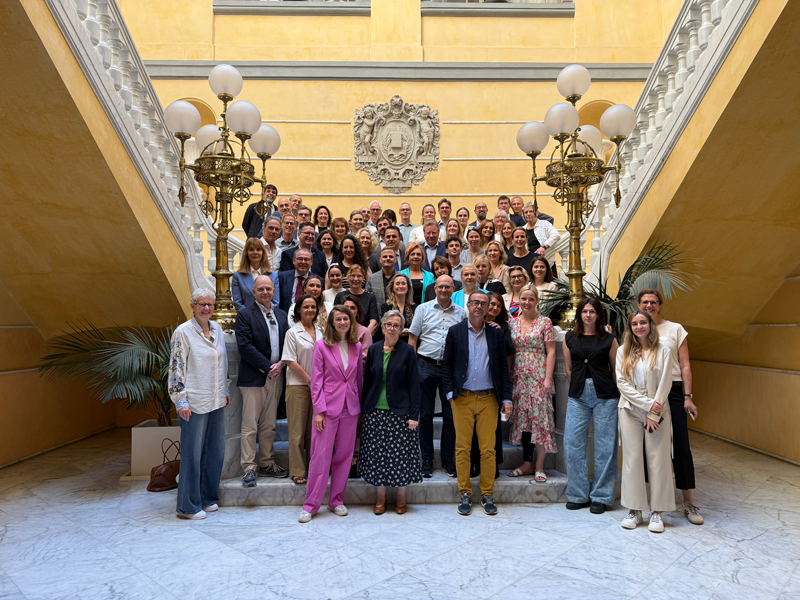
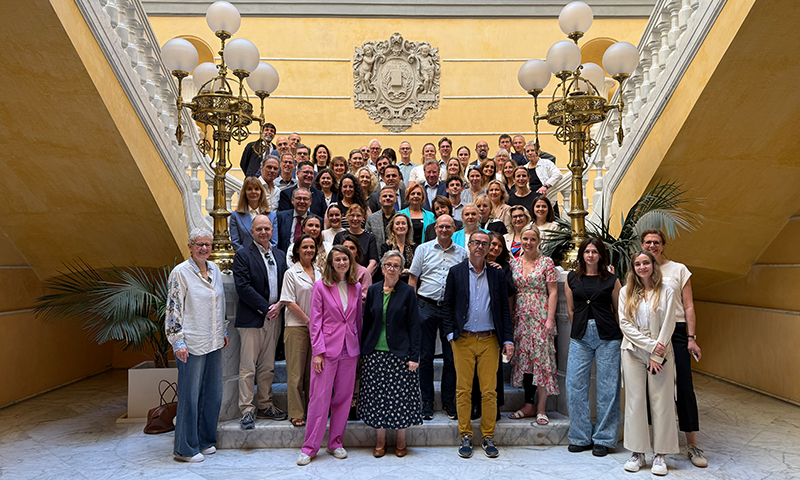
Ponentes y asistentes de la Conferencia anual sobre Derecho europeo de sucesiones, celebrada en el Colegio Notarial de Cataluña.

Sucesiones internacionales

Elena Domínguez Romero

La movilidad de los ciudadanos, la existencia de patrimonios repartidos entre varios países y la diversidad de los sistemas civiles han convertido las sucesiones transfronterizas en una realidad cotidiana. Notarios, jueces, abogados y académicos de toda Europa se reunieron en Barcelona los días 21 y 22 de mayo precisamente para hablar sobre ello en la Conferencia anual sobre Derecho europeo de sucesiones, celebrada en el Colegio Notarial de Cataluña.

En el foro, organizado por la Academy of European Law (ERA), se debatió sobre un fenómeno cada vez menos excepcional: una persona vive en un país, tiene bienes en otro, herederos en un tercero y ha otorgado testamento conforme a una ley de un país diferente; poniendo el foco, especialmente, en la jurisprudencia reciente del Tribunal de Justicia de la Unión Europea, el Certificado Sucesorio Europeo y la función notarial. También se abordó la repercusión de la creciente digitalización en las cuestiones sucesorias y la futura revisión del Reglamento Europeo de Sucesiones.


CADA VEZ ES MÁS COMÚN QUE UNA PERSONA VIVA EN UN PAÍS, TENGA BIENES EN OTRO Y HEREDEROS EN UN TERCERO


Una Europa sin fronteras

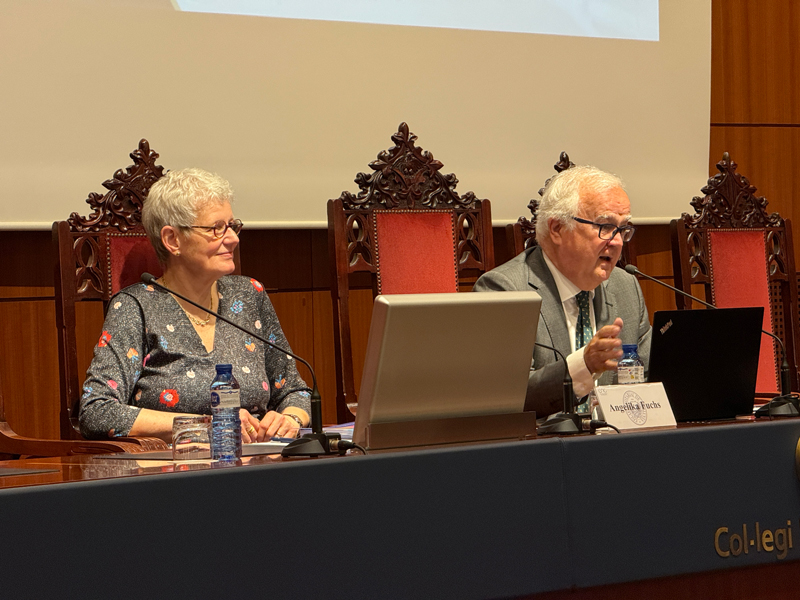
La conferencia fue inaugurada por José Alberto Marín, decano del Colegio Notarial de Cataluña, y Angelika Fuchs, jefa de la Sección de Derecho privado europeo de ERA. Marín subrayó en su intervención “el papel del Reglamento Europeo de Sucesiones en la creación de una Europa real y sin fronteras, que está permitiendo formalizar las herencias de una manera mucho más fácil y eficiente para el ciudadano.” Fuchs, por su parte, destacó la importancia de los temas tratados, que “reflejan las realidades complejas de planificar y liquidar herencias en un contexto plenamente transfronterizo”.

El primer bloque del foro abordó la jurisprudencia del Tribunal de Justicia de la Unión Europea (TJUE) de la mano de Gottfried Musger, presidente de Sala del Tribunal Supremo de Austria, quien presentó varios casos recientes.


EL REGLAMENTO EUROPEO DE SUCESIONES PARTE DE DOS PRINCIPIOS: UNIDAD Y UNIVERSALIDAD, QUE PERMITEN APLICAR UNA SOLA LEY A TODA LA HERENCIA


Por otro lado, Cristina González Beilfuss, catedrática de Derecho internacional privado de la Universitat de Barcelona, se centró en la ley aplicable. Subrayó que “el Reglamento Europeo de Sucesiones parte de dos principios, unidad y universalidad, que permiten aplicar una sola ley a toda la herencia, con independencia de dónde estén los bienes. Esa regla facilita la libre circulación de resoluciones y documentos, pero no elimina todos los problemas”. El más evidente es la residencia habitual, ya que no se identifica automáticamente con el empadronamiento ni con la residencia fiscal y exige una valoración global de la vida del causante. “Los jubilados europeos que pasan gran parte del año en España, pero mantienen vínculos familiares, económicos o administrativos con su país de origen, muestran la dificultad” apuntó. También lo hacen los ciudadanos globales, con varias nacionalidades y patrimonios dispersos, o las personas mayores dependientes cuya residencia cambia por decisión de sus familiares.

A ello se suma la professio iuris, es decir, la posibilidad de elegir la ley nacional para regir la sucesión. Se trata de una herramienta útil, pero no debería usarse de forma automática. Elegir la ley de la nacionalidad no solo afecta a la legítima; también condiciona la ejecución de la herencia, la responsabilidad por deudas, los poderes de los administradores y la coordinación con otros sistemas. Además, en España la cuestión se complica por la existencia de diversos derechos civiles.


EL CERTIFICADO SUCESORIO EUROPEO (CSE) POSIBILITA ACREDITAR EN OTRO ESTADO MIEMBRO LA CONDICIÓN DE HEREDERO, LEGATARIO, ADMINISTRADOR O EJECUTOR


Certificado Sucesorio Europeo

El Certificado Sucesorio Europeo (CSE) fue uno de los grandes ejes del congreso. Concebido como una especie de pasaporte sucesorio, permite acreditar en otro Estado miembro la condición de heredero, legatario, administrador o ejecutor. Su balance, sin embargo, es desigual. “En algunos países se usa con normalidad, mientras que en otros, en cambio, los certificados nacionales siguen desplazándolo”, aseguró Patrick Wautelet, catedrático de la Universidad de Lieja.

Ioana Olaru, formadora del Instituto Notarial Rumano, y Jens Kleinschmidt, catedrático de la Universidad de Tréveris, pusieron el acento en los problemas de contenido del CSE: qué bienes deben identificarse, qué ocurre cuando hay impugnaciones y hasta dónde puede llegar la autoridad emisora. Por su parte, la autoridad emisora debe verificar información, valorar pruebas, identificar beneficiarios y, en su caso, describir bienes o facultades. El problema aparece cuando hay impugnaciones. El TJUE ha señalado que, si los elementos a certificar están discutidos, la autoridad emisora no puede resolver el litigio dentro del procedimiento de expedición. Aunque la objeción parezca infundada, debe acudir al cauce judicial o al recurso correspondiente.

Planificación patrimonial

La planificación patrimonial abrió otro frente. Frans Sonneveldt, catedrático de la Universidad de Leiden, abordó la fiscalidad de las herencias ante el TJUE y recordó que la doble imposición sucesoria sigue siendo una de las grandes frustraciones de los ciudadanos europeos. “Un mismo patrimonio puede quedar gravado por la residencia del causante, la residencia de los herederos, la nacionalidad o la ubicación de los bienes. El TJUE ha corregido tratamientos discriminatorios, por ejemplo, en deducciones de deudas, reducciones personales o valoración de activos situados en otro Estado, pero no puede resolver por sí solo la doble imposición cuando los Estados ejercen soberanamente sus competencias fiscales.” La solución ideal planteada es tan sencilla como difícil: una herencia: un impuesto de sucesiones. Mientras no exista un convenio multilateral europeo, la planificación seguirá combinando testamentos, pactos sucesorios, regímenes matrimoniales, sociedades, trusts, fundaciones y otras entidades patrimoniales.

En el bloque dedicada a la planificación patrimonial, Guillermo Palao Moreno, catedrático de la Universitat de València y presidente de la Asociación Española de Profesores de Derecho Internacional y Relaciones Internacionales, habló sobre la interacción entre Derecho de sociedades y sucesiones, mientras que Troels Rovsing Koch, por su parte, trató la protección de activos y sus límites frente al Derecho imperativo. El mensaje fue común: planificar no es esconder el patrimonio, sino ordenar su transmisión respetando las normas de protección de herederos, acreedores y terceros.


EL NOTARIO DEBE AUTORIZAR HERENCIAS APLICANDO NORMAS ESTATALES, AUTONÓMICAS, EUROPEAS Y EXTRANJERAS


El papel del Notariado

La segunda jornada del congreso se centró en el papel del Notariado en las sucesiones internacionales y el futuro de estas. Antonio Ripoll Soler, notario de Alicante, explicó la función del notario en España como pieza de seguridad jurídica preventiva, en un contexto de coexistencia de diversas legislaciones civiles autonómicas y de convenios de doble nacionalidad. “Estas legislaciones están en un plano horizontal. El Código Civil no está por encima de ellas, y eso ha generado abundante jurisprudencia y resoluciones de la Dirección General de Seguridad Jurídica y Fe Pública. Todo ello sitúa al notario en el centro del problema, porque debemos autorizar herencias aplicando normas estatales, autonómicas, europeas y extranjeras.”

Por otro lado, Anna Wysocka-Bar, profesora adjunta de la Universidad Jaguelónica de Cracovia, repasó la evolución de la digitalización en el ámbito de la Justicia, que ha dado origen a herramientas digitales como el Portal Europeo de e-Justice o el Reglamento de Justicia Digital, que incorpora la comunicación electrónica, las videoconferencias, las firmas y los sellos electrónicos y el pago electrónico de tasas a las sucesiones transfronterizas. “Este reglamento pretende modernizar el marco legislativo de los procedimientos transfronterizos sobre la base del principio de “digital por defecto”. Esto es, las administraciones públicas ofrecen sus servicios primordialmente en formato digital, como opción preferente, pero manteniendo el uso de los canales tradicionales con el objetivo de no excluir a quienes no tienen acceso o competencias digitales.”

Para finalizar, Maria Vilar Badia, miembro de la Dirección General de Justicia y Consumidores de la Comisión Europea, hizo balance sobre los diez años de aplicación del Reglamento Europeo de Sucesiones y aseguró que “aunque el informe de aplicación aún no está en marcha, la Comisión está trabajando en la digitalización del Reglamento de Sucesiones y en algunas mejoras técnicas, detectadas gracias a cartas de ciudadanos, comunicaciones de profesionales y aportaciones de los Estados miembros.” Entre sus prioridades figuran simplificar el formulario del CSE, su expedición bilingüe obligatoria, crear vías no legislativas para reducir la reticencia de los bancos a aceptar el CSE, crear mensajes electrónicos predefinidos para dar respuesta a las solicitudes de información y explorar registros interconectados de certificados.

Angelika Fucks, jefa de la Sección de Derecho privado europeo de la Academy of European Law (ERA), y José Alberto Marín, decano del Colegio Notarial de Cataluña, en la inauguración de la conferencia.

EL NOTARIO EN LAS SUCESIONES INTERNACIONALES

En las sucesiones internacionales, el notario desempeña una función clave de seguridad jurídica preventiva. Debe comprobar si existe competencia internacional, identificar la ley aplicable, verificar el título sucesorio, recabar certificados, localizar bienes y orientar a los herederos sobre los pasos fiscales y registrales. Su labor no consiste solo en autorizar una escritura, también debe advertir de los efectos de la ley extranjera, comprobar la validez de documentos y facilitar la coordinación entre ordenamientos.

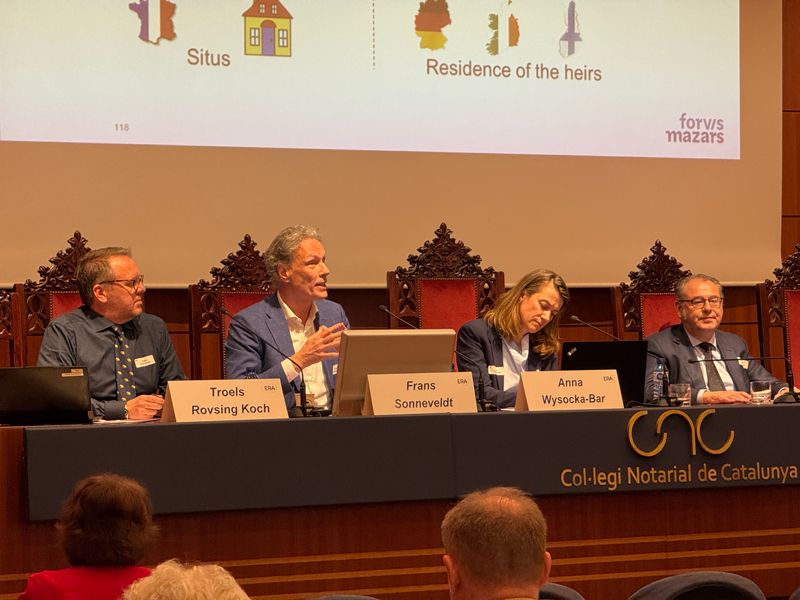
De izquierda a derecha, Troels Rovsing, abogado de Copenhague; Frans Sonneveldt, catedrático de la Universidad de Leiden; Anna Wysocka-Bar, profesora adjunta de la Universidad Jaguelónica de Cracovia; y Guillermo Palao, catedrático de la Universitat de València, en la mesa redonda sobre planificación patrimonial.

LA PLURALIDAD CIVIL EN ESPAÑA

Durante la celebración del congreso se puso el foco en una de las singularidades del ordenamiento español: la coexistencia de varios derechos civiles territoriales con regulación propia en materia de sucesiones. Esta pluralidad adquiere especial importancia en el contexto del Reglamento Europeo de Sucesiones. Cuando la norma remite al Derecho español como ley aplicable, no basta con identificar el Estado, también hay que determinar qué Derecho civil interno resulta competente. En esta línea, se debatió sobre si la professio iuris permite elegir directamente un Derecho civil territorial o si la elección debe referirse necesariamente a la ley estatal.

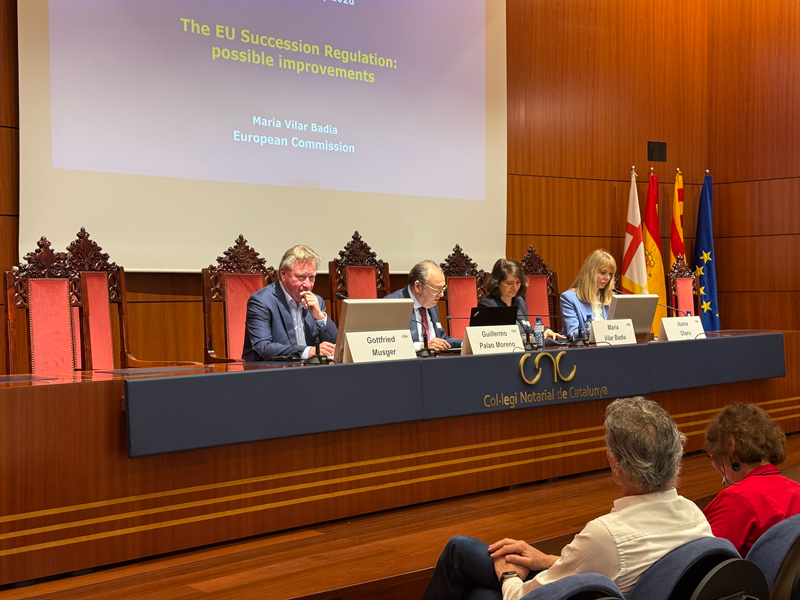
Intervención de Maria Vilar, miembro de la Dirección General de Justicia y Consumidores de la Comisión Europea, haciendo balance sobre el Reglamento Europeo de Sucesiones. De izquierda a derecha, Gottfried Musger, presidente de Sala en el Tribunal Supremo de Austria; Guillermo Palao, catedrático de la Universitat de València; Maria Vilar; e Ioana Olaru, formadora del Instituto Notarial Rumano.

LA LOCALIZACIÓN DE ACTIVOS DIGITALES, UN NUEVO RETO

La digitalización ha transformado el contenido de las herencias. Cada vez más personas dejan activos digitales, como criptoactivos, NFT, cuentas en plataformas o archivos en la nube, los cuales plantean un nuevo reto en las sucesiones: determinar dónde se localizan. Su localización puede depender del servidor, del proveedor o de la residencia del titular. Al no existir actualmente un régimen horizontal general en la Unión Europea sobre esta materia se generan controversias.

EUROPEAN SCOPE

Speakers and attendees at the annual conference on European succession law, held at the Notarial College of Catalonia.

International Successions

Elena Domínguez Romero

The mobility of citizens, existence of assets spread across several countries and diversity of civil systems have made cross-border successions a daily reality. Notaries, judges, lawyers and academics from all over Europe met in Barcelona on 21 and 22 May to discuss this very issue at the Annual Conference on European Succession Law, held at the Catalonian Notarial Association.

At the forum, organised by the Academy of European Law (ERA), the discussion focused on an increasingly common phenomenon: a person lives in one country, has assets in another, heirs in a third, and has drawn up a will under the laws of a different country; with a particular focus on the recent case law of the Court of Justice of the European Union, the European Certificate of Succession and the notarial function. The impact  of increasing digitalisation on succession issues and the future review of the European Succession Regulation were also addressed.


IT IS BECOMING INCREASINGLY COMMON FOR A PERSON TO LIVE IN ONE COUNTRY, HAVE ASSETS IN ANOTHER, AND HEIRS IN A THIRD COUNTRY


A Europe without borders

The conference was opened by José Alberto Marín, Dean of the Catalonian Notary Association, and Angelika Fuchs, Head of the European Private Law Section of ERA. In his speech, Marín emphasised “the role of the European Succession Regulation in the creation of a real and borderless Europe, which is making it much easier and more efficient for the citizen to formalise inheritances”. Fuchs, for her part, highlighted the importance of the topics covered, which “reflect the complex realities of planning and settling estates in a fully cross-border context”.

The first block of the forum addressed the case law of the Court of Justice of the European Union (CJEU) with Gottfried Musger, President of the Chamber of the Supreme Court of Austria, who discussed several recent cases.

On the other hand, Cristina González Beilfuss, professor of Private International Law at the Universitat de Barcelona, focused on applicable law. She stressed that “the European Succession Regulation is based on two principles, unity and universality, which allow a single law to be applied to the entire estate, regardless of where the assets are located. That rule facilitates the free circulation of resolutions and documents, but does not eliminate all the problems». The most obvious is the habitual residence, which is not automatically identified with residence registration or tax residence and requires a global assessment of the life of the deceased. «European pensioners who spend a large part of the year in Spain, but maintain family, economic, or administrative ties with their home country, illustrate this difficulty,» she pointed out. Global citizens, with multiple nationalities and scattered assets, or dependent elderly people whose residence changes at the decision of their relatives, are further examples.


THE EUROPEAN SUCCESSION REGULATION IS BASED ON TWO PRINCIPLES: UNITY AND UNIVERSALITY, WHICH ALLOW A SINGLE LAW TO BE APPLIED TO THE ENTIRE ESTATE


In addition, there is the professio iuris, i.e. the possibility of choosing national law to govern the succession. It is a useful tool, but should not be used automatically. Choosing the law of nationality affects not only the legitimate heirs; it also conditions the execution of the inheritance, liability for debts, powers of the administrators, and coordination with other systems. In addition, in Spain, the issue is complicated by the existence of various civil rights.

European Certificate of Succession

The European Certificate of Succession (ECS) was one of the main focuses of the conference. Conceived as a kind of inheritance passport, it allows the status of heir, legatee, administrator or executor to be accredited in another Member State. Their balance, however, is uneven. «In some countries it is used normally, while in others, on the other hand, national certificates continue to replace it,» assured Patrick Wautelet, professor at the University of Liège.

Ioana Olaru, trainer at the Romanian Notarial Institute, and Jens Kleinschmidt, professor at the University of Trier, emphasised the ECS content-related issues: which assets must be identified, what happens when there are challenges, and the extent of the issuing authority’s powers. For its part, the issuing authority must verify information, assess evidence, identify beneficiaries and, where applicable, describe assets or powers. The problem arises when there are challenges. The CJEU has stated that if the elements to be certified are disputed, the issuing authority cannot resolve the dispute within the certification procedure. Although the objection may seem unfounded, the matter must be referred to the courts or the appropriate appeal.


THE EUROPEAN CERTIFICATE OF SUCCESSION (ECS) MAKES IT POSSIBLE TO PROVE THE STATUS OF HEIR, LEGATEE, ADMINISTRATOR OR EXECUTOR IN ANOTHER MEMBER STATE


Estate planning

Estate planning has opened up another front. Frans Sonneveldt, professor at Leiden University, addressed the issue of inheritance taxation before the CJEU and recalled that double inheritance taxation remains one of the major frustrations for European citizens. «The same estate may be subject to taxation based on the residence of the deceased, residence of the heirs, nationality, or the location of the assets. The CJEU has corrected discriminatory treatments, for example, in debt deductions, personal reductions or valuation of assets located in another State, but it cannot resolve double taxation on its own when States exercise their tax powers in a sovereign manner”. The ideal solution proposed is as simple as it is difficult: an inheritance: an estate tax. As long as there is no European multilateral agreement, planning will continue to combine wills, inheritance agreements, matrimonial regimes, companies, trusts, foundations and other asset entities.

In the segment dedicated to estate planning, Guillermo Palao Moreno, professor at the University of Valencia and president of the Spanish Association of Professors of International Law and International Relations, spoke about the interaction between company law and succession law, while Troels Rovsing Koch, for his part, addressed the protection of assets and its limits in relation to mandatory law. The message was unanimous: planning is not about hiding assets, but about organizing their transfer while respecting the protection of heirs, creditors, and third parties.


THE NOTARY MUST AUTHORIZE INHERITANCES BY APPLYING STATE, REGIONAL, EUROPEAN, AND FOREIGN RULES


The Role Of Notaries

The second day of the conference focused on the role of notaries in international successions and their future. Antonio Ripoll Soler, a notary from Alicante, explained the role of the notary in Spain as a preventive legal safeguard, in a context of coexistence of various regional civil legislations and double nationality agreements. “This legislation is on a horizontal plane. The Civil Code is not above them, and this has generated abundant case law and rulings from the General Directorate of Legal Security and Public Faith. All of this places the notary at the centre of the problem, because we must authorize inheritances by applying state, regional, European, and foreign laws”.

On the other hand, Anna Wysocka-Bar, associate professor at the Jagiellonian University in Krakow, reviewed the evolution of digitalization in the field of justice, which has given rise to digital tools such as the European e-Justice Portal or the Digital Justice Regulation, which incorporates electronic communication, video conferencing, electronic signatures and seals, and electronic payment of fees for cross-border successions. “This regulation aims to modernize the legislative framework for cross-border procedures based on the ‘digital by default’ principle. This means that public administrations offer their services primarily in digital format, as a preferred option, but maintaining the use of traditional channels in order to not exclude those who do not have access to or possess digital skills”.

To conclude, Maria Vilar Badia, a member of the European Commission’s Directorate-General for Justice and Consumers, reviewed the ten years of application of the European Succession Regulation and assured that «although the application report is not yet underway, the Commission is working on the digitalization of the Succession Regulation and on some technical improvements, detected due to letters from citizens, notifications from professionals and contributions from Member States”. Its priorities include simplifying the ECS form, making it mandatory to issue the document in two languages, creating non-legislative ways to reduce banks’ reluctance to accept the ECS, creating pre-defined electronic messages to respond to requests for information, and exploring interconnected certificate registries.

Angelika Fucks, Head of the European Private Law Section at the Academy of European Law (ERA), and José Alberto Marín, Dean of the Notarial College of Catalonia, at the conference opening.

THE NOTARY IN INTERNATIONAL SUCCESSIONS

In international successions, notaries play a key role in preventive legal security. They must verify whether there is international jurisdiction, identify the applicable law, check the title of succession, obtain certificates, locate assets, and advise the heirs on tax and registration procedures. Their work is not just about authorizing a deed; they must also warn about the effects of foreign law, verify the validity of documents, and facilitate coordination between legal systems.

From left to right: Troels Rovsing, lawyer from Copenhagen; Frans Sonneveldt, Professor at Leiden University; Anna Wysocka-Bar, Assistant Professor at Jagiellonian University in Kraków; and Guillermo Palao, Professor at the University of Valencia, at the round table on estate planning.

CIVIL PLURALITY IN SPAIN

During the conference, focus fell on one of the unique features of the Spanish legal system: the coexistence of several territorial civil laws with their own regulations on inheritance matters. This plurality is particularly important in the context of the European Succession Regulation. When the rule refers to Spanish law as the applicable law, identifying the State is not enough; the applicable internal civil law must be determined. In this regard, there was a debate on whether professio iuris allows for the direct choice of a territorial civil law or whether the choice must necessarily refer to state law.

Presentation by Maria Vilar, a member of the European Commission's Directorate-General for Justice and Consumers, reviewing the European Succession Regulation. From left to right: Gottfried Musger, Chamber President at the Supreme Court of Austria; Guillermo Palao, Professor at the University of Valencia; Maria Vilar; and Ioana Olaru, trainer at the Romanian Notarial Institute.

THE LOCATION OF DIGITAL ASSETS: A NEW CHALLENGE

Digitalisation has transformed the content of inheritances. More and more people are leaving behind digital assets, such as cryptocurrencies, NFTs, accounts on platforms, or cloud storage, which pose a new challenge in inheritance matters: determining where they are located. Its location may depend on the server, the provider or the residence of the holder. Since there is currently no general horizontal regime in the European Union on this matter, controversies arise.

El Notariado ante el reto internacional: colaboración con la Academia de Derecho Europeo (ERA), por Pablo Vázquez

PROTECCIÓN AL CONSUMIDOR

ÁMBITO EUROPEO

PABLO VÁZQUEZ MORAL,

notario de Sant Feliu de Guíxols y censor primero de la Junta Directiva del Colegio Notarial de Cataluña

ERA es el proveedor líder de formación jurídica en el continente. Entre sus patronos se encuentran los 27 Estados de la UE, el Reino Unido y diversas instituciones de la Unión"

El Notariado ante el reto internacional: colaboración con la Academia de Derecho Europeo (ERA)

En un entorno globalizado como el actual, la práctica diaria del Notariado español ha experimentado una transformación profunda. Hoy en día es habitual que a nuestros despachos acudan ciudadanos extranjeros para otorgar todo tipo de negocios jurídicos: compraventas, herencias, testamentos… Esta realidad nos exige aplicar de forma constante el Derecho Internacional Privado, una materia regida de forma directa por reglamentos comunitarios. Ante este escenario, la formación continua de máxima calidad no es un accesorio, sino una necesidad absoluta para garantizar la seguridad jurídica.

Una provechosa alianza

Precisamente con esta finalidad formativa, hace más de cincos años se constituyó en el Colegio Notarial de Cataluña, con las catedráticas Cristina González Beilfuss y Beatriz Añoveros Terradas, el Instituto Notarial de Derecho Internacional Privado (INDIP). Y fue a través de Cristina González Beilfuss, miembro de su patronato, que contactamos con la Academia de Derecho Europeo (ERA, por sus siglas en alemán), institución europea de referencia en este ámbito que, a pesar de su relevancia, muchos notarios y juristas en España desconocen. Con el objetivo de situar al Notariado a la vanguardia, la Junta Directiva del Colegio Notarial de Cataluña está consolidando una provechosa alianza con ERA, permitiéndonos estrechar lazos con una entidad que es un auténtico referente en la aplicación del derecho comunitario.

Fundada en 1992 por iniciativa del Parlamento Europeo, ERA nació como una fundación pública sin ánimo de lucro con sede en la histórica ciudad de Tréveris (Alemania). Su creación respondió a un momento clave de la integración europea, con la consolidación del Mercado Único, donde se hacía indispensable una aplicación uniforme y coherente del derecho comunitario.

Hoy en día, ERA es el proveedor líder de formación jurídica en el continente. Cuenta con el respaldo institucional de sus patronos, entre los que se encuentran los 27 Estados miembros de la Unión Europea —España se adhirió formalmente en el año 2001—, el Reino Unido y diversas instituciones de la UE. Cofinanciada por la Unión Europea y el Estado federado alemán de Renania-Palatinado, su misión fundamental es capacitar a jueces, fiscales, notarios, abogados, funcionarios y juristas de toda Europa, dotándolos de las herramientas y redes de contactos necesarias para aplicar con eficacia el marco normativo común.

La propuesta de la Academia destaca por su enfoque práctico y su adaptabilidad. Diseñada por un equipo internacional de juristas, abarca todas las ramas del derecho europeo a través de múltiples formatos: conferencias presenciales, programas híbridos, seminarios en línea y productos de aprendizaje electrónico (e-learning). Además, publica de forma trimestral la prestigiosa revista jurídica ERA Forum.

Más allá del aprendizaje técnico, los eventos de ERA se han convertido en un foro de debate de primer nivel. Ofrecen una oportunidad inigualable para que profesionales de distintos Estados miembros intercambien experiencias directas, unificando criterios de interpretación y elevando las inquietudes de la práctica diaria hacia las propias instituciones de la Unión.

Colaboración mutua

Esta provechosa colaboración mutua se ha materializado con fuerza en el ámbito del derecho privado, un terreno donde el Notariado ejerce un papel crucial. El despliegue de esta alianza en Barcelona se ha estructurado a través de dos grandes hitos especializados.

La primera gran cita tuvo lugar en octubre de 2024 con la Conferencia anual sobre Derecho de familia europeo. En ella se abordaron cuestiones de máxima complejidad práctica, tales como la protección transfronteriza de adultos vulnerables en la Unión Europea y las dificultades inherentes a la preparación y redacción de contratos matrimoniales con elementos internacionales.

Dando continuidad a este éxito formativo, el pasado mes de mayo de 2026 el Colegio Notarial de Cataluña albergó la Conferencia anual sobre el Derecho europeo de sucesiones. Durante estas jornadas, ponentes de la máxima relevancia académica y judicial europea —incluyendo catedráticos de universidades de Barcelona, Tréveris, Leiden y Lieja, notarios y magistrados de tribunales supremos— analizaron al detalle la jurisprudencia más reciente del Tribunal de Justicia de la Unión Europea (TJUE) respecto al Reglamento 650/2012 de sucesiones. Se debatieron cuestiones tan vivas como la expedición del certificado sucesorio europeo, la identificación de activos, el impacto de la digitalización, la labor del notario en materia sucesoria transfronteriza y las lecciones aprendidas tras años de aplicación de la norma.

Estas conferencias no solo sirven para desgranar las últimas sentencias del TJUE o anticipar reformas normativas, sino que actúan como un extraordinario catalizador de relaciones humanas y profesionales. En las pausas de trabajo los asistentes pudieron tejer redes de colaboración directa con juristas de múltiples nacionalidades. Para un notario español, conocer personalmente a los operadores jurídicos que aplican las mismas normas en Francia, Alemania o Rumanía resulta de una utilidad incalculable a la hora de resolver dudas en escrituras transfronterizas futuras.

Acoger a una institución de la talla y el prestigio de ERA consolida al Colegio Notarial de Cataluña como un referente en la formación jurídica internacional y demuestra nuestro firme compromiso con la excelencia. Seguiremos impulsando esta colaboración para que el derecho europeo no sea percibido como una normativa lejana, sino como una herramienta cotidiana que dominamos con absoluta seguridad en beneficio de los ciudadanos.

ÁMBITO EUROPEO

PABLO VÁZQUEZ MORAL,

notary of Sant Feliu de Guíxols and senior auditor of the Board of Directors of the Notarial Association of Cataluña

ERA is the leading provider of legal training on the continent. Its members include the 27 EU Member States, the United Kingdom and various EU institutions"

The Notarial Profession Facing International Challenges: Collaboration with the European Law Academy (ERA)

In today’s globalised world, the day-to-day practice of the Spanish notarial profession has undergone a profound transformation. Nowadays, it is common for foreign nationals to visit our offices to carry out all manner of legal transactions: purchases and sales, inheritances, wills… This reality requires us to consistently apply Private International Law, a field governed directly by EU regulations. Against this backdrop, top-quality continuous training is not a luxury, but an absolute necessity to ensure legal certainty.

A beneficial alliance

It was precisely with this aim for training in mind that, more than five years ago, the Notarial Institute of Private International Law (INDIP) was established at the Notarial Association of Catalonia, under the leadership of Professors Cristina González Beilfuss and Beatriz Añoveros Terradas. It was through Cristina González Beilfuss, a member of its board of trustees, that we made contact with the Academy of European Law (ERA, as it is known by its German acronym), a leading European institution in this field which, despite its importance, is unknown to many notaries and legal professionals in Spain. With the aim of positioning the Notarial Profession at the forefront, the Board of Directors of the Notarial Association of Catalonia is forging a beneficial alliance with ERA, enabling us to strengthen our ties with an organisation that is a true leader in the application of EU law.

Founded in 1992 through an initiative of the European Parliament, ERA was established as a public, non-profit foundation based in the historic city of Trier (Germany). Its creation came at a pivotal moment in European integration, with the consolidation of the Single Market, when a uniform and consistent application of Community law had become essential.

Today, ERA is the leading provider of legal training on the continent. It enjoys the institutional support of its members, which include the 27 Member States of the European Union — Spain formally joined in 2001 —, the United Kingdom and various EU institutions. Co-funded by the European Union and the German federal state of Rhineland-Palatinate, its key mission is to train judges, prosecutors, notaries, lawyers, civil servants and legal professionals across Europe, equipping them with the tools and networks necessary to effectively implement the common regulatory framework.

The Academy’s proposal stands out due to its practical approach and its adaptability. Designed by an international team of legal experts, it covers all areas of European law through a range of formats: in-person conferences, hybrid programmes, online seminars and e-learning resources. It also publishes the prestigious legal journal ERA Forum on a quarterly basis.

Beyond technical learning, ERA events have become a leading forum for debate. They offer an unrivalled opportunity for professionals from different Member States to exchange first-hand experiences, thereby unifying interpretation criteria and bringing the concerns arising from day-to-day practice to the attention of the European Union’s institutions themselves.

Mutual cooperation

This mutually beneficial collaboration has been particularly evident in the field of private law, an area in which the notarial profession plays a crucial role. The roll-out of this partnership in Barcelona has been organised around two major specialised milestones.

The first major event took place in October 2024 with the Annual Conference on European Family Law. The conference addressed issues of the utmost practical complexity, such as the cross-border protection of vulnerable adults in the European Union and the difficulties inherent in preparing and drafting marriage contracts with international features.

Building on this success in training, last May 2026 the Notarial Association of Catalonia hosted the Annual conference on European succession law. During the conference, speakers of the highest academic and judicial standing in Europe — including senior lecturers from the universities of Barcelona, Trier, Leiden and Liège, as well as notaries and judges from supreme courts — analysed in detail the most recent case law of the Court of Justice of the European Union (CJEU) concerning Regulation 650/2012 on succession. The discussions covered such topical issues as the issue of the European Certificate of Succession, the identification of assets, the impact of digitalisation, the role of the notary in cross-border succession matters, and the lessons learnt following years of implementing the regulation.

These conferences not only serve to analyse the latest rulings of the CJEU or anticipate regulatory reforms, but also act as an exceptional catalyst to build personal and professional relationships. During breaks in the proceedings, participants were able to forge direct collaborative links with legal professionals of various nationalities. For a Spanish notary, being able to meet in person the legal practitioners who apply the same regulations in France, Germany or Romania is of enormous value when it comes to resolving any queries regarding future cross-border deeds.

Hosting an institution of the calibre and prestige of ERA cements the Notarial Association of Catalonia’s position as a leading centre for international legal education and demonstrates our firm commitment to excellence. We will continue to promote this collaboration so that European law is not seen as a distant set of regulations, but as an everyday tool that we can use with complete confidence for the benefit of citizens.

Entrevista a Alberto de Gregorio, director del Servicio Jurídico de la UE

ÁMBITO EUROPEO

El Servicio Jurídico actúa como la brújula jurídica de la Comisión”

Alberto de Gregorio,

director del Servicio Jurídico de la UE

Carlos Capa

Alberto de Gregorio, licenciado en Derecho por la Universidad de Salamanca, con máster en el College of Europe, es uno de los juristas españoles con mayor recorrido en las instituciones comunitarias. Con más de 25 años de experiencia en Bruselas, ha participado en algunos de los grandes hitos jurídicos de la UE, del Brexit a la Unión Bancaria, pasando por el fondo Next Generation EU y la respuesta legal a la invasión rusa de Ucrania.

-Con más de 25 años de experiencia en las instituciones de la Unión Europea y habiendo sido responsable en este mismo Servicio Jurídico de otras áreas, ¿qué supone para usted esta nueva responsabilidad?

– Esta responsabilidad constituye tanto un honor como un deber. Tras muchos años al servicio de la Unión en diversas funciones, dirigir el Servicio Jurídico implica garantizar la continuidad, la excelencia y la independencia en nuestro asesoramiento jurídico. Hoy en día, liderar el Servicio Jurídico significa ayudar a la Comisión a desenvolverse en un entorno jurídico cada vez más complejo, preservando al mismo tiempo sus principios fundamentales.


“EL SERVICIO JURÍDICO PROPORCIONA ASESORAMIENTO LEGAL INDEPENDIENTE A LA COMISIÓN, LA REPRESENTA ANTE EL TJUE Y VELA POR QUE TODOS LOS ACTOS SE AJUSTEN AL DERECHO DE LA UE”


-¿Qué funciones desempeña el Servicio Jurídico de la UE? ¿Quiénes lo integran?

– El Servicio Jurídico proporciona asesoramiento legal independiente a la Comisión, la representa ante el Tribunal de Justicia de la Unión Europea y vela por que todos los actos legislativos y administrativos se ajusten al Derecho de la UE. Está integrado por juristas altamente cualificados procedentes de todos los Estados miembros, que aportan diversas tradiciones jurídicas y conocimientos en múltiples ámbitos del Derecho. En otras palabras, el Servicio Jurídico actúa como la brújula jurídica de la Comisión.

-¿Cree que los ciudadanos y las empresas comunitarios conocen el trabajo que realizan

– Nuestro trabajo no siempre es visible, ya que se desarrolla “entre bastidores”. Sin embargo, su impacto es muy tangible. Cada propuesta conforme a Derecho, cada acuerdo internacional y cada asunto defendido contribuyen directamente a los derechos de los ciudadanos a un entorno económico estable. Seguir aumentando la concienciación resulta fundamental, especialmente para demostrar cómo el Derecho de la UE protege la vida cotidiana.


“EN TIEMPOS DE INCERTIDUMBRE, EL RESPETO DE LA LEGALIDAD Y LA SEGURIDAD JURÍDICA ADQUIEREN AÚN MAYOR RELEVANCIA”


-La legalidad y la seguridad jurídica son pilares básicos de la Unión Europea. Una de las principales funciones del Servicio que dirige es asesorar a las instituciones europeas y garantiza la legalidad de sus actos. ¿Es posible mantener estos pilares en la actual situación internacional

– Así es, y es esencial que así sea. En tiempos de incertidumbre, el respeto de la legalidad y la seguridad jurídica adquieren aún mayor relevancia. Estos principios garantizan previsibilidad, confianza y equidad. Aunque el entorno global sea complejo, la fortaleza de la UE reside precisamente en su compromiso con el Estado de Derecho. La seguridad jurídica no es un lujo, sino una condición para la confianza, la inversión y la cooperación.

-Otra de sus funciones es controlar la correcta aplicación del Derecho comunitario, lo que debe ser muy complejo teniendo en cuenta las diferentes regulaciones y puntos de vista de los Estados miembros. ¿Podemos hablar de una estrategia o política jurídica común?

– Más que una “estrategia” única, existe un ordenamiento jurídico compartido. Los tratados proporcionan una base común, y nuestra tarea consiste en garantizar que dicha base se aplique de manera coherente, respetando al mismo tiempo las especificidades nacionales. Si bien las perspectivas nacionales difieren, el papel del Servicio Jurídico es asegurar una interpretación y aplicación uniformes del Derecho de la UE. Ello no elimina la diversidad, sino que la encauza dentro de un orden jurídico coherente.

Uno de nuestros desafíos es reconciliar la identidad constitucional europea con la identidad constitucional de los Estados Miembros.


“LA PRIMACÍA DEL DERECHO DE LA UE DEBE PRESERVARSE, PERO SIEMPRE A TRAVÉS DEL RAZONAMIENTO JURÍDICO Y LA COOPERACIÓN, Y NO DE LA CONFRONTACIÓN”


-Ha asesorado en asuntos críticos para la UE, como el Brexit, la creación de la Unión Bancaria, el Mecanismo Europeo de Estabilidad, el fondo Next Generation EU y la respuesta jurídica ante la invasión de Ucrania. ¿Cuál considera en estos momentos el asunto jurídico que más ocupa o preocupa a la UE?

– El principal desafío consiste en adaptar el marco jurídico a cambios rápidos ya sean geopolíticos, económicos o tecnológicos sin perder coherencia. Garantizar que el Derecho de la UE siga siendo eficaz en ámbitos como las sanciones, la seguridad e independencia energética, la regulación digital, la competitividad y la cooperación en materia de defensa resulta especialmente exigente en la actualidad. El Derecho de la UE debe reorientarse hacia el Derecho de la independencia de la UE.

-La primacía del Derecho Comunitario frente a los tribunales nacionales provocará a menudo momentos de tensión. ¿Cómo hacen para mantener la tensión sin «rompe la cuerda»?

– La tensión es inherente a un sistema jurídico multinivel. La clave reside en el diálogo, el respeto mutuo y los mecanismos previstos en los tratados. La primacía del Derecho de la UE debe preservarse, pero siempre a través del razonamiento jurídico y la cooperación, y no de la confrontación. Mi servicio tiene una vocación  también transnacional. El desafío es articular sin disonancias la identidad constitucional nacional con al europea.


“LA SEGURIDAD JURÍDICA NO ES UN LUJO, SINO UNA CONDICIÓN PARA LA CONFIANZA, LA INVERSIÓN Y LA COOPERACIÓN”


-La Inteligencia Artificial, la descarbonización y la autonomía estratégica europea generan nuevas competencias compartidas y fronteras normativas difusas. ¿Qué papel desempeña el Servicio Jurídico para garantizar que la legislación europea se mantenga coherente y compatible con las regulaciones nacionales

– Nuestra función es garantizar la coherencia, legalidad, la seguridad jurídica y la compatibilidad con los tratados. En ámbitos en rápida evolución, contribuimos a definir los límites jurídicos, apoyamos al legislador y velamos porque las nuevas normas se integren de manera fluida en los marcos existentes, tanto a nivel de la UE como nacional.

-La seguridad jurídica es una de las señas de identidad de Europa. También es cierto que hay voces que consideran que la UE se encuentra sobrerregulada y que eso le resta competitividad. ¿Cuál es su opinión?
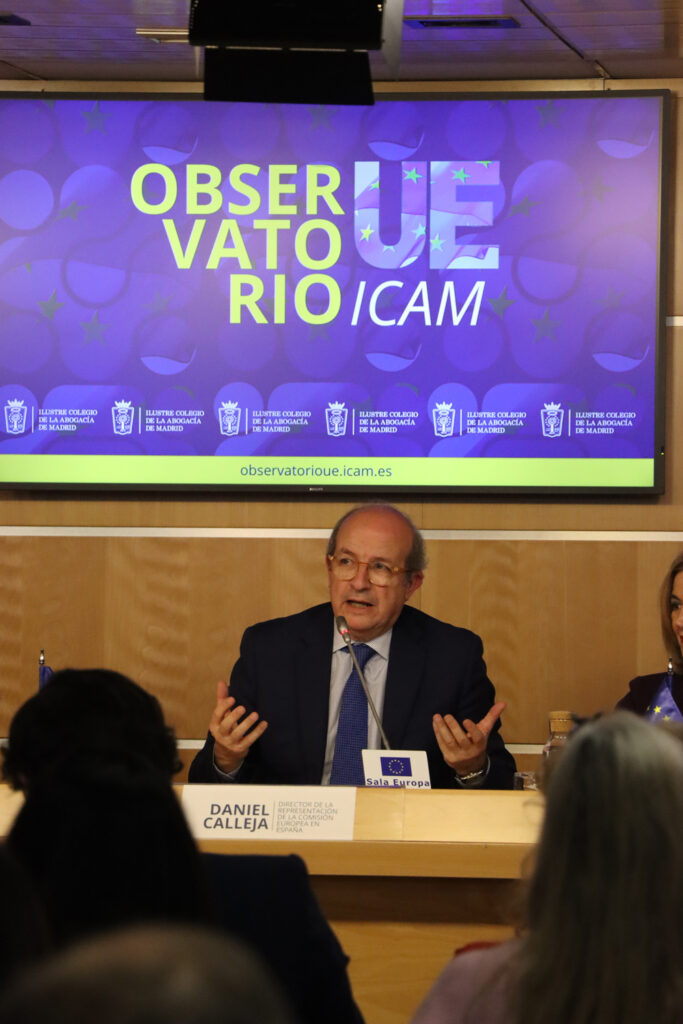
– Se trata de una preocupación legítima, pero la cuestión no es la cantidad de regulación, sino su calidad. La Unión debe regular cuando sea necesario, pero siempre de forma proporcionada y eficiente, y conforme al principio de subsidiariedad, de modo que apoye en lugar de obstaculizar. La regulación debe encontrar un equilibrio. La seguridad jurídica y los altos niveles de calidad legislativa son fortalezas de la UE, pero debemos mantenernos atentos a la proporcionalidad y a la competitividad. El objetivo no es más regulación, sino una mejor regulación: clara y eficaz.

¿Cómo contribuye el Notariado a la seguridad jurídica de los ciudadanos y empresas de la Unión Europea?

«La profesión notarial desempeña un papel preventivo fundamental. Al garantizar la legalidad y la autenticidad de los actos jurídicos, los notarios reducen los litigios, refuerzan la confianza y facilitan las transacciones transfronterizas. Permite que existan pruebas claras y accesibles para las partes involucradas y para el sistema judicial. Constituyen un componente esencial del sistema más amplio que garantiza la seguridad jurídica para los ciudadanos y las empresas en toda la Unión, proporcionando garantías de transparencia y estabilidad en la vida cotidiana y las relaciones comerciales.»

HUELLA DIGITAL

  • Alberto de Gregorio mantiene un perfil activo en Linkedin.
  • En el portal de transparencia de la UE se encuentra una biografía extensa y dirección de contacto.

EUROPEAN SCOPE

The Legal Service acts as the Commission’s legal compass”

Alberto de Gregorio,

Head of the EU Legal Service

Carlos Capa

Alberto de Gregorio, a law graduate from the University of Salamanca, with a master’s degree from the College of Europe, is one of the most experienced Spanish jurists in EU institutions. With over 25 years’ experience in Brussels, he has been involved in some of the EU’s major legal milestones, ranging from Brexit and the Banking Union to the Next Generation EU fund and the legal response to Russia’s invasion of Ukraine.

-With over 25 years of experience in European Union institutions and Legal Servicemanagement of other departments, what does this new responsibility mean for you?

– This responsibility is both an honour and a duty. After many years of service in the Union in various capacities, heading the Legal Service means ensuring continuity, excellence and independence in our legal advice. Today, leading the Legal Service means helping the Commission to navigate an increasingly complex legal environment, while preserving its fundamental principles.


«THE LEGAL SERVICE PROVIDES INDEPENDENT LEGAL ADVICE TO THE COMMISSION, REPRESENTS IT BEFORE THE CJEU AND ENSURES THAT ALL ACTS COMPLY WITH EU LAW»


-What is the role of the EU Legal Service? Who are its members?

– The Legal Service provides independent legal advice to the Commission, represents the Commission at the Court of Justice of the European Union and ensures that all legislative and administrative acts comply with EU law. Its members are highly qualified lawyers from all Member States who draw on different legal traditions and expertise in many areas of law. In other words, the Legal Service acts as the Commission’s guide on legal matters.

-Do you think that EU citizens and businesses are aware of the work you do?

– Our work is not always visible, as it takes place «behind the scenes». However, its impact is very tangible. Every lawful proposal, every sound international agreement and every defended issue contributes directly to citizens’ rights and to a stable business environment. Raising awareness further is essential, especially to demonstrate how EU law protects everyday life.


“IN TIMES OF UNCERTAINTY, RESPECT FOR LEGALITY AND LEGAL CERTAINTY ACQUIRE EVEN GREATER IMPORTANCE.”


-Legality and legal certainty are some of the basic foundations of the European Union. One of the main functions of the Service you manage is to advise European institutions and ensure the legality of their actions. Is it possible to continue to do this in the current international situation?
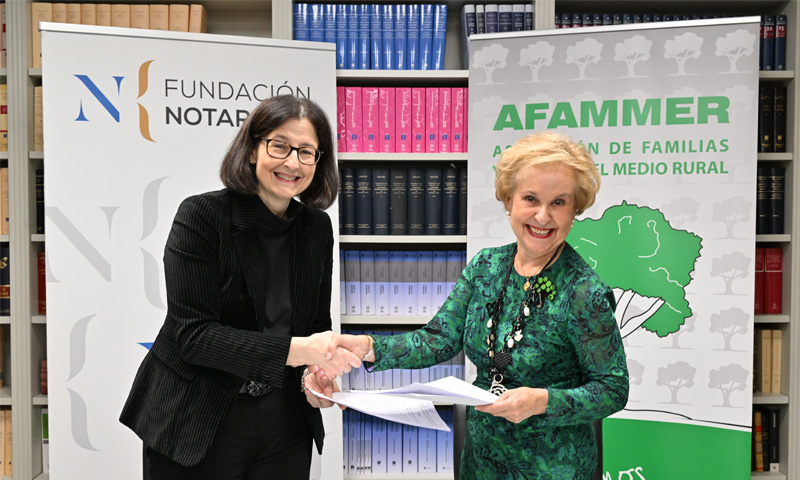
– Of course, and it is crucial that we do.. In times of uncertainty, respect for legality and legal certainty is even more important. These principles ensure predictability, trust and fairness. Although the global environment is complex, the EU’s strength lies precisely in its commitment to the rule of law. Legal certainty is not a luxury, but a condition for trust, investment and cooperation.

-Another of its functions is to monitor the correct application of Community law, which must be very complex in view of the different regulations and points of view of the Member States. Can we speak of a common legal strategy or policy?

– Rather than a single ‘strategy’, there is a shared legal framework. The treaties provide a common basis, and our task is to ensure that this basis is applied consistently, while respecting national specificities. While national perspectives differ, the role of the Legal Service is to ensure a uniform interpretation and application of EU law. This does not eliminate diversity, but channels it into a coherent legal order.

– You have advised on critical EU issues such as Brexit, the creation of the Banking Union, the European Stability Mechanism, the Next Generation EU fund and the legal response to the invasion of Ukraine. What do you think is the current legal issue of greatest concern or preoccupation for the EU?

– The main challenge is to adapt the legal framework to rapid changes, be they geopolitical, economic or technological, without losing coherence. Ensuring that EU law remains effective in areas such as sanctions, energy security and energy independence, digital regulation, competitiveness and defence cooperation is particularly demanding today. EU law must be realigned towards the law of EU independence.


«THE PRIMACY OF EU LAW MUST BE PRESERVED, BUT ALWAYS THROUGH LEGAL REASONING AND COOPERATION, NOT CONFRONTATION”.


– The primacy of Community law over national courts will often lead to moments of tension. How do you manage that tension without «breaking the rope»?

– Tension is inherent in a multi-level legal system. The key lies in dialogue, mutual respect and the mechanisms provided for in the treaties. The primacy of EU law must be preserved, but always through legal reasoning and cooperation, not confrontation. The challenge is to balance national constitutional identity with European identity through agreement.

– Artificial Intelligence, decarbonisation and European strategic autonomy generate new shared purviews and blurred regulatory boundaries. What role does the Legal Service play in ensuring that European legislation remains consistent and compatible with national regulations?

– Our role is to ensure consistency, legality, legal certainty and compatibility with the treaties. In rapidly evolving areas, we help define legal boundaries, support the legislator and ensure that new rules are smoothly integrated into existing frameworks, both at the EU and national level.


“LEGAL CERTAINTY IS NOT A LUXURY, BUT A CONDITION FOR TRUST, INVESTMENT AND COOPERATION”


-Legal certainty is one of Europe’s hallmarks. It is also true that there are voices that believe that the EU is over-regulated and that this undermines its competitiveness. What is your opinion?

– This is a legitimate concern, but the issue is not the quantity of regulation, but its quality. The Union should regulate where necessary, but always in a proportionate and efficient manner, and in accordance with the principle of subsidiarity, so that it supports rather than hinders. Regulation must strike a balance. Legal certainty and high standards of legislative quality are strengths of the EU, but we must remain vigilant regarding proportionality and competitiveness. The aim is not more regulation, but better, clear and effective regulation.

How does the Notariat contribute to legal certainty for citizens and businesses in the European Union?

«The notarial profession plays an essential preventive role. By ensuring the legality and authenticity of legal acts, notaries reduce disputes, strengthen trust and facilitate cross-border transactions. It enables clear and accessible evidence for the parties involved and for the judicial system. They are an essential component of the wider system that ensures legal certainty for citizens and businesses throughout the Union by providing guarantees of transparency and stability in everyday life and business relations.»

Digital signature

  • Alberto de Gregorio maintains an active Linkedin profile.
  • An extensive biography and contact address can be found on the EU’s transparency portal.

Todo lo que eres cabe en una cartera

ÁMBITO EUROPEO

El objetivo es establecer un ecosistema de carteras digitales capaces de funcionar de forma interoperable.

Todo lo que eres cabe en una cartera

GORKA R. PÉREZ

La Unión Europea prepara la llamada Cartera Europea de Identidad Digital, una iniciativa común destinada a simplificar la identificación y a redefinir la relación entre ciudadanos, Estados y servicios en la próxima década. Los países miembros deberán tenerla operativa antes de finales de año. La seguridad y la confianza se perfilan como los ejes de un proyecto que aspira también a reforzar la soberanía digital del bloque.

Reunir en una sola aplicación todos los documentos necesarios para acceder, desde el móvil, a servicios públicos y privados suena —al menos sobre el papel— como una promesa razonable. No solo porque simplificaría la relación digital con Administraciones y empresas, sino porque aliviaría una burocracia identificativa cada vez más pesada, que obliga a demostrar quiénes somos una y otra vez. Ese es el horizonte que persigue la llamada Cartera Europea de Identidad Digital, un proyecto comunitario que los Estados miembros deberán tener operativo antes de finales de 2026 y que aspira a convertir la identificación en un trámite casi invisible.

Carteras paneuropeas

Como ocurre con muchos proyectos que acaban desplegándose a escala comunitaria, la cartera digital europea no surge de la nada. Se apoya en el recorrido previo de distintos sistemas nacionales de identidad digital, desarrollados y probados en varios países durante los últimos años. La ambición ahora es dar un salto más: que esas soluciones, nacidas dentro de fronteras concretas, evolucionen hacia carteras paneuropeas capaces de funcionar más allá de su país de origen y ser reconocidas por el conjunto de los Estados miembros.

Esta convergencia no persigue la creación de una única aplicación común para todos los ciudadanos, sino el establecimiento de un ecosistema de carteras digitales capaces de funcionar de forma interoperable en cualquier país de la Unión. Esto es, un entramado de aplicaciones distintas, pero compatibles entre sí, concebido para que la identidad digital pueda circular sin fricciones dentro del mercado único europeo.

El atractivo de este tipo de herramientas digitales radica, sobre todo, en las facilidades que ofrecen al usuario. Una comodidad basada en la posibilidad de almacenar y compartir de forma selectiva las credenciales necesarias para acreditar la identidad ante terceros, todo ello desde una única aplicación instalada en el teléfono móvil o en cualquier otro dispositivo electrónico que lo permita, sin necesidad de repetir el proceso una y otra vez.

Superado el umbral de la identificación —el primer cuello de botella—, la equiparación a escala comunitaria abre la puerta a otros usos. La cartera digital permitirá también almacenar documentos oficiales como el permiso de conducir, recetas médicas, titulaciones académicas, pasaportes o certificados profesionales. Y añadirá una función clave: la posibilidad de firmar documentos electrónicamente con plena validez legal, integrando en un mismo entorno gestiones que hoy siguen dispersas.

Regulación digital

En los últimos años, la Unión Europea ha desplegado un volumen cada vez mayor de regulación digital, y es en ese entramado normativo donde encaja la futura identidad electrónica común. No solo como una herramienta de uso cotidiano, sino también como un instrumento que puede facilitar la aplicación de normas como la Ley de Servicios Digitales (DSA). Todo ello en un contexto en el que muchos ciudadanos, aun habituados a introducir sus datos personales en un número creciente de plataformas, empiezan a desconfiar de las garantías de seguridad que ofrecen esos espacios. Proporcionar un entorno fiable desde el que gestionar una identidad digital de alcance europeo se presenta, así, como una forma de restaurar esa confianza, fomentar el intercambio de información y alimentar infraestructuras consideradas estratégicas.

Ese énfasis en la seguridad fue, precisamente, uno de los ejes sobre los que la presidenta de la Comisión Europea, Ursula von der Leyen, articuló la presentación de la iniciativa. Lo subrayó en septiembre de 2020, durante su discurso sobre el Estado de la Unión, al defender la necesidad de ofrecer a los ciudadanos una identidad digital que reforzara la confianza y les devolviera el control sobre sus datos.

La fecha del discurso de Von der Leyen no fue casual. En plena pandemia, las aplicaciones destinadas a acreditar el estado de vacunación se situaron en el centro del debate público, también en los despachos de Bruselas. En buena medida porque esas herramientas dependían de infraestructuras controladas por gigantes tecnológicos como Apple y Google, que fijaron las reglas sobre cómo podían intercambiarse los datos necesarios para los sistemas de rastreo, limitando el margen de maniobra de los Estados.

Seguridad e independencia

Desde entonces, y como ha ocurrido con otras iniciativas estratégicas, evitar volver a depender de grandes compañías estadounidenses en ámbitos considerados sensibles se ha convertido en una convicción compartida dentro del proyecto europeo. La apuesta por una cartera digital propia se inscribe así en una voluntad más amplia de las instituciones comunitarias de reforzar su autonomía tecnológica y avanzar hacia una soberanía digital capaz de reducir vulnerabilidades externas.

De ahí que la seguridad y la privacidad se hayan convertido en los dos pilares sobre los que se sostiene el proyecto. Son condiciones indispensables para su éxito y, sobre todo, para que los ciudadanos perciban esas garantías en su relación cotidiana con la cartera digital. No hacerlo supondría comprometer la iniciativa y debilitar esa nueva vía de comunicación autónoma que pretende consolidar Bruselas. Más aún si se tiene en cuenta que el uso de estas carteras interconectadas será voluntario para los ciudadanos, y no obligatorio, tal y como ha subrayado la propia Comisión Europea.

La Cartera Europea de Identidad Digital se sitúa, así, en ese territorio en el que confluyen la técnica, la política y la vida cotidiana. No es solo una nueva herramienta administrativa ni un ejercicio de modernización digital más, sino el intento de redefinir cómo se articula la relación entre ciudadanos, Estados y servicios en un espacio europeo cada vez más interconectado. Su complejidad no es menor: exige resolver desafíos técnicos, garantizar estándares de seguridad elevados, coordinar a veintisiete países con trayectorias y culturas digitales muy distintas y, sobre todo, generar un nivel de confianza ciudadana que no se decreta, sino que se construye. De ese equilibrio dependerá buena parte de su viabilidad.

De ese delicado equilibrio dependerá buena parte de su viabilidad. Si falla alguno de esos pilares —una experiencia opaca, insegura o poco útil—, el proyecto corre el riesgo de quedarse en una promesa más del catálogo digital europeo. Si, por el contrario, logra asentarse como una herramienta eficaz y percibida como legítima, la cartera podría convertirse en una de las transformaciones silenciosas más profundas de la relación entre el ciudadano y el Estado en la Unión Europea.

El proyecto se apoya en experiencias nacionales previas y busca extenderlas a escala paneuropea

Finales 2026: fecha clave

Las carteras digitales interoperables deberán estar disponibles para ciudadanos, residentes y empresas antes de que concluya 2026. Ese es el horizonte fijado para un proceso que no comenzó ayer, sino que es el resultado de años de trabajo preparatorio y negociación técnica, y que todavía atraviesa una fase decisiva. Los desarrollos sobre arquitectura segura, estándares comunes y especificaciones continúan avanzando, apoyados en una “caja de herramientas” compartida a escala europea. En paralelo, la Unión ha puesto en marcha proyectos piloto de gran alcance, con la participación de administraciones públicas y empresas, destinados a poner a prueba el funcionamiento real de un sistema llamado a operar en todo el continente.

Un activo estratégico

Estas nuevas funcionalidades, además de simplificar procedimientos tradicionalmente tediosos —y en muchos casos poco accesibles para quienes carecen de habilidades digitales, como las personas mayores—, descansan sobre decisiones que van más allá de lo puramente técnico. Hay en su impulso una lectura política de fondo: la conciencia, cada vez más extendida en Bruselas, de que los datos se han convertido en un activo estratégico en la era de la inteligencia artificial. No en vano, como señaló el analista Peter Sondergaard: “La información es el petróleo del siglo XXI”.

La confianza ciudadana será clave en una iniciativa voluntaria que aspira a funcionar sin imponerse

Para saber más

The European Digital Identity Wallet: Why it matters and to whom. Caribou Digital.

Balance de ciberseguridad 2025. Instituto Nacional de Ciberseguridad.

Mi Carpeta Ciudadana: ¿qué es y para qué sirve? Ministerio de Asuntos Económicos y Transformación Digital.

ÁMBITO EUROPEO

The digital wallet will enable the storage of official documents and electronic signatures

Your whole life in a wallet

GORKA R. PÉREZ

The European Union is preparing the so-called European Digital Identity Wallet, a common initiative aimed at simplifying identification and re-defining the relationship between citizens, states and services over the next decade. Member countries must make it operational by the end of the year. Security and trust are seen as the cornerstones of a project that also aims to strengthen the bloc’s digital sovereignty.

Bringing together in a single application all the documents required in order to access public and private services from a mobile phone sounds — at least on paper — like a reasonable promise. Not only because it would simplify the digital relationship with administrations and companies, but also because it would alleviate an increasingly burdensome identification bureaucracy that requires us to prove who we are time and time again. This is the horizon pursued by the so-called European Digital Identity Wallet, an EU project that Member States must make operational before the end of 2026 and which aims to make identification an almost invisible process.

Pan-European Wallets

As with many projects that end up being rolled out at community level, the European digital wallet has not come out of the blue. It builds on the previous experience of different national digital identity systems, developed and tested in several countries over the last few years. The ambition now is to go one step further: for these solutions, conceived within specific borders, to evolve into pan-European wallets that function beyond their country of origin and are recognised by all Member States.

The aim of this convergence is not to create a single common application for all citizens,  but to establish an ecosystem of digital wallets capable of functioning interoperably in any EU country. That is, a web of different but mutually compatible applications designed to enable digital identity to circulate smoothly within the European single market.

The appeal of such digital tools lies, above all, in the ease they offer to the user. A convenience based on the possibility of selectively storing and sharing the credentials needed to prove identity to third parties, all from a single application installed on the mobile phone or any other compatible electronic device, without the need to repeat the process over and over again.

Once the threshold of identification – the first bottleneck – has been crossed, EU-wide alignment opens the door to other uses. The digital wallet will also allow the storage of official documents such as driving licences, medical prescriptions, academic qualifications, passports and professional certificates. It will add a key function: the ability to electronically sign documents with full legal validity, integrating into a single environment processes that are currently dispersed.

Digital regulation

In recent years, the European Union has deployed an increasing volume of digital regulation, and it is within this regulatory framework that the future common electronic identity fits. Not only as a tool for everyday use, but also as an instrument that can facilitate the implementation of regulations such as the Digital Services Act (DSA). All this in a context in which many citizens, even though they are used to entering their personal data on a growing number of platforms, are beginning to distrust the security guarantees offered by these spaces. Providing a trusted environment from which to manage a Europe-wide digital identity is therefore presented as a way of restoring trust, fostering information exchange and nurturing infrastructures considered strategic.

This emphasis on security was precisely one of the pillars on which the President of the European Commission, Ursula von der Leyen, based her presentation of the initiative. This was underlined in September 2020, during the State of the Union address, when the need to provide citizens with a digital identity that would strengthen trust and return control to them over their data was defended.

The timing of Von der Leyen’s speech was not coincidental. In the midst of the pandemic, applications to prove vaccination status were at the centre of public debate, including in the offices of Brussels. This was largely because these tools depended on infrastructures controlled by tech giants such as Apple and Google, which set the rules on how the data required for tracking systems could be exchanged, limiting the room that states have for manoeuvre.

Security and independence

Since then, and as has been the case with other strategic initiatives, avoiding a return to dependence on large US companies in areas considered sensitive has become a shared conviction within the European project. The commitment to the EU’s own digital wallet is therefore part of a broader desire by its institutions to strengthen their technological autonomy and move towards a digital sovereignty capable of reducing external vulnerabilities.

Hence, security and privacy have become the two pillars on which the project is based. These are essential conditions for its success and, above all, for citizens to perceive these guarantees in their day-to-day dealings with the digital wallet. Failure to do so would compromise the initiative and weaken the new autonomous communication channel that Brussels is seeking to consolidate. All the more so as the use of these interconnected wallets will be voluntary for citizens, and not compulsory, as the European Commission itself has underlined.

The European Digital Identity Wallet therefore lies in the territory where technology, politics and everyday life converge. It is not just another new administrative tool or exercise in digital modernisation, but an attempt to redefine how the relationship between citizens, states and services is articulated in an increasingly interconnected European space. It is somewhat complex: it requires solving technical challenges, guaranteeing high security standards, co-ordinating twenty-seven countries with very different digital backgrounds and cultures and, above all, generating a level of public trust that is not decreed, but built. Much of its viability will depend on this balance.

Much of its viability will depend on that delicate balance. If any one of these aspects is not delivered, and the experiences proves to be opaque, insecure or unhelpful, then the project risks becoming just another promise in the European digital catalogue. If, on the contrary, it can be established as effective tool and perceived as legitimate, the wallet could become one of the most profound silent transformations of the relationship between the citizen and the state in the European Union.

The project builds on previous national experiences and seeks to extend them on a pan-European scale

Late 2026: key date

Interoperable digital wallets should be available to citizens, residents and businesses by the end of 2026. This is the horizon set for a process that did not start yesterday, but is the result of years of preparatory work and technical negotiation, and is still going through a decisive phase. Developments on secure architecture, common standards and specifications continue to progress, supported by a shared European-wide «toolbox». In parallel, the European Union has launched wide-ranging pilot projects, involving public administrations and businesses, in order to test the actual functioning of a system that is intended to operate across the continent.

A strategic asset

These new features, in addition to simplifying traditionally tedious procedures (which are often inaccessible to those lacking digital skills, such as the elderly) are based on decisions that go beyond the purely technical. There is a fundamental political interpretation behind this initiative: the growing awareness in Brussels that data has become a strategic asset in the age of artificial intelligence. Not without reason, as analyst Peter Sondergaard points out: «Information is the oil of the 21st century”.

Public trust will be key in a voluntary initiative that aims to work through a light touch approach

Find out more

The European Digital Identity Wallet: Why it matters and to whom. Caribou Digital.

2025 Cybersecurity Overview. National Cybersecurity Institute.

My Citizen’s Wallet : what is it and what is it for? Ministry of Economic Affairs and Digital Transformation.

Un radar para entender y aplicar el Derecho europeo

ÁMBITO EUROPEO

De izquierda a derecha: Eugenio Ribón, Daniel Calleja y Teresa Mínguez.

Un radar para entender y aplicar el Derecho europeo

Redacción

Coincidiendo con el cuarenta aniversario de la adhesión de España a la Unión Europea, el Ilustre Colegio de la Abogacía de Madrid (ICAM) presentó en enero el Radar Europeo ICAM, una herramienta digital que permite seguir de forma actualizada y comprensible el ciclo legislativo europeo y su aplicación en el ordenamiento jurídico español.

En las últimas cuatro décadas España ha incorporado 6.747 normas europeas a su sistema jurídico. Solo en 2025, el 45 % de las leyes aprobadas por las Cortes Generales tuvo origen comunitario, ya sea por transposición de directivas o por adaptación a reglamentos europeos. Sin embargo, España sigue siendo el país de la UE con mayor número de directivas pendientes de transposición: 101, de las cuales la mitad acumulan ya retrasos.

En este contexto, el Radar Europeo ICAM se presenta como una herramienta de servicio público orientada a reforzar la seguridad jurídica, facilitar el trabajo de la abogacía y de otros operadores jurídicos y reducir la distancia entre Bruselas y la práctica jurídica diaria. Su diseño ha corrido a cargo del Observatorio ICAM de Derecho de la Unión Europea, una estructura estratégica creada en 2024 para ofrecer análisis riguroso, recursos especializados y formación sobre Derecho comunitario a los profesionales del sector legal.


EN LAS ÚLTIMAS CUATRO DÉCADAS, ESPAÑA HA INCORPORADO 6.747 NORMAS EUROPEAS A SU SISTEMA JURÍDICO


Acercar Europa

Durante el acto de presentación, celebrado en la sede de la Representación de la Comisión Europea en Madrid, su director, Daniel Calleja, señaló que “la digitalización de la Justicia es un tema prioritario para la UE”, además de recordar que “la privacidad y la seguridad de los datos deben ocupar un lugar primordial”. También aseguró que “la Comisión Europea está convencida de que no puede haber justicia de calidad sin profesionales formados y capacitados. El papel de los colegios profesionales es absolutamente central”.

El decano del ICAM, Eugenio Ribón, subrayó que el Radar Europeo nace para responder a una necesidad estructural del sistema jurídico español: “Europa no sufre una carencia normativa, sino un déficit de ejecución y de armonización”. Recordó que España encabeza actualmente la lista de Estados miembros con directivas pendientes de transposición, y alertó de que “la fragmentación en la aplicación del Derecho de la Unión es un vector de inseguridad jurídica, dificultando la actividad económica y el fortalecimiento del mercado interior europeo en un contexto de alta tensión geopolítica comercial”.

Por su parte, la diputada Teresa Mínguez, responsable de Relaciones Internacionales y copresidenta del Observatorio ICAM de Derecho de la Unión Europea, subrayó que “el Radar Europeo ICAM es una herramienta viva y en evolución que refuerza la capacidad de la abogacía para comprender, anticipar y participar activamente en estos procesos de transformación”.


LA HERRAMIENTA PERMITE SEGUIR EL CICLO LEGISLATIVO COMUNITARIO CON CRITERIOS JURÍDICOS Y ENFOQUE PRÁCTICO


Una plataforma para juristas

Desarrollado por el Observatorio ICAM de Derecho de la Unión Europea en colaboración con Newtral, el Radar Europeo ICAM se presenta como una plataforma especializada para anticipar, entender y aplicar el Derecho comunitario desde la práctica profesional. Diseñado expresamente para juristas y operadores del sistema legal, permite realizar un seguimiento estructurado y comprensible del ciclo legislativo europeo, desde la propuesta normativa hasta su adopción, transposición y entrada en vigor, con acceso inmediato a los textos legales, medidas nacionales de transposición, jurisprudencia europea y alertas de cumplimiento. Todo el sistema está alojado en la nueva web del Observatorio, accesible en www.observatorioue.icam.es.

Participantes en el coloquio Justicia Digital 2030.

Justicia Digital 2030

La presentación del Radar tuvo lugar en el marco de un coloquio titulado Justicia Digital 2030, organizado por el ICAM en colaboración con la Representación de la Comisión Europea en España. El acto se inició con las intervenciones del decano del Colegio, Eugenio Ribón; del director de la Representación de la Comisión, Daniel Calleja; y de la diputada responsable de Internacional del ICAM, Teresa Mínguez.


A continuación, intervino desde Bruselas el director en funciones de Políticas de Justicia de la Comisión Europea, Peter Csonka, antes de dar paso al coloquio, que contó con la participación de Irina Vasiliu, analista política de la Comisión Europea en Madrid; Miguel Ángel de la Pisa, vicepresidente de la Comisión de Sector Público y coordinador del grupo de trabajo de Justicia de AMETIC; y Javier Díez-Hochletiner, catedrático emérito de Derecho de la UE de la UAM, junto a Teresa Mínguez.

Sistema de alertas

Entre las funcionalidades del Radar Europeo ICAM se incluyen un sistema de alertas legislativas semanales que avisa de los hitos más relevantes del ciclo normativo europeo y nacional, así como un boletín mensual con análisis, agenda legislativa y contribuciones de expertos. Además, la plataforma incorpora cuatro paneles interactivos embebidos en la web del Observatorio: el tren legislativo nacional, el listado de directivas sin transponer en la Unión Europea, el estado de transposición en España y una herramienta específica para seguir el ciclo completo de cada directiva europea

Daniel Calleja en un momento de su intervención.

ÁMBITO EUROPEO

From left to right: Eugenio Ribón, Daniel Calleja and Teresa Mínguez.

A radar for understanding and applying European law

Editorial staff

Coinciding with the 40th anniversary of Spain’s accession to the European Union, in January, the Madrid Bar Association (ICAM) launched the ICAM European Radar, a digital tool that enables users to track the European legislative process and its application in the Spanish legal system in an up-to-date and easily understandable way.

In the last four decades, Spain has incorporated 6,747 European standards into its legal system. In 2025 alone, 45% of the laws passed by the Spanish Parliament were of EU origin, either by transposition of directives or by adaptation to European regulations. However, Spain remains the EU country with the highest number of directives pending transposition: 101, half of which are already behind schedule.

In this context, the ICAM European Radar is presented as a public service tool aimed at strengthening legal certainty, facilitating the work of the legal profession and other legal operators, and reducing the gap between Brussels and everyday legal practice. It was designed by the ICAM European Union Law Observatory, a strategic structure created in 2024 to offer rigorous analysis, specialist resources and training on EU law to legal professionals.


IN THE LAST FOUR DECADES, SPAIN HAS INCORPORATED 6,747 EUROPEAN STANDARDS INTO ITS LEGAL SYSTEM


Bringing Europe closer

During the launch ceremony, held at the headquarters of the European Commission Representation in Madrid, its director, Daniel Calleja, pointed out that “the digitisation of justice is a priority issue for the EU”. He also recalled that “privacy and data security must be of paramount importance”. He also stated that «the European Commission is convinced that there can be no quality justice without trained and skilled professionals. The role of professional associations is absolutely central».

The Dean of ICAM, Eugenio Ribón, underlined that the European Radar was born to respond to a structural need of the Spanish legal system: “Europe does not suffer from a lack of regulation, but from a lack of implementation and harmonisation”. He recalled that Spain currently heads the list of Member States with directives pending transposition, and warned that «fragmentation in the application of EU law is a vector of legal uncertainty, hindering economic activity and the strengthening of the European internal market in a context of high geopolitical and commercial tension».

For her part, Teresa Mínguez, Head of International Relations and Co-Chairperson of the ICAM EU Law Observatory, underlined that “the ICAM European Radar is a living and evolving tool that strengthens the capacity of the legal profession to understand, anticipate and actively participate in these transformation processes”.


THE TOOL ALLOWS USERS TO FOLLOW THE EU LEGISLATIVE PROCESS WITH LEGAL CRITERIA AND A PRACTICAL APPROACH.


A platform for lawyers

Developed by the ICAM European Union Law Observatory in collaboration with Newtral, the ICAM European Radar is a specialist platform to anticipate, understand and apply EU law in professional practice. Designed specifically for lawyers and legal system operators, it enables structured and comprehensible monitoring of the European legislative process, from legislative proposal to adoption, transposition and entry into force, with immediate access to legal texts, national transposition measures, European case law and compliance alerts. The entire system is hosted on the Observatory’s new website, accessible at www.observatorioue.icam.es.

Participants in the colloquium Digital Justice 2030.

Digital Justice 2030

The launch of the Radar took place in the context of a colloquium entitled Digital Justice 2030, organised by ICAM in collaboration with the Representation of the European Commission in Spain. The event began with speeches by the College Dean, Eugenio Ribón; the Director of the Commission’s Representation, Daniel Calleja; and the ICAM Deputy for international affairs, Teresa Mínguez.


This was followed by a speech from Brussels by the European Commission’s Acting Director of Justice Policy, Peter Csonka, before giving way to the colloquium, with the participation of Irina Vasiliu, Policy Analyst at the European Commission in Madrid; Miguel Ángel de la Pisa, Vice-Chairperson of the Public Sector Committee and Co-ordinator of AMETIC’s Justice working group; and Javier Díez-Hochletiner, Professor Emeritus of EU Law at the UAM, together with Teresa Mínguez.

Alert system

The ICAM European Radar’s features include a weekly legislative alert system that notifies of the most relevant milestones in the European and national regulatory process, as well as a monthly newsletter with analysis, legislative agenda and expert contributions. In addition, the platform incorporates four interactive panels embedded in the Observatory’s website: the national legislative tracker, the list of directives not yet transposed into the European Union, the state of transposition in Spain and a specific tool to follow the complete process of each European directive

Daniel Calleja during his speech.

Europa prepara un Bizum que afiance su soberanía financiera

ÁMBITO EUROPEO

La banca comunitaria tiene el objetivo de facilitar la conversación económica entre sus ciudadanos.

Europa prepara un Bizum que afiance su soberanía financiera

GORKA R. PÉREZ

Enviar dinero rápido y gratis entre países de la UE está a punto de ser tan sencillo como hacer un Bizum. De hecho, esa es, en esencia, la idea: imitar un modelo que en España no ha dejado de crecer año tras año. A falta de cerrar algunos detalles importantes Europa se prepara para poner en marcha este mismo año un sistema que busca cambiar la forma de pagar de millones de personas.

Establecer un sistema de transferencias inmediato entre particulares a través del teléfono móvil. Una idea que tras desplegarse por Suecia, Polonia, Dinamarca o Noruega germinó en España a finales de 2016, dando como resultado a Bizum: un mecanismo que desde entonces se ha convertido en una referencia en la forma de relacionarse económicamente a pequeña escala. Tal ha sido su éxito, que desde la banca comunitaria se pretende replicar este instrumento, con el objetivo de conectar a todas las entidades europeas, y facilitar la conversación económica entre sus ciudadanos.

El proyecto cuenta con el visto bueno de las autoridades europeas así como de los supervisores bancarios, y los últimos detalles pasan por definir la sociedad que será propietaria de la tecnología necesaria para llevarlo a cabo. Cuando se haya deshecho el nudo asociativo, esta plataforma permitirá a los europeos realizar transferencias instantáneas entre países sin coste. Algo que se espera que ocurra a lo largo de este año, idealmente antes de la primavera, según las últimas manifestaciones oficiales.


EUROPA Y EPI, DOS INICIATIVAS INDEPENDIENTES IMPULSADAS POR DISTINTOS PAÍSES, CONFORMARÁN EL CORPUS DEL NUEVO HUB PANEUROPEO


Masivamente utilizado

Cuando una nueva práctica se convierte en hábito, como ha sucedido con el uso de Bizum, su salto a la conversación cotidiana se produce de manera natural, como si siempre hubiera estado ahí. “Te hago un Bizum”, ha pasado a ser una de esas frases habituales que abrochan realidades y contribuyen a olvidar el pasado. El éxito de esta herramienta es incuestionable: en 2025 superó los 1.237 millones de operaciones, con un volumen asociado de 67.751 millones de euros, según la banca española. En siete años, desde 2018, primer ejercicio del que hay datos, el número de interacciones se ha multiplicado por 38, y las previsiones para este 2026 se sitúan por encima de los 1.400 millones de operaciones.

Pese a que su implantación ha sido relativamente tardía en comparación con la de sus equivalentes europeos (Swish apareció en Suecia en 2012, MobilePay en Dinamarca en 2013, BLIK en Polonia en 2015, el mismo año en el que se lanzó Vipps en Noruega) su expansión fue mucho más rápida gracias al apoyo coordinado de casi todo el sector bancario español. Al tratarse de una iniciativa conjunta, su propagación fue mucho más expansiva que la de los demás sistemas, y hoy, prácticamente la totalidad de los bancos nacionales ofrecen ya este servicio.


EL PARLAMENTO EUROPEO HA ALERTADO DEL PELIGRO DE DEPENDER DE PROVEEDORES EXTRANJEROS COMO VISA O APPLE PAY


A la europea

Un hito que no ha pasado desapercibido en el ecosistema europeo, y que ha dado pie al proyecto conjunto EuroPA y EPI, dos iniciativas independientes que en 2025 anunciaron un acuerdo histórico para crear conjuntamente un centro paneuropeo de pagos instantáneos que interconecte a Bizum con Bancomat Pay, MB Way, Vipps MobilePay, BLIK, y otros; y que cubrirá inicialmente 15 países y más de 380 millones de personas, aproximadamente el 84% de la población europea. La Alianza Europea de Pagos y la Iniciativa Europea de Pagos (EuroPA y EPI en sus siglas en inglés), buscan con su unión crear una alternativa a Visa, Mastercard, Apple Pay o Google Pay.

“Gracias a las nuevas normas de la UE sobre pagos instantáneos, las personas y las empresas pueden transferir dinero en euros en cuestión de segundos, en cualquier momento y en todos los países de la eurozona. Estas medidas harán que los pagos instantáneos sean más seguros, más baratos y más ampliamente disponibles”. Así, por medio de este anuncio del pasado 10 de octubre, justificó la Comisión Europea por qué la UE necesitaba un sistema común de pagos instantáneos. Uno que fuera interoperable, universal y sin sobrecoste, equiparable al modelo de Bizum.

Pero hay otras motivaciones detrás de este proyecto que, si bien no esquivan las estrictamente operativas a nivel financiero, sí tienen que ver con la fortaleza de todo el sistema: lograr la soberanía financiera y la independencia de proveedores externos. Piero Cipollone, miembro del Comité Ejecutivo del BCE, alertó ante el Parlamento Europeo que una parte significativa de los pagos digitales en Europa “está en manos de proveedores no europeos”, lo que provoca una “dependencia excesiva de proveedores no europeos” y “socava nuestra resiliencia y compromete nuestra soberanía monetaria”.

Las conversaciones para que este plan cristalice versan ahora sobre la formación de la sociedad que será la propietaria de la tecnología que permita conectar entre sí a cada una de estas plataformas. Pese a que la idea original pasaba por establecer conexiones bilaterales entre ellas a cambio de una comisión, este planteamiento se terminó rechazando en favor de una red multilateral. Queda por resolver, sin embargo, una de las tareas más quirúrgicas de todo el proyecto: el reparto del accionariado de esa sociedad.


TRAS AÑOS DE BLOQUEO SE ESPERA QUE ESTÉ OPERATIVO ESTE AÑO: IDEALMENTE EN PRIMAVERA


Distintas perspectivas

En cuanto a la forma de hacerlo, hay visiones enfrentadas. Una apunta a que cada plataforma nacional se reparta los títulos de la nueva entidad de forma equilibrada. Otra señala que esta debería realizarse en función del volumen que aporte cada país; y la tercera vía pasa por que se haga un reparto original que, una vez lanzada la herramienta, se corrija en función del volumen. Por el momento, las conversaciones a este respecto siguen abiertas, del mismo modo que el equipo gestor y el CEO de la entidad siguen pendientes de designación.

 Pese a que ahora la estrategia es común por parte de todos los países de la UE, en un principio existieron dos bandos con propuestas antagónicas. Por un lado, Francia y Alemania (el bloque EPI); por el otro, España, Italia y Portugal (representantes de EuroPA). El primer grupo apostaba por crear una solución europea desde cero. Esto es, un producto único y homogéneo, no una red de soluciones locales conectadas. Ese producto llevaba el nombre de Wero, y estaba liderado por la gran banca de Francia, Alemania, Bélgica y Países Bajos, que defendían su peso financiero e influencia geopolítica. La otra coalición de países abanderaba el aprovechamiento de las plataformas existentes, y su interconexión mediante un centro común, en lugar de sustituirlos. En su opinión, la infraestructura técnica ya era suficientemente robusta, y solo necesitaba aumentar su interoperabilidad.

Este enfrentamiento provocó la congelación del proyecto durante años, hasta que la tregua llegó el 23 de junio de 2025, en favor de una solución híbrida: se crearía una empresa común que conectase todas las plataformas, pero sin que ninguna se impusiera sobre las demás. Unas líneas maestras sobre las que se sigue trabajando hasta hoy.

Retos de esta forma de pago

 La operabilidad de este nuevo sistema, que deberá llevar a cabo las transferencias en un periodo de no más de 10 segundos y sin sobrecoste alguno para los particulares, según la recientemente aprobada normativa del Parlamento Europeo, promete multiplicar geográficamente la satisfacción de todos aquellos usuarios que quieran enviar dinero fuera de sus fronteras, de la misma manera que lo vienen haciendo dentro de ellas. Y es que los hábitos, si no se resisten, pronto se convierten en necesidad.  

A medida que avance la implantación de este ecosistema común, los bancos deberán adaptar sus infraestructuras para garantizar la estabilidad, seguridad y velocidad de las operaciones, un reto que no es menor en un entorno donde millones de transacciones cruzarán fronteras en cuestión de segundos.

“Te hago un Bizum”, ha pasado a ser una de esas frases habituales.

Impacto en el ciudadano

La confianza del usuario será un pilar decisivo: cualquier fallo, por mínimo que sea, repercutirá en la percepción de un sistema que aspira a convertirse en la columna vertebral de los pagos europeos. Además, esta transición implicará una pedagogía silenciosa, pero profunda, en la que los ciudadanos deberán asimilar nuevos usos casi sin advertirlo, igual que ocurrió con Bizum en España.

¿Qué significará un Bizum europeo?

La consolidación de este proyecto no solo transformará la manera en que europeos de distintos países se envían dinero, sino que redefinirá la arquitectura de los servicios financieros en la UE para las próximas décadas, reforzando su integración económica, y afianzando su soberanía.

Millones de transacciones cruzarán fronteras en cuestión de segundos.

Para saber más

The future of instant payments in the EU (2025, Pablo Iglesias‑Rodríguez, Sussex Law School / Springer)

The rise of instant payments: a cross-country comparison (2025, Central European Management Journal)

Instant Payments: the current & future state of the market in Europe (Sopra Banking, 2024)

ÁMBITO EUROPEO

The community bank aims to facilitate economic dialogue among its citizens.

Europe prepares a Bizum to strengthen its financial sovereignty

GORKA R. PÉREZ

Sending money quickly and for free between EU countries is about to be as easy as using Bizum. In fact, the idea is essentially this: to imitate a model that in Spain has continued to grow year after year. With a few important details still to be finalised, Europe is preparing to launch a system this year that aims to change the way millions of people pay.

Establish a system of immediate transfers between individuals via mobile phone. After being deployed in Sweden, Poland, Denmark and Norway, the idea took root in Spain at the end of 2016. The result was Bizum: a mechanism that has since become a benchmark for how people interact economically on a small scale. Such has been its success that the community banking sector intends to replicate this instrument, with the aim of connecting all European institutions and facilitating economic dialogue among their citizens.

The project has been approved by the European authorities and banking supervisors, and the last details are being finalised by defining the company that will own the technology required for its implementation. Once the associative knot has been unravelled, this platform will allow Europeans to make instant transfers between countries free of charge. This is expected to happen over the course of this year, ideally before spring, according to the latest official statements.


EUROPA AND EPI, TWO INDEPENDENT INITIATIVES DRIVEN BY DIFFERENT COUNTRIES, WILL FORM THE CORPUS OF THE NEW PAN-EUROPEAN HUB


Widely used

When a new practice becomes a habit, as has happened with the use of Bizum, referring to it in everyday conversation comes naturally, as if it had always been there. “I’ll send you a Bizum,” has become one of those familiar phrases that help people forget the past. The success of this tool is unquestionable: in 2025, it exceeded 1,237 million transactions, with an associated volume of 67,751 million euros, according to Spanish banks. In seven years, since 2018, the first year for which data is available, the number of interactions has increased 38-fold, and forecasts for 2026 anticipate over 1.4 billion operations.

Although its implementation has been relatively late compared to its European counterparts (Swish appeared in Sweden in 2012, MobilePay in Denmark in 2013, BLIK in Poland in 2015, the same year in which Vipps was launched in Norway), its expansion was much faster due to the coordinated support of almost the entire Spanish banking sector. As a joint initiative, its spread was much more expansive than that of the other systems, and today, practically all national banks already offer this service.


THE EUROPEAN PARLIAMENT HAS WARNED OF THE DANGERS OF RELYING ON FOREIGN PROVIDERS SUCH AS VISA OR APPLE PAY


European style

This milestone has not gone unnoticed in the European ecosystem, and has given rise to the joint project EuroPA and EPI, two independent initiatives that in 2025 announced a historic agreement to jointly create a pan-European hub for instant payments that will interconnect Bizum with Bancomat Pay, MB Way, Vipps MobilePay, BLIK, and others. It will initially cover 15 countries and more than 380 million people, approximately 84% of the European population. The European Payments Alliance and the European Payments Initiative (EuroPA and EPI in their English acronyms) aim, by joining forces, to create an alternative to Visa, Mastercard, Apple Pay or Google Pay.

Due to the new EU rules on instant payments, individuals and businesses can transfer money in euros in a matter of seconds, at any time and in all euro area countries. These measures will make instant payments safer, cheaper and more widely available». This announcement on 10 October was therefore the way in which the European Commission justified why the EU needed a common instant payment system. One that would be interoperable, universal and free of charge, comparable to the Bizum model.

But there are other objectives behind this project which, while not limited to the strictly financial operational aspects, relate to the strength of the entire system: achieving financial sovereignty and independence from external providers. ECB Executive Board member Piero Cipollone warned the European Parliament that a significant share of digital payments in Europe «is in the hands of non-European providers», leading to «excessive dependence on non-European providers» and «undermining our resilience and compromising our monetary sovereignty».

Discussions to bring this plan to fruition now focus on the formation of the company that will enable each of these platforms to connect with each other. Although the original idea was to establish bilateral connections between them in exchange for a fee, this approach was eventually rejected in favour of a multilateral network. However, one of the most surgical tasks of the whole project remains to be resolved: the distribution of the company’s shareholding.


AFTER YEARS OF BLOCKADE, IT IS EXPECTED TO BE OPERATIONAL THIS YEAR: IDEALLY IN SPRING


Different perspectives

On the question of how to do this, there are conflicting views. One aims for each national platform to share the titles of the new entity in a balanced way. Another suggests that this should be done based on the volume contributed by each country; and the third option involves making an initial allocation which, once the tool is launched, is adjusted according to the volume. For the time being, discussions in this respect are still ongoing, and the management team and the CEO of the institution are still to be appointed.

Although the strategy is now common to all EU countries, there were originally two camps with conflicting proposals. On the one hand, France and Germany (the EPI bloc); on the other, Spain, Italy and Portugal (EuroPA representatives). The first group was in favour of creating a European solution from scratch. This is a single, homogeneous product, not a network of connected local solutions. This product was called Wero, and was led by the big banks of France, Germany, Belgium and the Netherlands, which defended their financial clout and geopolitical influence. The other coalition of countries advocated building on existing platforms, and interconnecting them through a common hub, rather than replacing them. In their view, the technical infrastructure was already sufficiently robust and only needed to increase its interoperability.

This confrontation caused the project to be frozen for years, until the truce came on 23 June 2025, in favour of a hybrid solution: a joint venture would be created to connect all the platforms, but without any one platform taking precedence over the others. Some guiding principles that are still being worked on today.

The challenges of this payment method

The operability of this new system, which should carry out transfers in no more than 10 seconds and at no extra cost to individuals, according to the recently approved European Parliament regulation, promises to increase users’ satisfaction across borders, just as they have been doing within them. Habits, if not resisted, soon become a necessity.  

As the implementation of this common ecosystem progresses, banks will need to adapt their infrastructures in order to ensure the stability, security and speed of operations: no small challenge in an environment where millions of transactions will cross borders in a matter of seconds.

“I’ll send you a Bizum” has become one of those common phrases.

Impact on the citizen

User confidence will be a decisive pillar: any failure, however minor, will have an impact on the perception of a system that aspires to become the backbone of European payments. Moreover, this transition will involve a silent but profound pedagogy in which citizens will have to assimilate new uses almost without noticing, as was the case with Bizum in Spain.

What will a European Bizum mean?

The consolidation of this project will not only transform the way Europeans from different countries send money to each other, but will redefine the architecture of financial services in the EU for the coming decades, strengthening its economic integration and reinforcing its sovereignty.

Millions of transactions will cross borders in a matter of seconds.

Find out more

The future of instant payments in the EU (2025, Pablo Iglesias‑Rodríguez, Sussex Law School / Springer)

The rise of instant payments: a cross-country comparison (2025, Central European Management Journal)

Instant Payments: the current & future state of the market in Europe (Sopra Banking, 2024)

El nuevo horizonte de las transferencias instantáneas en la UE: el Bizum a la europea, por Fernando Serrano Antón

PROTECCIÓN AL CONSUMIDOR

ÁMBITO EUROPEO

FERNANDO SERRANO ANTÓN,

Catedrático de Derecho Financiero y Tributario. Jean Monnet Chair “EU FairTax”. Universidad Complutense de Madrid

La motivación principal es recobrar el control europeo de los flujos de pago y reducir la dependencia de las grandes redes de tarjetas extranjeras"

El nuevo horizonte de las transferencias instantáneas en la UE: el Bizum a la europea

La transformación digital de los pagos se ha convertido en un eje crítico de la agenda económica de la Unión Europea. La Comisión Europea y el Banco Central Europeo, junto con los principales bancos, impulsan la creación de una infraestructura paneuropea de transferencias instantáneas inspirada en Bizum y basada en las normas SEPA Instant Credit Transfer (SCT Inst). El objetivo es combinar exigencias regulatorias con innovación para proporcionar a todos los ciudadanos un servicio de pagos soberano, interoperable y disponible 24/7.

Modalidad instantánea

En marzo de 2024, el Parlamento Europeo y el Consejo aprobaron el Reglamento (UE) 2024/886, que obliga a cualquier proveedor que ofrezca transferencias ordinarias a prestar también la modalidad instantánea, con abono en la cuenta del beneficiario en menos de diez segundos y disponibilidad continua. Las comisiones no pueden superar las de las transferencias convencionales y los bancos deben estar preparados para recibir pagos inmediatos el 9 de enero de 2025 y enviarlos el 9 de octubre de 2025. El Reglamento también incorpora un servicio de verificación que exige comprobar que el IBAN del destinatario corresponde con su nombre antes de ejecutar la operación, con la finalidad de evitar pagos a beneficiarios equivocados.

El marco normativo se ha visto modificado con el acuerdo político, con fecha 27 de noviembre de 2025, para la aprobación de la PSD3 (Directiva 3 de servicios de pago) y el Reglamento de Servicios de Pago (PSR). Estas normas refuerzan la lucha contra el fraude, conceden más derechos a los usuarios en casos de fraude y permiten que proveedores no bancarios accedan directamente a los sistemas de pago. Además, amplían las bases para la banca abierta y la futura open finance.

El monedero Wero

La European Payments Initiative (EPI), respaldada por grandes bancos europeos, lanzó en 2024 el monedero Wero. Este sistema, ya operativo en Francia, Alemania, Bélgica y Países Bajos, permite enviar o solicitar dinero y realizar compras en línea mediante transferencias SCT Inst en menos de diez segundos. Wero planea sustituir métodos locales como iDEAL en los Países Bajos y se expandirá en 2026 para admitir pagos en comercios físicos.

Por otro lado, la European Payments Alliance (EuroPA) agrupa a Bizum (España), Bancomat (Italia), SIBS–MB Way (Portugal), Vipps MobilePay (países nórdicos) y la propia EPI. A principios de 2026, firmaron un memorando de entendimiento para interconectar sus soluciones. La fase técnica está en marcha y se espera que las transferencias personales transfronterizas comiencen en 2026 y los pagos en comercios en 2027. Los socios crearán una entidad central de interoperabilidad que respetará las marcas y aplicaciones existentes; los usuarios seguirán usando su app habitual, pero verán un distintivo que indicará la aceptación en otros países. La alianza cubrirá inicialmente 13 países y llegará a unos 130 millones de usuarios.

Reducir la dependencia

La motivación principal es recobrar el control europeo de los flujos de pago y reducir la dependencia de las grandes redes de tarjetas extranjeras (VISA y Mastercard). La infraestructura conjunta de Wero y EuroPA, junto con el posible euro digital, es la respuesta europea al dilema entre soberanía y conveniencia. Los beneficios previstos incluyen la autonomía estratégica de la UE al disponer de una red de pagos propia que limita la dependencia de proveedores extracomunitarios. Además, los costes deben mantenerse reducidos, ya que las normas prohíben cobrar más por una transferencia instantánea que por una ordinaria. Asimismo, se garantiza la rapidez y la eficiencia al procederse al abono en menos de diez segundos. Otro beneficio consiste en la inclusión y dinamismo, dado que la interoperabilidad fomentará el comercio transfronterizo y la movilidad dentro de la UE. Por último, la extensión a pagos en comercios físicos y electrónicos, así como la integración con servicios de identidad digital, podría impulsar nuevos servicios digitales.  

Retos pendientes

Obviamente esta transformación debe afrontar algunos retos pendientes: el primero, la propia coordinación técnica y regulatoria, ya que la creación de un hub paneuropeo exige armonizar sistemas antifraude, verificación de titulares y vigilancia de ciberseguridad, todo ello bajo la supervisión del RGPD y de la Autoridad Bancaria Europea. El segundo, consiste en el reparto de costes y gobernanza, o lo que es lo mismo se precisa definir la participación accionarial y la responsabilidad de cada entidad en la nueva sociedad central; en tercer lugar, el reto consiste en la adopción por los usuarios y comercios, porque, aunque Bizum tiene una alta penetración en España, otros mercados pueden presentar barreras culturales o regulatorias, por ello la experiencia de usuario y la confianza serán claves. Y, por último, tenemos el reto de la competencia de otras iniciativas como, por ejemplo, el desarrollo del euro digital, la llegada de la PSD3 y la presencia de grandes plataformas globales que obligan a diseñar un servicio de valor añadido y conforme a la regulación.

El “Bizum a la europea” resulta de la confluencia entre regulación (Reglamento 2024/886, la Directiva de servicios de pagos 3 y el Reglamento de servicios de pago), infraestructura (SEPA Instant y TIPS) e innovación (Wero y EuroPA). Si los desafíos se gestionan bien, esta iniciativa consolidará la soberanía digital de la UE, reforzará el mercado interior y ofrecerá a usuarios y empresas un sistema de pagos rápido, seguro y asequible. Más que replicar el éxito de Bizum en España, aspira a crear un mercado de pagos verdaderamente unificado y adaptado a la era digital en Europa.

FERNANDO SERRANO ANTÓN,

Professor of Financial and Tax Law. Jean Monnet, “EU FairTax” Chair. Complutense University of Madrid

The main motivation is to regain European control of payment flows and reduce dependence on large foreign card schemes"

The new horizon of instant transfers in the EU: European-style Bizum

The digital transformation of payments has become a critical part of the European Union’s economic agenda. The European Commission and the European Central Bank, together with major banks, are pushing for the creation of a pan-European instant credit transfer infrastructure inspired by Bizum and based on SEPA Instant Credit Transfer (SCT Inst) standards. The aim is to combine regulatory requirements with innovation in order to provide all citizens with a sovereign, interoperable and 24/7 payments service.

Instant mode

In March 2024, the European Parliament and the Council adopted Regulation (EU) 2024/886, which obliges any provider offering ordinary credit transfers to also provide the instant transfers option, with the beneficiary’s account being credited in under ten seconds and continuous availability. Fees cannot exceed those for conventional transfers and banks must be prepared to receive immediate payments on 9 January 2025 and send them on 9 October 2025. The Regulation also incorporates a verification service that requires checking that the recipient’s IBAN corresponds to their name before executing the transaction, in order to avoid payments going to the wrong beneficiaries.

The regulatory framework has been modified with the political agreement, dated 27 November 2025, for the adoption of PSD3 (Payment Services Directive 3) and the Payment Services Regulation (PSR). These rules strengthen the fight against fraud, grant users more rights in cases of fraud and allow non-bank providers direct access to the payment systems. In addition, they broaden the bases for open banking and the future of open finance.

The Wero wallet

Backed by major European banks, the European Payments Initiative (EPI) launched the Wero wallet in 2024. This system is already operational in France, Germany, Belgium and the Netherlands, allows money to be sent or requested and online purchases to be made via SCT Inst transfers in less than ten seconds. Wero plans to replace local methods such as iDEAL in the Netherlands and will expand in 2026 to support payments in physical stores.

On the other hand, the European Payments Alliance (EuroPA) brings together Bizum (Spain), Bancomat (Italy), SIBS–MB Way (Portugal), Vipps MobilePay (Nordic countries) and EPI itself. In early 2026, they signed a memorandum of understanding in order to interconnect their solutions. The technical phase is underway and cross-border personal transfers are expected to start in 2026 and merchant payments in 2027. The partners will create a central interoperability entity that will respect existing brands and applications; users will continue to use their usual app, but will see a badge indicating acceptance in other countries. The alliance will initially cover 13 countries and reach some 130 million users.

Reducing dependency

The main motivation is to regain European control of payment flows and reduce dependence on large foreign card schemes (VISA and Mastercard). The joint infrastructure of Wero and EuroPA, together with the possible digital Euro, is Europe’s answer to the dilemma between sovereignty and convenience. The expected benefits include the EU’s strategic autonomy by having its own payment network that limits dependence on non-EU suppliers. In addition, costs must be kept low, as the rules prohibit charging more for an instant transfer than for an ordinary transfer. Speed and efficiency are also ensured, as the payment is made in less than ten seconds. Another benefit is inclusiveness and dynamism, as interoperability will encourage cross-border trade and mobility within the EU. Finally, the extension to payments in physical and e-commerce stores, as well as integration with digital identity services, could drive new services. 

Pending challenges

Obviously, this transformation must face some upcoming challenges: first, the technical and regulatory coordination itself, as the creation of a pan-European hub requires harmonisation of anti-fraud systems, verification of holders and cybersecurity monitoring, all under the supervision of the GDPR and the European Banking Authority. The second challenge is the distribution of costs and governance, i.e., the shareholding and responsibility of each entity in the new central company must be defined; thirdly, the challenge is the adoption by users and merchants, because, although Bizum has a high penetration in Spain, other markets may present cultural or regulatory barriers, so the user experience and trust will be key. Finally, there is the challenge of competition from other initiatives, such as the development of the digital euro, the arrival of PSD3 and the presence of large global platforms, which shall require a value-added and compliant service to be designed.

The «European-style Bizum» is a result of the confluence of regulation (Regulation 2024/886, the Payment Services Directive 3 and the Payment Services Regulation), infrastructure (SEPA Instant and TIPS) and innovation (Wero and EuroPA). If the challenges are well managed, this initiative will strengthen the EU’s digital sovereignty, strengthen the internal market and offer users and businesses a fast, secure and affordable payment system. Rather than replicating the success of Bizum in Spain, it aims to create a truly unified and digitally adapted payments market in Europe.