
Siguiente El valor del liderazgo empresarial

Nº 159
Mayo - junio 2026

Reunir en una sola aplicación todos los documentos necesarios para acceder, desde el móvil, a servicios públicos y privados suena —al menos sobre el papel— como una promesa razonable. No solo porque simplificaría la relación digital con Administraciones y empresas, sino porque aliviaría una burocracia identificativa cada vez más pesada, que obliga a demostrar quiénes somos una y otra vez. Ese es el horizonte que persigue la llamada Cartera Europea de Identidad Digital, un proyecto comunitario que los Estados miembros deberán tener operativo antes de finales de 2026 y que aspira a convertir la identificación en un trámite casi invisible.
Carteras paneuropeas
Como ocurre con muchos proyectos que acaban desplegándose a escala comunitaria, la cartera digital europea no surge de la nada. Se apoya en el recorrido previo de distintos sistemas nacionales de identidad digital, desarrollados y probados en varios países durante los últimos años. La ambición ahora es dar un salto más: que esas soluciones, nacidas dentro de fronteras concretas, evolucionen hacia carteras paneuropeas capaces de funcionar más allá de su país de origen y ser reconocidas por el conjunto de los Estados miembros.
Esta convergencia no persigue la creación de una única aplicación común para todos los ciudadanos, sino el establecimiento de un ecosistema de carteras digitales capaces de funcionar de forma interoperable en cualquier país de la Unión. Esto es, un entramado de aplicaciones distintas, pero compatibles entre sí, concebido para que la identidad digital pueda circular sin fricciones dentro del mercado único europeo.
El atractivo de este tipo de herramientas digitales radica, sobre todo, en las facilidades que ofrecen al usuario. Una comodidad basada en la posibilidad de almacenar y compartir de forma selectiva las credenciales necesarias para acreditar la identidad ante terceros, todo ello desde una única aplicación instalada en el teléfono móvil o en cualquier otro dispositivo electrónico que lo permita, sin necesidad de repetir el proceso una y otra vez.
Superado el umbral de la identificación —el primer cuello de botella—, la equiparación a escala comunitaria abre la puerta a otros usos. La cartera digital permitirá también almacenar documentos oficiales como el permiso de conducir, recetas médicas, titulaciones académicas, pasaportes o certificados profesionales. Y añadirá una función clave: la posibilidad de firmar documentos electrónicamente con plena validez legal, integrando en un mismo entorno gestiones que hoy siguen dispersas.
Regulación digital
En los últimos años, la Unión Europea ha desplegado un volumen cada vez mayor de regulación digital, y es en ese entramado normativo donde encaja la futura identidad electrónica común. No solo como una herramienta de uso cotidiano, sino también como un instrumento que puede facilitar la aplicación de normas como la Ley de Servicios Digitales (DSA). Todo ello en un contexto en el que muchos ciudadanos, aun habituados a introducir sus datos personales en un número creciente de plataformas, empiezan a desconfiar de las garantías de seguridad que ofrecen esos espacios. Proporcionar un entorno fiable desde el que gestionar una identidad digital de alcance europeo se presenta, así, como una forma de restaurar esa confianza, fomentar el intercambio de información y alimentar infraestructuras consideradas estratégicas.
Ese énfasis en la seguridad fue, precisamente, uno de los ejes sobre los que la presidenta de la Comisión Europea, Ursula von der Leyen, articuló la presentación de la iniciativa. Lo subrayó en septiembre de 2020, durante su discurso sobre el Estado de la Unión, al defender la necesidad de ofrecer a los ciudadanos una identidad digital que reforzara la confianza y les devolviera el control sobre sus datos.
La fecha del discurso de Von der Leyen no fue casual. En plena pandemia, las aplicaciones destinadas a acreditar el estado de vacunación se situaron en el centro del debate público, también en los despachos de Bruselas. En buena medida porque esas herramientas dependían de infraestructuras controladas por gigantes tecnológicos como Apple y Google, que fijaron las reglas sobre cómo podían intercambiarse los datos necesarios para los sistemas de rastreo, limitando el margen de maniobra de los Estados.
Seguridad e independencia
Desde entonces, y como ha ocurrido con otras iniciativas estratégicas, evitar volver a depender de grandes compañías estadounidenses en ámbitos considerados sensibles se ha convertido en una convicción compartida dentro del proyecto europeo. La apuesta por una cartera digital propia se inscribe así en una voluntad más amplia de las instituciones comunitarias de reforzar su autonomía tecnológica y avanzar hacia una soberanía digital capaz de reducir vulnerabilidades externas.
De ahí que la seguridad y la privacidad se hayan convertido en los dos pilares sobre los que se sostiene el proyecto. Son condiciones indispensables para su éxito y, sobre todo, para que los ciudadanos perciban esas garantías en su relación cotidiana con la cartera digital. No hacerlo supondría comprometer la iniciativa y debilitar esa nueva vía de comunicación autónoma que pretende consolidar Bruselas. Más aún si se tiene en cuenta que el uso de estas carteras interconectadas será voluntario para los ciudadanos, y no obligatorio, tal y como ha subrayado la propia Comisión Europea.
La Cartera Europea de Identidad Digital se sitúa, así, en ese territorio en el que confluyen la técnica, la política y la vida cotidiana. No es solo una nueva herramienta administrativa ni un ejercicio de modernización digital más, sino el intento de redefinir cómo se articula la relación entre ciudadanos, Estados y servicios en un espacio europeo cada vez más interconectado. Su complejidad no es menor: exige resolver desafíos técnicos, garantizar estándares de seguridad elevados, coordinar a veintisiete países con trayectorias y culturas digitales muy distintas y, sobre todo, generar un nivel de confianza ciudadana que no se decreta, sino que se construye. De ese equilibrio dependerá buena parte de su viabilidad.
De ese delicado equilibrio dependerá buena parte de su viabilidad. Si falla alguno de esos pilares —una experiencia opaca, insegura o poco útil—, el proyecto corre el riesgo de quedarse en una promesa más del catálogo digital europeo. Si, por el contrario, logra asentarse como una herramienta eficaz y percibida como legítima, la cartera podría convertirse en una de las transformaciones silenciosas más profundas de la relación entre el ciudadano y el Estado en la Unión Europea.
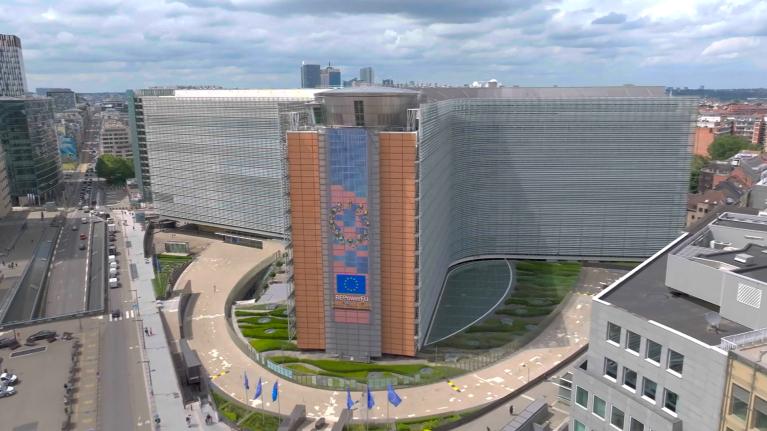
Las carteras digitales interoperables deberán estar disponibles para ciudadanos, residentes y empresas antes de que concluya 2026. Ese es el horizonte fijado para un proceso que no comenzó ayer, sino que es el resultado de años de trabajo preparatorio y negociación técnica, y que todavía atraviesa una fase decisiva. Los desarrollos sobre arquitectura segura, estándares comunes y especificaciones continúan avanzando, apoyados en una “caja de herramientas” compartida a escala europea. En paralelo, la Unión ha puesto en marcha proyectos piloto de gran alcance, con la participación de administraciones públicas y empresas, destinados a poner a prueba el funcionamiento real de un sistema llamado a operar en todo el continente.
Estas nuevas funcionalidades, además de simplificar procedimientos tradicionalmente tediosos —y en muchos casos poco accesibles para quienes carecen de habilidades digitales, como las personas mayores—, descansan sobre decisiones que van más allá de lo puramente técnico. Hay en su impulso una lectura política de fondo: la conciencia, cada vez más extendida en Bruselas, de que los datos se han convertido en un activo estratégico en la era de la inteligencia artificial. No en vano, como señaló el analista Peter Sondergaard: “La información es el petróleo del siglo XXI”.

The European Digital Identity Wallet: Why it matters and to whom. Caribou Digital.
Balance de ciberseguridad 2025. Instituto Nacional de Ciberseguridad.
Mi Carpeta Ciudadana: ¿qué es y para qué sirve? Ministerio de Asuntos Económicos y Transformación Digital.
Bringing together in a single application all the documents required in order to access public and private services from a mobile phone sounds — at least on paper — like a reasonable promise. Not only because it would simplify the digital relationship with administrations and companies, but also because it would alleviate an increasingly burdensome identification bureaucracy that requires us to prove who we are time and time again. This is the horizon pursued by the so-called European Digital Identity Wallet, an EU project that Member States must make operational before the end of 2026 and which aims to make identification an almost invisible process.
Pan-European Wallets
As with many projects that end up being rolled out at community level, the European digital wallet has not come out of the blue. It builds on the previous experience of different national digital identity systems, developed and tested in several countries over the last few years. The ambition now is to go one step further: for these solutions, conceived within specific borders, to evolve into pan-European wallets that function beyond their country of origin and are recognised by all Member States.
The aim of this convergence is not to create a single common application for all citizens, but to establish an ecosystem of digital wallets capable of functioning interoperably in any EU country. That is, a web of different but mutually compatible applications designed to enable digital identity to circulate smoothly within the European single market.
The appeal of such digital tools lies, above all, in the ease they offer to the user. A convenience based on the possibility of selectively storing and sharing the credentials needed to prove identity to third parties, all from a single application installed on the mobile phone or any other compatible electronic device, without the need to repeat the process over and over again.
Once the threshold of identification – the first bottleneck – has been crossed, EU-wide alignment opens the door to other uses. The digital wallet will also allow the storage of official documents such as driving licences, medical prescriptions, academic qualifications, passports and professional certificates. It will add a key function: the ability to electronically sign documents with full legal validity, integrating into a single environment processes that are currently dispersed.
Digital regulation
In recent years, the European Union has deployed an increasing volume of digital regulation, and it is within this regulatory framework that the future common electronic identity fits. Not only as a tool for everyday use, but also as an instrument that can facilitate the implementation of regulations such as the Digital Services Act (DSA). All this in a context in which many citizens, even though they are used to entering their personal data on a growing number of platforms, are beginning to distrust the security guarantees offered by these spaces. Providing a trusted environment from which to manage a Europe-wide digital identity is therefore presented as a way of restoring trust, fostering information exchange and nurturing infrastructures considered strategic.
This emphasis on security was precisely one of the pillars on which the President of the European Commission, Ursula von der Leyen, based her presentation of the initiative. This was underlined in September 2020, during the State of the Union address, when the need to provide citizens with a digital identity that would strengthen trust and return control to them over their data was defended.
The timing of Von der Leyen’s speech was not coincidental. In the midst of the pandemic, applications to prove vaccination status were at the centre of public debate, including in the offices of Brussels. This was largely because these tools depended on infrastructures controlled by tech giants such as Apple and Google, which set the rules on how the data required for tracking systems could be exchanged, limiting the room that states have for manoeuvre.
Security and independence
Since then, and as has been the case with other strategic initiatives, avoiding a return to dependence on large US companies in areas considered sensitive has become a shared conviction within the European project. The commitment to the EU’s own digital wallet is therefore part of a broader desire by its institutions to strengthen their technological autonomy and move towards a digital sovereignty capable of reducing external vulnerabilities.
Hence, security and privacy have become the two pillars on which the project is based. These are essential conditions for its success and, above all, for citizens to perceive these guarantees in their day-to-day dealings with the digital wallet. Failure to do so would compromise the initiative and weaken the new autonomous communication channel that Brussels is seeking to consolidate. All the more so as the use of these interconnected wallets will be voluntary for citizens, and not compulsory, as the European Commission itself has underlined.
The European Digital Identity Wallet therefore lies in the territory where technology, politics and everyday life converge. It is not just another new administrative tool or exercise in digital modernisation, but an attempt to redefine how the relationship between citizens, states and services is articulated in an increasingly interconnected European space. It is somewhat complex: it requires solving technical challenges, guaranteeing high security standards, co-ordinating twenty-seven countries with very different digital backgrounds and cultures and, above all, generating a level of public trust that is not decreed, but built. Much of its viability will depend on this balance.
Much of its viability will depend on that delicate balance. If any one of these aspects is not delivered, and the experiences proves to be opaque, insecure or unhelpful, then the project risks becoming just another promise in the European digital catalogue. If, on the contrary, it can be established as effective tool and perceived as legitimate, the wallet could become one of the most profound silent transformations of the relationship between the citizen and the state in the European Union.
Interoperable digital wallets should be available to citizens, residents and businesses by the end of 2026. This is the horizon set for a process that did not start yesterday, but is the result of years of preparatory work and technical negotiation, and is still going through a decisive phase. Developments on secure architecture, common standards and specifications continue to progress, supported by a shared European-wide «toolbox». In parallel, the European Union has launched wide-ranging pilot projects, involving public administrations and businesses, in order to test the actual functioning of a system that is intended to operate across the continent.
These new features, in addition to simplifying traditionally tedious procedures (which are often inaccessible to those lacking digital skills, such as the elderly) are based on decisions that go beyond the purely technical. There is a fundamental political interpretation behind this initiative: the growing awareness in Brussels that data has become a strategic asset in the age of artificial intelligence. Not without reason, as analyst Peter Sondergaard points out: «Information is the oil of the 21st century”.
The European Digital Identity Wallet: Why it matters and to whom. Caribou Digital.
2025 Cybersecurity Overview. National Cybersecurity Institute.
My Citizen’s Wallet : what is it and what is it for? Ministry of Economic Affairs and Digital Transformation.
Déjanos tu email y recibirás un correo cuando publiquemos el siguiente número de la revista.